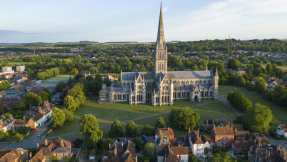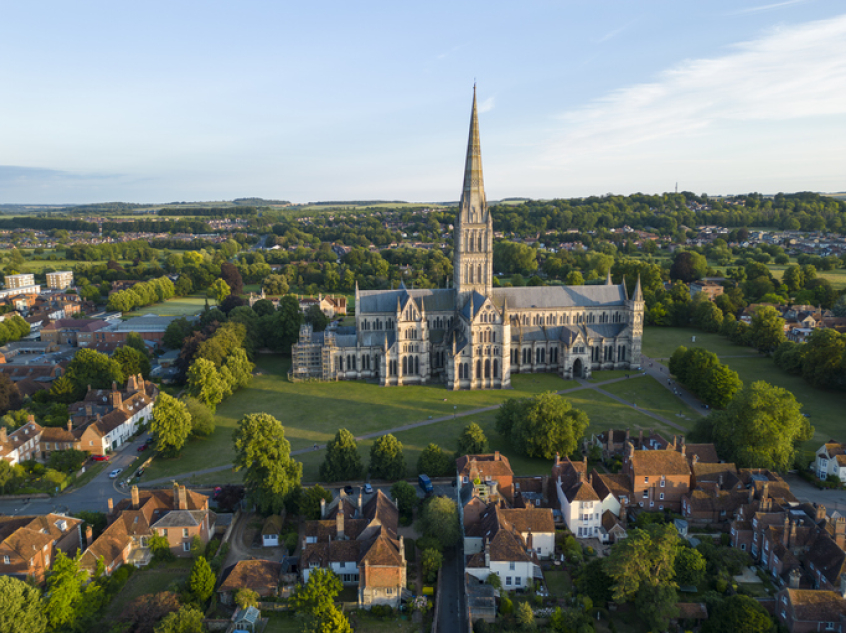
A new report has found that Salisbury Cathedral contributes over £21 million to annually to the economy of the city. On a national level its economic impact is estimated to be over £35 million a year.
An Economic Impact Assessment found that the cathedral supports nearly 300 jobs either directly or indirectly. Among these are heritage crafts such as stonemasonry and glazing, which is supported at the cathedral’s works yard, one of only 12 such in the country.
The report also suggested that the cathedral provides a host of more intangible benefits, such as improved health and wellbeing, as well as being a source of local and national pride.
Responding to the report, the Dean of Salisbury, Nicholas Papadopulos, said, “It is cheering to learn that this report confirms what we have always known: Salisbury Cathedral makes a significant contribution to the spiritual, community and economic life of our city.
"Through worship, visits, and an increasingly diverse programme of events, we offer a warm welcome to hundreds of thousands of people 365 days of the year, all enabled by our dedicated team of staff and volunteers.”
John Glen, MP for Salisbury, commented, “It is very heartening to see that alongside its immeasurable contribution to the spiritual and cultural life of the city, Salisbury Cathedral has a vast and very tangible impact on our local economy.
"The cathedral and the community, business and cultural institutions of the city constantly support and enrich each other.”
The report comes at a time when the maintenance costs of Britain’s cathedral’s and historic churches is increasingly under the spotlight.
Earlier this month Southwell Minster said it faces closure unless it can find an additional £20 million in funding. A relatively modest cathedral, it costs around £3,600 per day to run. By contrast, it costs around £30,000 per day required to keep the likes of Canterbury Cathedral and York Minster operational.
Salisbury Cathedral requires around £22,000 a day to operate.
Just days ago the National Churches Trust warned that over 1,000 historic churches and cathedrals are now “at risk”, due in large part to the government’s decision to end a scheme that exempted historic places of worship from VAT on repair bills.
The Archbishop of Canterbury, Sarah Mullally, has called on the government to reconsider VAT on historic church repairs, describing them as an "intolerable burden".