Recorded attacks on Christians in Europe rose by 44% in 2025, according to a new report that also raises concerns about restrictions on the public expression of Christian faith.
The Vienna-based Observatory on Intolerance and Discrimination against Christians in Europe (OIDAC Europe) identified 2,465 anti-Christian hate crimes and incidents in 2025, up from 2,211 in 2024.
Attacks on property, including churches and religious symbols, accounted for most of the cases.
The report recorded at least 395 attacks on individuals, including threats, up from 274 in 2024.
France had the highest government-recorded total at 843, followed by England and Wales with 624, Germany with 337, and Austria with 134.
OIDAC Europe warned that many incidents go unreported and the true number could be considerably higher. In addition, some countries do not record anti-Christian offences separately.
The findings draw on national police statistics and other data from the Office for Democratic Institutions and Human Rights, part of the Organisation for Security and Co-operation in Europe.
The figures for England and Wales cover April 2025 to March 2026 and represent a 24% rise from the previous reporting period.
In France, recorded offences against individuals rose by 70%. Physical violence against members of the Christian community doubled, while physical attacks on clergy and other church officials rose to four times the previous year’s figure.
Among the most serious incidents documented was the killing of Ashur Sarnaya, a 45-year-old disabled Assyrian Christian who had fled persecution by the so-called Islamic State in Iraq.
Sarnaya was stabbed to death outside his apartment in Lyon in September 2025 while livestreaming Christian messages in Arabic. OIDAC Europe said French authorities had since confirmed that the attack was jihadist in nature.
The report also highlighted the killing of a Catholic priest in Poland, an attempted homicide in Germany, and a stabbing in Spain that injured three people.
Of the 528 cases OIDAC Europe documented individually, 184 involved vandalism of churches or cemeteries, 90 were desecration, and 78 were arson-related attacks. A further 46 fell into the category of threats and disruption of worship.
A survey of 996 Catholic priests in Poland found that almost half (49.7%) had experienced some form of aggression in the preceding 12 months. Of those affected, 80.8% had not reported the incidents to the authorities.
The report also documented cases in which Christians faced restrictions on expressing their beliefs in workplaces, schools and public spaces. Several of the cases in the UK involved Christians who lost jobs or employment opportunities after expressing views on abortion, marriage or sexuality.
The report highlighted the cases of two teachers, Sarah Morse in Scotland and Anita Meston in Washington, Sunderland, who lost their jobs after answering pupils’ questions about their opposition to abortion. Morse accepted a financial settlement, while Meston has brought a religious discrimination claim.
The report also cited the case of Christian social worker Felix Ngole. An employment tribunal found that Touchstone Leeds had discriminated against him when it initially withdrew its job offer after learning of his publicly expressed beliefs on marriage and sexuality. The charity declined to reinstate the offer after a second interview, and the Court of Appeal heard Ngole’s further challenge in September 2026.
OIDAC Europe raised concerns about the use of public order regulations and abortion clinic buffer zone laws in cases involving prayer or evangelism.
In Northern Ireland, guidance issued by the Police Service of Northern Ireland in July 2026 said that carrying a Bible, reading Scripture or praying with a patient within a designated safe access zone could constitute an offence if the activity was capable of influencing or distressing someone accessing abortion services. The guidance said a person could also commit an offence by acting recklessly as to whether their actions would influence or distress someone accessing abortion services.
Another case referenced in the report involved the prosecution of Christian pro-life volunteer Isabel Vaughan-Spruce, who pleaded not guilty to five charges relating to silent prayer near an abortion facility in Birmingham. Her trial is scheduled for January 2027.
Clive Johnston, a retired Baptist pastor, was convicted and fined £450 for holding an open-air Sunday service within the safe access zone near Causeway Hospital in Coleraine, Northern Ireland. He preached on John 3:16 without mentioning abortion. His appeal was heard in October.
OIDAC Europe argued that authorities should distinguish peaceful religious activity from intimidation or obstruction when enforcing laws intended to prevent harassment.
"Christians should be able to express their beliefs, take part in public life and practise their faith without facing unjustified exclusion or prosecution. Even when courts ultimately uphold their rights, lengthy proceedings can impose severe personal and financial burdens and discourage others from speaking openly about their faith," said Anja Tang, the organisation’s executive director.
The report also highlighted several successful legal challenges. The European Court of Human Rights ruled that a blanket ban on door-to-door religious outreach in the Bulgarian city of Shumen violated religious freedom, while in London a court acquitted Christian evangelist Richard Johnson, who had been prosecuted after distributing gospel leaflets in Soho.
Elsewhere in the report, OIDAC Europe criticised media coverage and political commentary that it said had portrayed traditional Christian teachings on marriage, sexuality and abortion as extremist or socially dangerous.
Spain’s public broadcaster RTVE apologised after describing the growth of evangelical churches as "worrying" and "dangerous".
Earlier this year, Amnesty International UK withdrew a briefing that had collectively labelled Christian and other organisations, especially those critical of transgender ideology, "anti-rights". It apologised, acknowledging significant failings in its research and editorial standards.
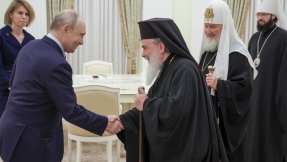
The report also pointed to restrictions on independent Christian communities in Russia, Belarus and Russian-occupied Ukraine, including the detention of clergy, interference with worship and pressure on congregations to accept state-approved religious leaders.
In Russian-occupied Ukraine, authorities ordered Baptist pastor Vladimir Rytikov to leave after his congregation refused to register with them, according to the report. In Russia, Pentecostal pastor Nikolai Romanyuk was sentenced to four years in prison over a sermon opposing participation in the war.
OIDAC Europe called on European governments to improve the recording and investigation of anti-Christian hate crimes, strengthen protection for religious communities, and review legislation that could disproportionately restrict peaceful religious expression.
It also called for the European Union to appoint a coordinator to combat anti-Christian hatred, alongside existing coordinators addressing antisemitism and anti-Muslim hatred.
"Reliable data are essential in an increasingly politicised debate. Neither ignoring anti-Christian hostility nor exploiting it for political purposes helps those affected," Tang said.
"We need to investigate its causes carefully and support victims and communities."
The report concluded: “Protecting religious freedom requires authorities to distinguish belief from conduct, disagreement from discrimination, and peaceful religious expression from coercion or threats, including when religious convictions challenge prevailing secular views."
The report added, “Safeguarding these freedoms supports societies in which people can openly practise their faith, express their convictions and contribute to public life without intimidation or unjustified exclusion.”