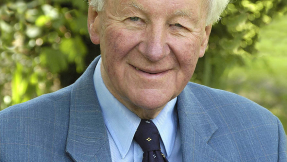
The Message of the Sermon on the Mount by the evangelical pastor and scholar John Stott was fresh and challenging to re-read more than forty years after I first read it in 1984. This is despite the drastic changes in Western society since then and the triumph of wokery.
Subtitled Christian Counter-Culture, it was first published by Inter-Varsity Press in the Bible Speaks Today series of commentaries in 1978. Dr Stott (1921-2011) was then Rector Emeritus of the conservative evangelical flagship church in central London, All Souls Langham Place.
Stott, it has to be acknowledged, led a somewhat sheltered life. He was a conscientious objector in World War II and so avoided military service. Of all the wars to be a conscientious objector to, World War II would seem a rather bizarre choice but Stott was then a convinced pacifist.
He did not ever do a regular secular job but studied modern languages and then theology at Cambridge University before getting ordained in 1945 in the Church of England when the clerical calling was still quite a high-status occupation. He served as curate of All Souls before becoming its incumbent in 1950 until 1975.
I get a sense from his book that he knew the limitations of his experience. He quoted liberally from German pastor Dietrich Bonhoeffer’s 1937 book on the Sermon on the Mount, The Cost of Discipleship. Commenting on “those who are persecuted for righteousness’ sake” in Matthew 5v10-12, Stott wrote:
“Few men of this century have understood better the inevitability of suffering than Dietrich Bonhoeffer. He seems never to have wavered in his Christian antagonism to the Nazi regime, although it meant for him imprisonment, the threat of torture, danger to his own family and finally death. He was executed on the direct order of Heinrich Himmler in April 1945 in the Flossenburg concentration camp, only a few days before it was liberated.”
This, Stott wrote, was the fulfilment of what Bonhoeffer had always believed and taught. “Suffering, then,” Bonhoeffer had written, “is the badge of true discipleship. The disciple is not above his master.”
The clarity of Stott’s teaching is what makes it so fresh. The closing chapter of the book is, I think, one of the best explanations of the divinity of Christ that I have ever read.
Answering the question “Who is this preacher?” against those who would claim that Jesus was a great moral teacher but not the divine Son of God, Stott wrote:
“What we shall find is that it is impossible to drive a wedge between the Jesus of the Sermon on the Mount and the Jesus of the rest of the New Testament. Instead, the preacher of the Sermon on the Mount is the same supernatural, dogmatic, divine Jesus who is to be found everywhere else.”
He concluded with the counter-cultural challenge that the divine Jesus Christ’s Sermon on the Mount presents to the contemporary church: “Too often the church has turned away from this challenge and sunk into a conformist, bourgeois respectability. At such times, it is almost indistinguishable from the world, it has lost its saltiness, its light is extinguished and it repels all idealists.
“For it gives no evidence that it is God’s new society which is tasting already the joys and powers of the age to come. Only when the Christian community lives by Christ’s manifesto will the world be attracted and God be glorified. So when Jesus calls us to himself, it is to this that he calls us. For he is the Lord of the counter-culture.”
Julian Mann, a former Church of England vicar, is an evangelical journalist based in Lancashire.