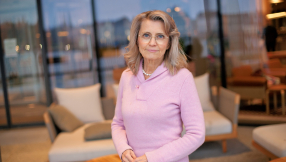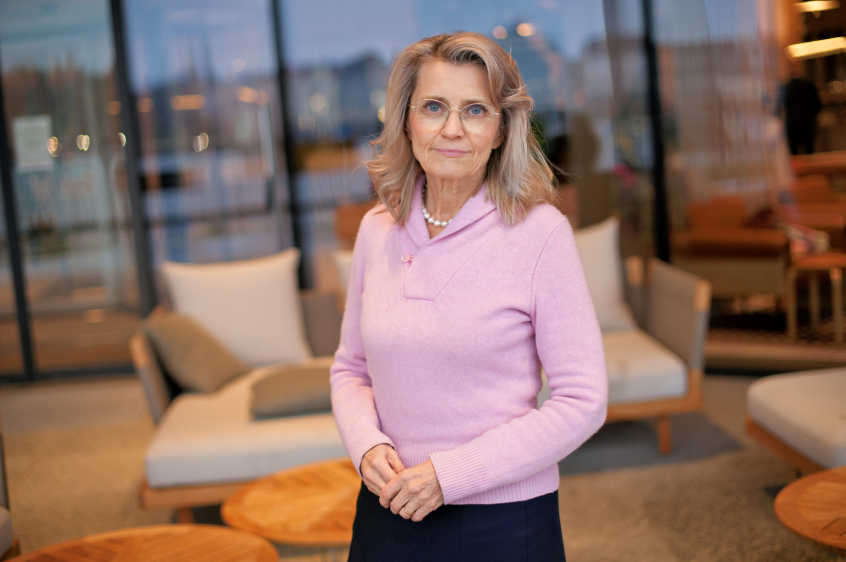
Päivi Räsänen, a Christian politician who was convicted in Finland earlier this year over past comments about homosexuality, has called European hate speech laws “very problematic and dangerous”.
Mrs Räsänen, former Minister of the Interior, shared more about her prosecution at the annual conference of the International Foundation for Therapeutic and Counselling Choice (IFTCC) in Poland on Saturday.
Finland’s Supreme Court found Mrs Räsänen guilty in March of agitation against a population group over a booklet she authored in 2004 and later shared online. The booklet was titled “Male and Female He Created Them: Homosexual Relationships Challenge the Christian Understanding of Humanity”. It contained statements describing homosexuality as a disorder of psychosexual development and a sexual deviation, which the court found insulting to gay people as a group.
She was convicted under Finnish laws governing war crimes and crimes against humanity following a seven-year legal battle, having previously been exonerated by the district court. The Supreme Court fined her 1,800 euros and ordered that the offending passages be deleted from online versions of the booklet.
With the support of the Alliance Defending Freedom, she is appealing to the European Court of Human Rights together with Bishop Juhana Pohjola and the Luther Foundation Finland who were convicted alongside her for their role in publishing the booklet.
Addressing the IFTCC conference, Mrs Räsänen described how the criminal case against her has led to a “chilling effect” in Finland, causing pastors and other citizens to fear that they too might be prosecuted for past comments.
Even among those in power, Mrs Räsänen said that many Finnish politicians had approached her privately to express their support, yet “very few” spoke up publicly for fear that they too might be prosecuted.
Most European countries have some form of hate speech law. In the UK, “stirring up hatred” based on race, religion, or sexual orientation is illegal, while in Germany there are laws criminalising language that attacks the human dignity of protected groups through insults, malicious denigration or defamation. Finland criminalises publicly shared language that threatens, defames or insults groups on grounds including race, religion, sexual orientation or disability.
At a time when “language has become a battlefield” and the meaning of words is being changed, Mrs Räsänen said that such laws are shutting down important debates.
She warned that limitations on freedom of speech were moving Europe towards “ideological totalitarianism” where “only one way of thinking about humanity is correct”. Instead, she said that people must be free to disagree, even if it means they may be offended. Christians, she added, must be free to publicly express their faith.
“My writings and my views may be freely opposed and criticised, but labelling opinions as crimes seriously restricts freedom of expression, and that is why the hate speech laws are very problematic and dangerous,” she said.
Dr Guillermo A Morales Sancho, of the Alliance Defending Freedom, said of European hate speech laws, “The thing that works the most is the chilling effect - the fact that people might self-censor just to avoid being prosecuted.”
He pointed out that under the European Union's Digital Services Act, the Finnish Supreme Court order against Mrs Räsänen’s booklet now applies to all of Europe. This is because the Act makes content deemed to be illegal in one EU country illegal across all 27 member states.
“One case can have an amazing impact, actually affecting almost 500 million people and curtailing real speech,” said Dr Sancho.
Indeed the impact of her conviction has been felt beyond the EU, with the UK having denied Mrs Räsänen a travel authorisation to attend a conference in Northern Ireland this summer. After appealing to Shabana Mahmood, she was eventually issued a visa but not in time to attend the conference.
Matthew Grech, an ex-gay Christian, will warn against free speech restrictions within the context of so-called ‘conversion therapy’ bans when he meets MEPs at the European Parliament later this month.
Grech was prosecuted in Malta for “advertising” conversion practices after speaking in a media interview about how he left homosexuality. He was found not guilty in March after a three-year legal battle. However, the prosecution is appealing his acquittal and a decision is expected in January 2027 so the battle is not over yet.
Several European countries, including France, Germany, Spain and Belgium, have some form of conversion therapy ban in place. In the UK, Westminster is currently scrutinising draft legislation that would ban ‘conversion practices’ across England and Wales. Northern Ireland is also considering a ban under separate legislation.
Grech told the conference there was “so much confusion” around the definition of conversion therapy as he warned that such bans were “affecting freedom of conscience in Europe” and “trying to silence us”.
Despite the difficulties of the past few years, he said he could “rejoice” at the fact that his prosecution has opened doors for more people to know about the experiences of the ex-gay community.
“God's ways are mysterious, but the Lord is truly amplifying his voice through all of this and so much good has happened because of it. Our stories are being made known throughout the world,” he said.
Mrs Räsänen shared a similar testimony, telling the audience that although there were some “dark days”, she was surprised by the amount of joy she experienced and the many opportunities that have arisen to share the Gospel.
She said she had been greatly encouraged by countless messages of support from around the world, including from people who have become Christians as a result of following her case. A particularly memorable message came from a gay atheist who criticized her views when the police first started investigating in 2019. Seven years later - the day before the Supreme Court hearing - he reached out again, this time to tell her that he had become a Christian and was now praying for her victory. The message moved her to tears, she said.
Mrs Räsänen went on to say that she considered the last seven years “part of my calling” as she encouraged Christians to be courageous and speak the truth without fear.
”We are now living in a time when we are called to stand firm in those parts of the Scriptures which challenge the current ethos and thinking,” she said.
“Now it is time to be open about your faith in Jesus and bravely and courageously speak about the teachings of the Bible.
“It doesn’t help if we try to be silent and stay in the corner because they will still find us in the corner.
“Find courage and openly testify about Jesus.”
She added, “It is not in vain to defend the Bible, freedom of speech and faith … God is amazing at turning evil into good, so we do not have to be afraid of opposition, criticism and even persecution.”
The conference also heard from her husband, Dr Niilo Räsänen, who called on churches to be a faithful witness.
He said that many theologians today “have effectively silenced God”, while many European churches have accepted transgender ideology “without asking the hard questions”.
“If the light of general revelation goes dark and the light of God’s Word goes out too, then we are in a dark place - the nations that have no light understand better than us here in Europe that marriage is between one man and one woman,” he said.
Mr Räsänen called on the Church to stand firm in its witness.
“Only around one to two per cent of Finns go to church on Sunday. But the worst thing is not that the number of members is falling. The worst thing is when the Church is changed by the culture around it. That is the main problem.”
He continued, “The Church’s main task is the Great Commission [but] if the Church changes its teachings and becomes liberal, as it is in Finland, it is no longer a witness and the Church does not change the culture but rather the culture changes the Church.”
He added, “The Church’s first task is to stay in the teaching of Jesus and to be a witness to it in the world.”