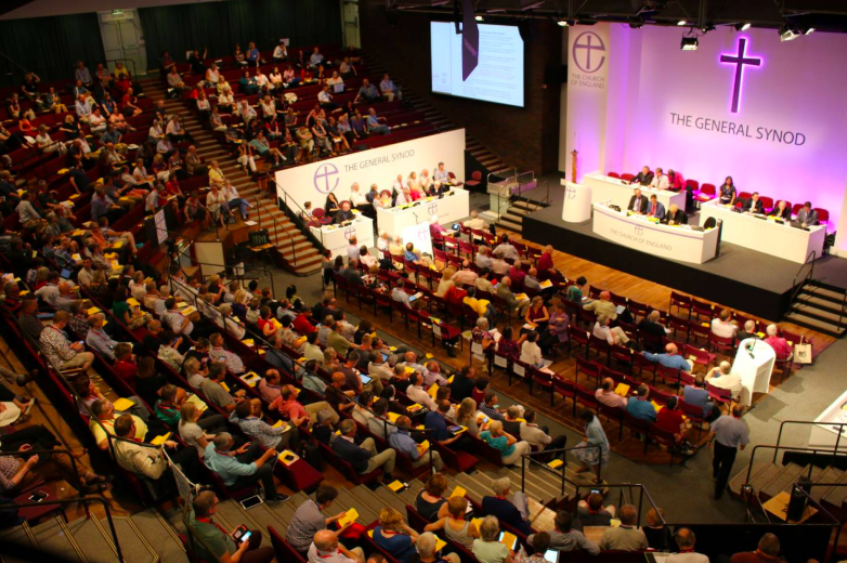
In July 2017 the Church of England’s General Synod passed the following motion:
"That this Synod:
-
endorse the Memorandum of Understanding on Conversion Therapy in the UK of November 2015, signed by The Royal College of Psychiatrists and others, that the practice of gay conversion therapy has no place in the modern world, is unethical, potentially harmful and not supported by evidence;
-
call upon the Church to be sensitive to, and to listen to, contemporary expressions of gender identity;
-
and call on the government to ban the practice of Conversion Therapy."
If the draft ‘Conversion Practices Bill’, which is currently undergoing the process of pre-legislative scrutiny in the Westminster Parliament, ever becomes law, then Synod will get what it asked for.
Key sections of the draft bill
Section 1(1) of the draft bill defines ‘conversion practice’ means:
"…any conduct carried out by a person towards an individual with the intention of—
(a) causing the individual—
(i) to have or not to have,
(ii) to believe that they have or do not have,
a sexual orientation or a particular sexual orientation; or
(b) causing the individual—
(i) to have or not to have,
(ii) to believe that they have or do not have, a transgender identity or a particular transgender identity."
Under subsection 3 of section 1 an exception is made for health care workers: ‘unless the person acts in a way that falls far below the standards reasonably expected of a person in their position.’
Subsections 5 and 6 of section 1 declare that:
"(5) The question whether conduct amounts to an abuse of the individual is a question of fact to be determined by reference to all the circumstances of the case, including in particular the nature of the conduct."
and that:
"6) In assessing the nature of the conduct, consideration is to be given (among other things) to the question whether it involves any of the following—
(a) words or behaviour of a sexual nature;
(b) violent or threatening words or behaviour;
(c) controlling or coercive words or behaviour;
(d) use of economic pressure;
(e) use of psychological or emotional pressure."
Under section 2 (1) of the draft bill:
‘A person commits an offence if the person carries out an abusive conversion practice on an individual which causes—
(a) serious harm to the individual’s physical or mental health, or
(b) serious alarm or distress to the individual which has a substantial adverse effect on their usual day-to-day activities.’
Under Section 2 (2) of the draft bill, the maximum penalty for someone committing an offence under the bill would be five years in prison, a fine, or both.
Section 5 of the draft bill further declares that an offence under the bill can be committed not just by an individual but by ‘bodies corporate and unincorporated bodies,’ that is to say, businesses and other corporate bodies managed by a board of governors or by their members, and subsections (1) and (2) explain that not only can an offence be committed by the body concerned but that:
"If a person who is, or is purporting to act as, a relevant officer of the body authorises or permits, participates in, or fails to take all reasonable steps to prevent the commission of the offence, that person also commits the offence."
The threat to Christian individuals, churches and other organisations
On 1 July this year, in response to a question in the House of Lords from the Bishop of Leicester, Lord Collins of Highbury, speaking on behalf of the Government declared:
"The Government have no intention of interfering with people’s right to religious belief and expression. We are not seeking to prevent people living a life that aligns with their religious or cultural values. This is not about telling people that they cannot hold certain views.
"We are targeting clear instances of abuse here, and we are very clear about sending a message that LGBT+ people deserve to be safe from harm.
"An offence occurs only if someone seeks to change a person’s identity through abusive conversion practices that result in harm. A religious leader teaching their faith’s views on LGBT+ matters should not be affected by this draft bill."
What Lord Collins is saying is that Christians (and members of other religions) have nothing to worry about. If the bill becomes law, it will not affect their practice of their faith. However, the reality is potentially very different.
The first problem is with the concepts of ‘sexual orientation’ and ‘transgender identity’ in Section 1 (1).
From a traditional Christian perspective, sexual orientation is not about who a person is but about the sexual desires that they have. Traditional Christian anthropology holds that individuals are created by God as either male or female (Genesis 1:26-27, Matthew 19:4) and he intends them to have sexual intercourse only in the context of marriage with someone of the opposite sex (Genesis 2:18-25, Matthew 19:5). Christianity sees any desire to have sex with members of one's own sex as a manifestation of the Fall and giving into it as an act of sin (Romans 1:26-27).
Modern Western society, however, sees things differently. It elides identity and sexual desire. Influenced by the thought of Sigmund Freud, it holds that sexual desires are an essential element of who people are and that this means that a description of their ‘sexual orientation’ as lesbian, gay or bisexual is not simply a description about who they want to sleep with, but about who they are. What follows from this is that to say that someone can change their sexual desires, or refrain from acting upon them, would be to deny their identity as someone with a particular ‘orientation’ and could therefore potentially be a criminal offence.
In traditional Christian anthropology being a male or female is not a matter of choice but of biology. Someone is a male or female because their body is designed to play a particular role in sexual activity and in the procreation, birth and post-natal care of children. Once again, modern Western society sees things differently, with the view being widely held that you are who you believe yourself to be regardless of your biology. That is why, for example, it will say that a biological male who self-identifies as female is a woman (‘a trans woman is a woman’). What follows from this is that a Christian who adheres to traditional Christian belief by holding that someone who identifies as transgender is in reality defined by their biological sex could potentially be committing a criminal offence.
It might be argued in response that, according to the draft bill, a criminal offence would only be committed if a Christian engages in activity that falls under section 1(6) and 2(1) of the draft bill and therefore Christians have nothing to worry about. However, as the Christian campaign group Let Us Pray points out, this is not the case. It notes that there is no clear threshold for when activity becomes abusive and therefore criminal:
"Rather than providing a clear threshold, section 1(4–6) gives courts a non-exhaustive list of considerations for answering this question - including highly subjective concepts such as ‘emotional’ and ‘economic’ pressure. It’s not difficult to see how a mother who refuses to fund her teenage daughter’s request to take testosterone could be accused of exerting ‘economic pressure’. Likewise, a pastor who counsels a man in his congregation not to leave his wife for another man could be said to have applied ‘emotional pressure.'
"Section 2 establishes the third element of the offence. An abusive conversion practice becomes a criminal offence if it causes ‘serious harm to the individual’s physical or mental health’ or ‘serious alarm or distress … which has a substantial adverse effect on their usual day-to-day activities’.
"This may sound robust, but the test of ‘serious alarm or distress’ is easily met.
"The concepts of alarm and distress have already proved problematic for free speech under sections 4A and 5 of the Public Order Act. Simply adding the word ‘serious’ does little to solve the issue.
"Given the highly emotive nature of the issues involved, feelings of alarm or distress are likely to be amplified. Take the earlier example of a mother refusing to support her daughter’s request to transition. It is not difficult to imagine how that refusal could be experienced as causing ‘serious distress or alarm'.
"Or consider the man whose employer refuses him access to his female co-workers' toilets. Suddenly we’re potentially ticking all the ‘emotional’, ‘economic’ and ‘distress’ boxes at once.
"Once conduct falls within the Bill's sweeping definition of a conversion practice in section 1, it could all too easily satisfy this test."
Furthermore, the vagueness of what constitutes an offence means that even praying for someone could be an offence, as LGBTQ+ campaigners such as Steve Chalke and Jayne Ozanne have suggested, on the grounds that it has undermined someone’s physical or mental health or caused them severe distress, even if these effects only manifest themselves retrospectively.
Even the specific protection for health care workers in section 1(3) is not robust. As the Policy Exchange’s new report on the bill, 'Not what it says on the tin', observes, the issue of what constitutes appropriate medical care for LGBTQ+ individuals is highly contested, particularly in the area of children with gender dysphoria.
The Policy Exchange says:
"Against this background it can be seen that the seemingly innocuous provision in clause 1(3) of the draft bill, which on its face exempts only competent health care providers from criminal responsibility for conversion practices, is in fact yet another battleground in the sex and gender debate.
"Absent a clear definition of the phrase ’far below the standards reasonably expected’ this clause is destined for bitter and prolonged dispute over even the most basic components of competent and ethical healthcare for people with transgender identities. This part of the draft bill seems designed to litigate the allegations and counter-allegations of engagement in conversion practices which are habitually exchanged between proponents of affirmation and supporters of watchful waiting.
"Meanwhile, medical and therapeutic professionals who do not wish to get caught in that crossfire - and who wish still less to risk imprisonment for doing their job - are likely to avoid offering treatment for gender distress altogether. The curbing of accessible care for fear of litigation and criminalisation will further reduce accessibility for those in need of medical assistance."
This quotation focuses on the issue of care for those suffering from gender distress, but exactly the same issue would arise in the case of those seeking help with unwanted same-sex attraction (such as for example a man with sexual desires for men who wants help to remain faithful to his wife).
An additional problem for Christians is the way in which section 5 of the draft bill extends the risk of prosecution to corporate bodies and their officers and members, something which would apply both to churches and all other Christian organisations.
To quote the Policy Exchange report again:
" … the draft bill will render religious organisations and communities vulnerable to prosecution. This appears to be one of its principal purposes. Given the lack of clarity as to the parameters of the offences, religious organisations are very likely to be significantly restricted in their interactions with anybody who identifies as transgender or LGB. In fact, they would be well advised not to interact with such persons at all if the draft bill is brought into force, were it not for the discrimination law issues this could raise."
Turning to clause 5(2), the report warned that officers of organisations could themselves commit an offence if they failed to take “all reasonable steps” to prevent an offence by the organisation, despite uncertainty over what this would require in practice:
"As such, a person working in an institution who takes such preventative steps as they consider appropriate may nonetheless find themselves prosecuted for failing to take other steps, despite the marked absence of any indication in the draft bill of what these might amount to. At a minimum, a wide range of organisations will be likely to try to head off this liability by putting extremely cautious policies into place.
"If the quality of the 'LGBT' policies habitually produced by external consultants for private and public sector bodies is any indication, then there is no guarantee that such policies will be lawful or of any assistance in avoiding criminal liability."
To give a concrete example of the problems to which the Policy Exchange report is referring, not only could an individual parish priest, or lay minister be prosecuted for teaching and preaching a traditional Christian understanding of sexual identity and ethics, but a PCC, a bishop, or the Church of England as a whole, could be prosecuted for not preventing the offending behaviour.
Now, supporters of the bill might suggest that in reality prosecutions and convictions would be few and far between because courts would take a ‘reasonable’ view of the matter, but (a) there is absolutely no guarantee that this would be the case and (b) the threat of prosecution would always be there and would have a seriously detrimental effect on freedom of speech and freedom of religion, on family life, and on the provision of legitimate psychotherapeutic care for people who are in acute distress.
Those in the Church of England who voted for the 2017 General Synod motion need to realise that this is the practical outworking of what they voted for. As the old adage goes ‘be careful what you wish for.’ They, and the Church of England as a whole need to repent of their error and the Church of England, as the established Church, needs to take a lead in opposing this bill.