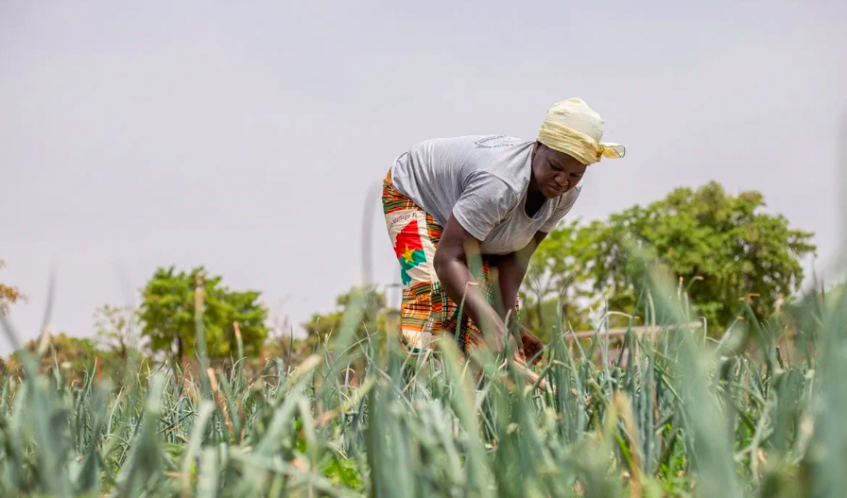
Christian humanitarian charity Tearfund has called on world leaders attending the COP31 climate summit in Türkiye to ensure that funding reaches vulnerable farming communities, warning that worsening climate conditions are threatening food production and pushing more people towards hunger.
The appeal follows the opening of the United Nations climate conference in Antalya on Monday, which was designated Food, Agriculture and Health Day.
Representatives from almost 200 countries have gathered for the two-week summit, which runs until 20 November, to discuss how governments can accelerate efforts to address climate change, particularly through financial support, emissions reductions and measures to help vulnerable communities adapt.
Reacting to the opening discussions, Rana Gorges, Tearfund’s country director in Iraq, welcomed the attention given to food security but stressed that more funding needed to reach smallholder farmers, many of whom are already bearing the consequences of extreme weather.
“Climate change is driving a global food crisis, leaving the smallholder farmers who produce our food unable to feed themselves or their families,” she said.
“At Tearfund, we believe that true food security must be for all, placing the people who grow our food and face the brunt of climate change at the forefront of these discussions.”
Gorges also welcomed the specific attention given to smallholder farmers during the summit’s opening discussions, noting their important contribution to global food production despite having limited access to international climate funding.
She warned that heatwaves, floods and shrinking arable land were destroying farmers’ livelihoods, with El Niño adding to the pressures on food security.
“Closing the funding gap is vital to lifting millions of people out of hunger and protecting lives and livelihoods from climate impacts,” she said.
She added: “Agriculture negotiations must recognise the need for more finance in their outcomes, to build climate resilience for communities.”
Her comments come as international negotiators face renewed pressure to demonstrate tangible progress on climate finance, one of the most contentious issues at this year’s conference.
Funding for climate adaptation emerged as an early point of contention at COP31, despite negotiations getting underway without significant procedural disagreements.
According to Agence Europe, African countries sought to give greater prominence to financial assistance for climate adaptation, with Ghana representing the African Group of Negotiators in calling for funding to be treated as a central priority.
However, efforts to secure a dedicated place on the conference agenda for a threefold increase in adaptation finance were unsuccessful because participating countries could not reach a consensus.
The conference is being led through an unusual partnership between Türkiye and Australia, with Turkish Environment Minister Murat Kurum serving as COP31 President and Australia’s Climate Change and Energy Minister Chris Bowen serving as President of Negotiations.
During Monday’s opening session, Kurum emphasised the importance of ensuring that international climate agreements produce improvements in people’s everyday lives.
“Our decisions must take shape in a city's infrastructure, on a farmer's land and along a factory’s production line. Families must feel their impact in lower energy bills,” he told delegates, according to UN News.
Bowen, meanwhile, proposed developing a presidency-led decision throughout the summit, rather than postponing discussions until its closing stages, despite ongoing disagreements among countries over what the final agreement should entail.
The urgency of the discussions was reinforced by new warnings about the pace of global warming.
The World Meteorological Organization (WMO) reported that 2026 was on track to be one of the four warmest years on record, with the global average surface temperature between January and September approximately 1.47°C above the 1850–1900 average.
The organisation also highlighted record levels of ocean heat and sea levels, underscoring the growing risks associated with continued warming.
Speaking at a WMO press conference, Alan Dangour, director of climate and health at Wellcome, urged negotiators to recognise the human consequences of climate change.
“The main character at the centre of this story is not the atmosphere. It's not the land, the ocean or the ice. It’s us. You and me, our family and our communities,” he said, as reported by UN News.
Stressing that people and communities must remain central to the discussions, he warned: “We cannot adapt to an unmitigated future.”
Joy Shumake-Guillemot of the WMO told UN News that closer cooperation between meteorologists and health professionals could help countries prepare for climate-related health emergencies, including extreme heat and disease outbreaks.
She explained that weather forecasts could help hospitals anticipate increased demand during heatwaves, while seasonal predictions could support efforts to prevent diseases such as malaria.
“From a public health perspective, almost all heat deaths are actually preventable,” she said.
Agriculture remains particularly exposed to these changes, as shifting rainfall patterns, prolonged droughts and increasingly destructive storms affect crop production and threaten food supplies.
The Food and Agriculture Organization of the United Nations (FAO) has similarly identified COP31 as an important opportunity to strengthen food systems and increase investment in climate-resilient farming.
As reported by Global Agriculture, Kaveh Zahedi, head of the FAO’s climate division, warned that extreme temperatures, exacerbated by El Niño, were making food production increasingly difficult and urged governments to increase investment in agricultural adaptation.
Discussions at COP31 are also examining the future of the Sharm el-Sheikh joint work programme on agriculture and food security, established at COP27, and how international support can better reach family farmers.
Cristian Barrazueta of the World Rural Forum told UN News that complex application procedures and multiple intermediaries were preventing smaller farming organisations from accessing international climate funds.
He pointed to efforts by farmers in countries such as Fiji to adapt their agricultural practices to increasingly severe weather, including experimenting with alternative crops and protecting seedlings from devastating cyclones.
Tearfund remains concerned about whether the commitments made in Antalya will translate into meaningful assistance for communities already experiencing the effects of climate change.
Gorges urged governments to deliver funding directly to farming communities, saying: “Farmers cannot stand on empty promises alone; world leaders must ensure funding moves directly from negotiation rooms to farmers and their fields.”
She concluded, “When farmers thrive, communities thrive."