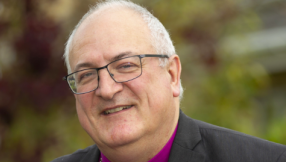
The President of the Nigerian Catholic bishops' conference has called on the government 'to be more proactive' in protecting Christians in the southern part of Kaduna state, where it is said they face 'structural injustice'. The state lies in Nigeria's 'middle belt,' where the predominantly Muslim north of the country meets the predominantly Christian south.
'We are particularly saddened by the constant and wanton destruction of lives and properties,' said Archbishop Ignatius Kaigama, according to the Catholic News Service of Nigeria (CNSN).
'Yesterday, it was Southern Kaduna; recently, it was Zaki-Biam in Benue State and the other day, it was Ile-Ife in Oyo State...no one knows which community will be the next victim.'
The region has seen attacks by Fulani herdsmen – mainly Muslim - on local farmers, who are predominantly Christian, some of whom have reportedly carried out retaliatory killings.
The Catholic church estimated in December that more than 800 people had died in the Kaduna clashes, though the government claims the figure is much lower.
According to Crux, government officials have also tried to insist that there is no religious dimension to the conflict, suggesting instead that it is largely about ethnic tensions.
But Kaigama said: 'We live in a country that is multi-ethnic, multi-religious and complex in nature...that is why we must constantly appeal to the sensibilities of our political leaders not to be seen to promote the interest of any particular group but to be neutral and seek the common things that will promote unity, fairness and equity in the country.'
Bishop Joseph Bagobiri of Kafanchan told CNSN: 'The crisis here has persisted because of the way and manner the federal and state governments, as well as the security agents are handling it. The root cause of this crisis is the institutionalisation of what could be regarded as structural injustice...[This] to my view, is a deliberate policy of injustice designed to shut our people out from the scheme of things and deny us our rights.'
The bishop said the situation meant it will be difficult for Christianity to survive in northern Nigeria.
Bagobiri said that the Church must learn to live with persecution. 'We as a Church must evolve new ways on how we can face violence without losing faith," he said. 'It is our prayer that God will give us his strength and the needed direction on how to make Christianity survive despite the constant attacks and persecutions we received.'
He added that people have turned to prayer in the absence of government help.
'It is only God that can save us from our present situation,' the bishop said.
'Our hope in Him is never in vain since he knows our problem and He will deliver us one day just as he delivered the people of Israel from the hands of the Egyptians.'