
The High Court has ruled against the saying of prayers before council meetings.
The judgement follows a judicial review initiated by the National Secular Society (NSS) to challenge prayers as part of the formal business at Bideford Town Council in Devon.
The NSS took action after receiving a complaint from Bideford town councillor Clive Bone, who felt “uncomfortable” having to sit through prayers.
It went to judicial review after both sides failed to reach agreement. Bideford Town Council said those with objections were free not to participate and that the register of attendance would not be taken until after the saying of prayers.
It rejected the NSS's requests for the prayers to be held before the meeting or for them to be replaced by a period of silence.
In its ruling, the High Court said that the saying of prayers as part of the formal meeting of a Council was “not lawful” under the Local Government Act 1972 and that “there is no statutory power permitting the practice to continue”.
The NSS said the ruling applies to the formal meetings of all councils in England and Wales, many of which still say Christian prayers during proceedings.
Passing the judgement, head of the Administrative Court, Mr Justice Ouseley said: “I do not think the 1972 Act […] should be interpreted as permitting the religious views of one group of councillors, however sincere or large in number, to exclude, or even to a modest extent, to impose burdens on or even to mark out those who do not share their views and do not wish to participate in their expression of them. They are all equally elected councillors.”
NSS director Keith Porteous Wood said the judgement was an “important victory for everyone who wants a secular society”.
“The NSS is not seeking to deprive those who wish to pray the opportunity to do so. Indeed, we fight to retain freedom of religion and belief.
“The judgement clearly states that religious freedoms are not hindered, as councillors who wish to do so are free to say prayers before council meetings.”
He continued: “There is no longer a respectable argument that Britain is a solely Christian nation or even a religious one.
“An increasing proportion of people are not practising any religion and minority faiths are growing in number and influence.
“This underlines the need for shared civic spaces to be secular and available to all, believers and non-believers alike, on an equal basis.”
The ruling comes despite the Council voting twice to retain the prayers.
The Council had been supported in its legal case by The Christian Institute, which criticised the High Court's judgement.
Spokesman Simon Calvert said: "It is extraordinary to rule that councils have no lawful authority to choose, if they so wish, to start their formal meetings with prayers. That is simply wrong.
“The logic of the ruling is that councils would also be going beyond the law if they took a vote and decided to start each formal council meeting with the national anthem.
“There is no way that Parliament, when it passed the Local Government Act 40 years ago, intended it to be used to outlaw prayers.
“This case was brought by a campaign group that wants to drive Christianity out of public life, and the High Court has today given them great encouragement to take matters further.
“It is high time Parliament put a stop to this assault upon our national heritage. What’s next? Will prayers at the cenotaph end up in court?
“What about local councils that wish to formally mark the Queen’s Diamond Jubilee as part of their official meeting? Is that now unlawful too?”
A member of St Mary’s Church, Bideford, who asked not to be named, said the ruling was “ridiculous”.
“I am quite cross about it,” she said. “If someone does not want to take part in the prayers, all they have to do is come in when the official business starts.”
David Morris, of Churches Together in Bideford, said he was not surprised by the ruling.
"Since we live in a multi-faith - including no-faith - society, Christians must expect to be challenged about views and practices established in less varied times," he said.
"Perhaps we should ask ourselves why the quality of our collective witness does not convince as widely as we might hope."




-

Thousands sign petition against drag show after advert showed baby Jesus in nipple tape
-

Wes Huff confesses to plagiarism, asks for prayer: 'It was sinful'
-

Where is this ‘space for faith’ that the King speaks of?
-

‘Beyond astonishing’ that schools are encouraging children to play GTA 6, Christian group says
-

John Lennox says there is enough evidence to take Christianity seriously
-

Does the BBC understand worship?
Most Popular
News
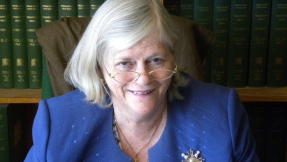
Hundreds gather to remember Ann Widdecombe at Westminster Cathedral
Prime Minister Andy Burnham and four of his predecessors joined around 600 people at Westminster Cathedral on Thursday for a memorial service for Ann Widdecombe.
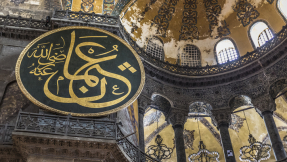
Wake up and smell the coffee: why the rise of Islam is a call to discipleship
New demographic forecasts from the Pew Research Centre predict that Islam is set to overtake Christianity globally by 2035. And in the UK, the Christian share is set to collapse to 25 per cent by 2070. Drawing on 30 years’ reporting on the persecuted church, Andrew Boyd argues that these figures are a sharp wake-up call.
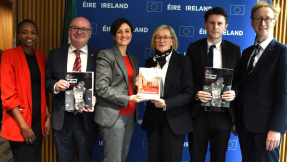
EU envoy pledges support for persecuted Christians
The envoy spoke of the “terrible and unnecessary suffering” faced by persecuted Christians.

When Jacob and Esau meet
Jewish academic and Hebrew scholar Irene Lancaster explores the rabbinic interpretation of Jacob’s encounter with Esau.





