
A new Bible that arranges Scripture according to when the events occurred - as opposed to when it was written - has re-opened debate in the Christian blogosphere over whether chronological ordering leads to clarity or confusion.
Bible publishing giant Thomas Nelson is set to debut the Chronological Study Bible next month, marketing the book as the "only study Bible that presents the text of the New King James Version in chronological order".
In the edition, well-known books in the Bible like the Gospels, Psalms and the Epistles of Apostle Paul are chopped up and re-woven with other texts to fit the historical timeline.
The accounts of Jesus' life as detailed in Matthew, Mark, Luke and John are combined into one narrative based on the order of events found in Mark.
Psalm 51 is lifted out from the longest book in the Bible and placed after the story of King David and Bathsheba.
Letters written by Apostle Paul to members of the Early Church are worked into the chronology of Acts.
"We understand more deeply what scholars and historians know of the earliest peoples," says a presenter in a video commercial for the new study Bible.
He compared the experience of reading the chronological NKJV Bible to a "Master's history class" or a "trip to the Holy Land guided by scholars".
But some Christians see a dead end to this journey.
"It bothers me when bad historical criticism trumps narrative structure," writes one blogger by the name of Drew. "It's primarily a set of theological texts that have historical significance, not a set of historical texts that have theological significance."
Re-working the text "removes the significance of the authorship through that process of transmission", he added.
Some Christian bloggers are skeptical over the accuracy of the new format. Others criticise Thomas Nelson for re-hashing the Gospel message with financial motives.
Many biblical scholars find the project interesting but hold reservations.
"I do think you do lose something when you start demolishing any book of the Bible," said Richard Hess, professor of Old Testament at Denver Seminary in Colorado, according to The Tennessean. "You lose the literary and theological context."
The slew of objections has kept Wayne Hastings, senior vice president and group publisher of the Bible Division for Thomas Nelson Publishers, busy with damage control. He has been visiting blogs and news sites and posting a link to his blog response on the issue.
"Looking through the eyes of someone who has had trouble understanding the Bible, this could be a refreshing alternative," wrote Hastings on his blog posting.
He also pointed to a disclaimer scholars placed in the introduction of the Chronological Study Bible which reads: "The goal of the Chronological Study Bible is not to replace the time-honored canonical arrangement, but instead to honor time as the setting in which the biblical record appeared. Readers who study this Bible will return to their traditional (in canonical order) Bibles better equipped to read them."




-

Thousands sign petition against drag show after advert showed baby Jesus in nipple tape
-

Wes Huff confesses to plagiarism, asks for prayer: 'It was sinful'
-

Where is this ‘space for faith’ that the King speaks of?
-

‘Beyond astonishing’ that schools are encouraging children to play GTA 6, Christian group says
-

John Lennox says there is enough evidence to take Christianity seriously
-

Does the BBC understand worship?
Most Popular
News
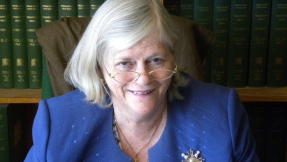
Hundreds gather to remember Ann Widdecombe at Westminster Cathedral
Prime Minister Andy Burnham and four of his predecessors joined around 600 people at Westminster Cathedral on Thursday for a memorial service for Ann Widdecombe.

Wake up and smell the coffee: why the rise of Islam is a call to discipleship
New demographic forecasts from the Pew Research Centre predict that Islam is set to overtake Christianity globally by 2035. And in the UK, the Christian share is set to collapse to 25 per cent by 2070. Drawing on 30 years’ reporting on the persecuted church, Andrew Boyd argues that these figures are a sharp wake-up call.

EU envoy pledges support for persecuted Christians
The envoy spoke of the “terrible and unnecessary suffering” faced by persecuted Christians.

When Jacob and Esau meet
Jewish academic and Hebrew scholar Irene Lancaster explores the rabbinic interpretation of Jacob’s encounter with Esau.





