Not too long ago, it could be safely assumed that most people in England understood that phrases such as 'Dearly beloved brethren' referred to all of humankind and not just their siblings.
They knew that 'graven image' meant the thing that 'thou shalt not make thyself' – and was not the mispelling of a command not to take selfies on a gravestone.
It was a given that a curate who took 'ghostly counsel and advice' was seeking spiritual inspiration from God, not from a spectral haunting in the churchyard.
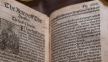
Today these once-familiar phrases from the 1662 Book of Common Prayer are not only understood by fewer of the general population – it seems even trainee clergy need help getting to grips with them as well.
Now all first year students in theological colleges across the country are to receive a brand new glossary to assist their understanding of the free copy of The Book of Common Prayer handed to them by the Prayer Book Society at the start of their studies.
The glossary – also available to others free of charge – has been produced by the society which encourages rediscovery and use of the majesty and spiritual depth of Cranmer's Book of Common Prayer, which is at the heart of the Church of England's worship.
Here are seven definitions that might prove helpful to anyone finding themselves with one of the traditional Anglican prayer books in church.
Froward: perverse, contrary. eg.Ps 18.26, Ps 101.5
Holpen: past tense of 'to help'. eg 'He remembering his mercy hath holpen His servant Israel.'
Oblation: from the late Latin oblatio, (from offerre, oblatum, to offer), offering. eg 'alms and oblations', 'his one oblation of himself once offered.'
Quick; Quicken: living; to make alive. eg 'the quick and the dead.'
Suffer: (1) to endure pain. (2) to tolerate or allow. eg 'Suffer the little children to come unto me.'
Supplication: humble and earnest petition. eg 'Almighty God, who hast given us grace at this time with one accord to make our common supplications unto thee...'
Vulgar: easily understandable. eg 'in the vulgar tongue'.