
Religious leaders in Nigeria launched an unprecedented $1-billion effort Thursday to tackle malaria, which each year kills up to 300,000 Nigerians.
The Faith United for Health campaign, which brings together Muslims, Catholics and Christians in the country, seeks to deliver 63 million mosquito nets to 30 million households by the end of 2010 and train 30,000 religious leaders to spread malaria prevention messages across Nigeria
"Working together, Nigeria’s faith leaders have the credibility, influence, and reach to carry the message that ‘bed nets save lives’ to their nation’s most distant villages," commented U.N. Secretary-General's Special Envoy for Malaria, Ray Chambers, who attended the launch of the Nigerian Inter-Faith Action Association’s campaign in Abuja.
"Their efforts will help ensure that the next generation of Nigeria's children will have the strength and good health to pursue their hopes and dreams," he added.
According to Chambers’ office, ensuring universal access to malaria-control tools – insecticidal mosquito nets, indoor spraying with insecticides, and effective medication – by the end of 2010, in Nigeria is critical to reaching the Secretary-General's ultimate goal of near-zero global malaria deaths by 2015.
“With one quarter of the world's malaria deaths occurring here, Nigeria bears the most onerous malaria burden,” Chambers noted.
But the U.N. official highlighted how, in just one year, Nigeria has position itself to meet the Secretary-General's goal of universal coverage by 2010, adding that "the proficiency with which the government is closing in on malaria is a bold statement that across sub-Saharan Africa, the Secretary General's goal is achievable.”
Chambers also hailed the fact that Nigeria is positioning itself to achieve funding for 100 percent of the 70 million nets that are required for universal coverage, with 60 million nets already funded, and with the approval and disbursement of resources from the World Bank, the Global Fund to Fight AIDS, TB, and Malaria, and UNITAID, among others.
“All nations who feel that the challenge may be too daunting, can look to Nigeria and understand that rapid progress is possible," the U.N. official commented.
Though malaria is both preventable and treatable, many die because prevention and treatment tools are not readily available to the people who need them most.
Simple solutions such as sleeping under a treated bed net, spraying insecticide inside homes, and using the right anti-malarial drugs dramatically reduce the impact of malaria, which is a caused by a tiny parasite most commonly transferred to people through the bite of a mosquito carrying it.
But because many cases are not treated quickly, what starts with a fever and moves on to headaches and vomiting can eventually overwhelm the body or even infect the brain and cause a coma.
At this point, malaria becomes fatal.
Presently, Nigeria – Africa’s most populous country – contributes more than a quarter of the one million malaria deaths in Africa, according to official statistics.
Some 75 million Nigerians, or half of the population, get attacked by the blood infection at least once a year while children below five years (around 24 million) get up to four bouts each year.
Worldwide, 350-500 million cases of malaria occur each year, and malaria each day kills 3,000 children. In Africa, where 90 percent of malaria deaths occur, the disease is the number one killer of children.
Over the past year, fifteen million nets have been delivered by Nigeria’s Federal and State government and close to half of Nigeria's population now has access to a mosquito net.
A month-by-month net distribution strategy, meanwhile, has been established to ensure that across Nigeria's 36 states, nets are continuously delivered until universal coverage is achieved at the end of 2010.
"The exemplary leadership of President Yar'Adua, the ministry of health, and all development partners working alongside the government, is leading to a fundamental reversal of the course of malaria control in Nigeria," commented Chambers.




-

Wes Huff addresses plagiarism allegations
-

Wes Huff confesses to plagiarism, asks for prayer: 'It was sinful'
-

Jonathan Aitken says Russell Brand asked him for prayer after rape conviction
-

Attacks on Christians in Europe rise by 44%, report finds
-

Adult baptisms rise by a third as Church of England sees fifth consecutive year of growth
-
Where is this ‘space for faith’ that the King speaks of?
Most Popular
News
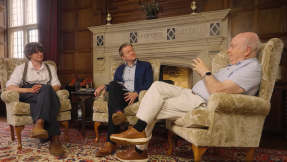
John Lennox says there is enough evidence to take Christianity seriously
Speaking with agnostic YouTuber Joe Folley, Oxford mathematician John Lennox argued that the historical evidence for Jesus’ resurrection is enough of a reason for sceptics to explore whether his promises hold true in their own lives.

Calls for inquiry as recorded assisted suicide deaths in Hawaii rise 293% since 2019
Pro-life organisation Right To Life UK has called for an independent inquiry into Hawaii’s assisted suicide system after official figures showed a record number of deaths and the state’s Department of Health acknowledged gaps in its reporting.

Can Labour tackle the youth jobs crisis without addressing its roots?
The barriers that keep young people out of work can take shape long before they leave school. Tackling them starts with supporting families and giving every child the chance to develop their gifts.

Christian group calls for prayer for forced marriage victims in Pakistan
Every year it is estimated that around 1,000 girls in Pakistan are kidnapped, forcibly converted to Islam and married, often to a much older man.





