
The body's own immune system can fight the deadly cancer melanoma if scientists can flip the system's "off" switch to "on," two preliminary studies suggest.
|PIC1|Scientists have long sought to rev up the disease-fighting cells of the immune system to fight melanoma. The new work addresses the other side of the coin, the regulatory cells that normally keep disease-fighting cells in check.
By shutting those inhibiting cells off, scientists hope to enable the disease-fighting cells to mount a continuous attack on the cancer. Two new studies of that strategy were reported this week in Prague at a European cancer research meeting.
"This is a fundamentally different approach to treating cancer," said Dr. Alexander Eggermont, professor of surgical oncology at the University of Rotterdam, Netherlands, the conference's chairman. Eggermont was not connected to either of the skin cancer research papers.
Advanced melanoma is a devastating disease for which there is no effective treatment. The average life expectancy is about nine months, and less than 20 percent of patients survive more than two years after diagnosis.
In one paper, Dr. Jason Chesney from the J.G. Brown Cancer Center in Louisville, Ky., reported that when patients with advanced melanoma were given a drug combination to knock out their T-regulatory cells, tumors shrank or remained stable in five of seven participants.
"This is a landmark study," said Dr. Anna Pavlick, director of the melanoma program at New York University Medical Center's cancer institute, who was not involved in the study. "What it shows is that by suppressing T-regulatory cells, we can take the brakes off a patient's immune system."
Though Pavlick says it's too early to change how patients are treated based on Chesney's study alone, she believes the research merits further study.
"It's like having permanent chemotherapy," said Chesney. "You're inducing your own immune system to stick around and keep this cancer from growing."
In another study presented Wednesday, Dr. Jeffrey Weber, a professor of medicine at the University of Southern California in Los Angeles, described how he and colleagues were able to block a protein on the T-regulatory cells. That inhibited them enough for the immune system to attack cancer cells.
Out of 25 patients tested, 24 are alive after 17 months, and three are free of cancer.
Both Chesney and Weber say it will be years before their strategies are sufficiently tested to know if they work on a wide scale. But if their hypotheses prove correct, they could also be applied to other types of cancer in which T-regulatory cells are known to play a role, such as breast, kidney, or esophageal cancer.
Allowing the immune system to run wild does not come without risk; doctors admit it could lead to autoimmune diseases including hepatitis, colitis or dermatitis. Still, most say those conditions are manageable, and are outweighed by the prospect of beating melanoma.




-

Why the Archbishop of Canterbury’s award controversy matters
-

More than one in four US Protestant churchgoers believe some biblical truths become outdated
-

Christian leaders issue ‘sober and urgent call’ for Western Church to prepare for disruption
-

Australia's anti-therapy laws harm the most vulnerable - Britain should not copy them
-

Songs of Praise celebrates 65 years with special anniversary episode - and finds a new generation online
-
First segments of Eternal Wall of Answered Prayer near Birmingham completed
Most Popular
News

Disabled baby euthanized in the Netherlands
Doctors in the Netherlands euthanized a severely disabled one-year-old child, the first case reported by Dutch authorities under rules introduced in 2024 that allow ending the lives of seriously ill children between the ages of one and 12.

400% increase in euthanasia deaths in Australian state of Victoria
Right To Life UK said the surge in numbers showed why UK MPs were right to reject assisted suicide.
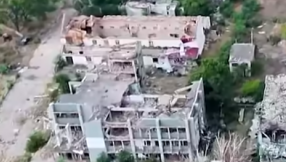
Ukrainian churches appeal for aid in starving Oleshky
Russia and Ukraine have blamed each other for the crisis in Oleshky.
Westminster Abbey plans memorial to JRR Tolkien
The memorial will go next to that of his friend CS Lewis.








