
A new group of historians, biblical scholars, and theologians has embarked on the quest for the historical Jesus to objectively determine what can be “reliably recovered” about him, his life, his teachings, and his activities.
"Jesus remains after 2,000 years the most fascinating figure of Western civilisation," notes James D Tabor, one of several scholars participating in The Jesus Project.
The author of The Jesus Dynasty says scholars today are uniquely positioned to examine the issue of who Jesus was in new and challenging ways.
"Scholars now at the beginning of the twenty-first century are able to take advantage of a plethora of new texts, sources, and methods, including the discovery of the Dead Sea Scrolls, various lost Gospels that are not in our New Testament, and a rich archeological record,” says Tabor, who was a consultant for the highly controversial and widely rejected documentary "The Lost Tomb of Jesus".
This past weekend, scholars behind The Jesus Project gathered for three days in Amherst, New York, for its inaugural meeting. Among those who have been drawn to the project are Tabor, who serves as the chair of the Department of Religious Studies at the University of North Carolina at Charlotte; Paul Kurtz, founder and chairman of the Committee for Skeptical Inquiry; religious skeptic Robert Price, a professor of Theology and Scriptural Studies at the Johnnie Colemon Theological Seminary in Miami Gardens, Florida; archaeologist and biblical scholar Robert Eisenman, who is most famous for his controversial work on the Dead Sea Scrolls and the origins of Christianity; and Bruce Chilton, a professor of Religion at Bard College who specializes in early Christianity and Judaism.
Though a similar effort, called The Jesus Seminar, has been seeking the historical Jesus for more than two decades, organizers of The Jesus Project say their effort is different from The Jesus Seminar as it is not largely theologically driven.
"The Jesus Seminar had difficulty separating itself from the faith commitments of its members,” says R Joseph Hoffmann, a historian of religion and chair of the Project and the Committee for the Scientific Examination of Religion – the secular think tank sponsoring the project.
“Its conclusions and methods raised more questions than they answered," he adds.
At the session this past weekend, participants agreed that a rigorous scientific inquiry was needed, and that the project would be committed to a position of neutrality towards the sources used as "evidence" for the Jesus tradition.
During the closing conference round-table, Tabor was quick to emphasise that "the Jesus Project repudiates any theological agendas, special pleading, or dogmatic presuppositions".
All members of the project are said to share a common commitment to the importance of applying scientific methodologies to the sources used to construct the Jesus tradition.
The Project has outlined a set of priorities for its next meetings, including a "consistent" translation of the Gospels, an inquiry into the causes of the canonisation of the existing New Testament documents, parallels between Islam and early Christianity in delineating its sacred books, and the need to carve a middle path between what Hoffmann describes as "Da Vinci Code sensationalism and the truly fascinating story that underlies the history of Christianity".
Papers delivered at the conference will be published under the title "Sources of the Jesus Tradition: An Inquiry", by Prometheus Books in 2009.
The project's next conference is scheduled tentatively for May 2009 in Chicago.




-

Wes Huff addresses plagiarism allegations
-

Wes Huff confesses to plagiarism, asks for prayer: 'It was sinful'
-

Jonathan Aitken says Russell Brand asked him for prayer after rape conviction
-

Attacks on Christians in Europe rise by 44%, report finds
-

Adult baptisms rise by a third as Church of England sees fifth consecutive year of growth
-

Where is this ‘space for faith’ that the King speaks of?
Most Popular
News
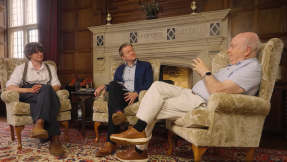
John Lennox says there is enough evidence to take Christianity seriously
Speaking with agnostic YouTuber Joe Folley, Oxford mathematician John Lennox argued that the historical evidence for Jesus’ resurrection is enough of a reason for sceptics to explore whether his promises hold true in their own lives.

Calls for inquiry as recorded assisted suicide deaths in Hawaii rise 293% since 2019
Pro-life organisation Right To Life UK has called for an independent inquiry into Hawaii’s assisted suicide system after official figures showed a record number of deaths and the state’s Department of Health acknowledged gaps in its reporting.

Can Labour tackle the youth jobs crisis without addressing its roots?
The barriers that keep young people out of work can take shape long before they leave school. Tackling them starts with supporting families and giving every child the chance to develop their gifts.

Christian group calls for prayer for forced marriage victims in Pakistan
Every year it is estimated that around 1,000 girls in Pakistan are kidnapped, forcibly converted to Islam and married, often to a much older man.





