More than 4,200 Christians have been killed in Nigeria so far this year, according to a new report calling for stronger action to protect communities facing violence across the country’s Middle Belt.
The assessment by US-based Christian nonprofit Equipping the Persecuted (ETP) recorded 4,216 Christian lives lost between January 1 and September 8 - equivalent to nearly 17 deaths a day, or roughly one every hour and a half.
It also estimates that over 600 Christian communities have been destroyed or abandoned and over five million Christians displaced by violence and insecurity.
ETP describes its figures as “documented minimums”, saying its reporting draws on eyewitness and survivor testimony, burial and medical records, church and community records, photographs, video, official confirmations and on-the-ground verification.
The 16-page report, ‘Crisis in the Middle Belt: Religious Persecution and Security Failure in Nigeria’, argues that violence affecting predominantly Christian farming communities in parts of central Nigeria is frequently described in ways that obscure “both its nature and scale”.
While acknowledging that disputes over land, grazing, ethnicity and communal identity can themselves become fatal, ETP argues that these factors “do not account for the prevailing pattern” it has documented.
“According to Equipping The Persecuted and TruthNigeria field reporting, the destruction of villages, burning of churches, and permanent displacement of communities are overwhelmingly associated with religiously motivated attacks and sustained militant territorial pressure rather than isolated communal disputes,” the report stated.
It continued: “The crisis must therefore be described accurately: while insecurity in Nigeria affects multiple communities, the majority of documented violence against Christian farming communities examined in this report appears to be religiously motivated and carried out through organized militant networks.”
The organisation attributes a significant proportion of the violence to organised Fulani militant networks, alongside established Islamist groups including Boko Haram, Islamic State West Africa Province (ISWAP), Ansaru and Lakurawa.
The report also places the violence in a longer historical and political context, tracing some militant Fulani movements to the jihad movements of the early 19th century.
It argues that Fulani influence increased under Muhammadu Buhari’s presidency, assisted by policies that favoured cross-border movement, and claims that Fulani political and military figures gained greater influence within Nigeria’s security apparatus.
ETP stresses that its use of terms such as “Fulani-linked actors” and “Fulani Ethnic Militia” refers only to armed groups and organised militant networks linked to specific incidents through available evidence and does not assign “collective responsibility” to Fulani civilians or the wider Fulani population.
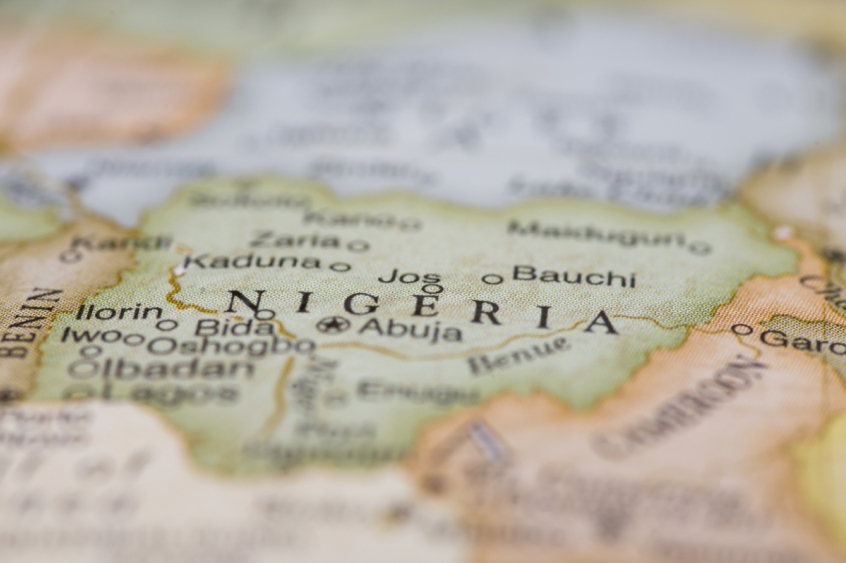
Benue, Plateau and Southern Kaduna are identified as facing “the most acute danger”, while Taraba, Nasarawa, Niger and Kwara are also highlighted as areas under “significant pressure”.
Over one week in September alone, TruthNigeria, ETP’s independent news outlet, recorded no less than 35 deaths and over 70 abductions across several states.
The report rates Benue, Plateau and Southern Kaduna as facing a “critical” level of risk, while Taraba, Nasarawa, Niger and Kwara are categorised as “high” risk.
Patterns identified include village attacks, arson, kidnappings, armed movement and prolonged displacement.
ETP argues: “Inaccurate characterization can produce flawed policy responses. When attacks are framed only as farmer-herder clashes, the actions of unknown gunmen, or generalized rural violence, mass persecution may be misinterpreted as merely a development problem or a policing failure. Likewise, when the religious identity of affected communities is omitted, the religious dimension of the violence may be underrepresented in public reporting and casualty records.”
Its Nigeria Terror Tracker data attributes 786 of 1,313 fatalities recorded between January 1 and September 7 this year to Fulani-linked actors, compared with 189 attributed to Boko Haram and ISWAP combined.
For the comparable period in 2025, the tracker attributed 4,932 deaths to Fulani-linked actors and 1,958 to Boko Haram and ISWAP combined.
ETP cautions that these figures come from a different dataset from its 4,216 Christian death toll. The Nigeria Terror Tracker is used for comparative analysis, while ETP’s casualty registry specifically documents Christian deaths, and the report says the two should not be combined.
The report also draws on findings from the Observatory for Religious Freedom in Africa (ORFA), which recorded 22,835 Christian civilian deaths between October 2019 and September 2025 and ascribed around 53% to Fulani militant groups. Around 8% were linked to Boko Haram and ISWAP combined.
Muslims, particularly non-Fulani Muslims, have also been among those killed, the report notes.
ETP argues: “This distinction is significant because it suggests that the violence cannot be explained solely as a Christian-Muslim conflict. Rather, the pattern is consistent with a broader ideological, territorial, and communal strategy directed against multiple populations perceived to be outside the militants' sphere of influence or control.”
Kidnapping is another major concern raised in the report.
ETP says captives face starvation, torture and forced labour, while women and girls are exposed to sexual violence.
When loved ones are kidnapped, families can be pushed into severe financial hardship after selling possessions to meet ransom demands.
The organisation believes kidnappings linked to Fulani militant activity in parts of the Middle Belt are underreported because of “fear of retaliation, limited access to authorities and mistrust of government institutions”.
ETP says TruthNigeria has published 163 alerts since June 2023, while its wider network has issued more than 200 operational warnings.
Another major focus of the report is the safe return of displaced communities, with warnings that prolonged displacement can become long-term dispossession when armed groups continue to occupy or access abandoned farms, roads, water sources and villages.
It says that “humanitarian assistance remains essential” but warns that aid unaccompanied by “safe and voluntary return” can lead to the “normalization of dispossession”.
The organisation is calling for affected territory to be secured, property rights restored, homes and infrastructure rebuilt and displaced families supported to return voluntarily and safely.
“Humanitarian relief remains essential, but relief alone is insufficient,” the report says. “Without secure return, property restoration, and effective protection, temporary displacement risks becoming permanent dispossession.”
Its recommendations include intelligence-led operations against militant networks, measures to disrupt financing and weapons supplies, investigations into officials or others suspected of assisting militants or failing to act on credible warnings, and stronger systems for recording casualties and religious identity where it can be verified.
ETP proposes a 12-month programme beginning with mapping threatened communities, placing named commanders in charge of responding to credible early warnings and opening prosecution and financing units, followed by arrests, asset freezes, trials and the gradual return and reconstruction of communities considered safe.
The organisation concluded: “Success should be measured not by announcements, condolence visits, or temporary security deployments, but by tangible improvements in the safety and well-being of affected communities.
“The ultimate test of success is whether affected communities can live, worship, farm, travel, and educate their children in safety and whether those responsible for violence face credible accountability under the rule of law.”
The findings add to mounting concerns about insecurity in Nigeria and the report points to concerns raised by the US Commission on International Religious Freedom (USCIRF), which in its 2026 annual report recommended Nigeria for designation as a Country of Particular Concern.
A later USCIRF update in May highlighted violence by non-state Fulani militant actors as a “significant religious-freedom concern”.
ETP is calling on the Nigerian government and international partners to adopt a more targeted response to violence in the Middle Belt.
An Open Doors report published earlier this year found that extremist-linked abductions rose by 153% in the final three months of 2025 compared with the same period a year earlier, from 1,352 to 3,415. It also recorded a 51% increase in killings over the same period.