
Brazil--the world's fifth largest country and the biggest country in South America, has become the leading world publisher of Bibles over the past decade. The great religious awakening is due to the rapid advance of evangelical churches and smart business planning by publishers.
All 136 country-chapters of the World Bible Society together published 21 million Bibles last year. And the Brazilian Bible Society's share was 4.2 million.
Brazil's other publishers printed an additional 1.5 million Bibles. Roy Lloyd, a spokesman for the society's U.S. chapter, says "more Bibles are produced in Brazil than at any of the other Bible societies around the world."
"We base our religion on the Bible, we want to get people back to Jesus directly, and the way to do that is for everyone to pack a Bible." Roberto dos Santos, an Assemblies of God pastor who preaches daily on a dusty square in front of Sao Paulo's Roman Catholic Cathedral.
The Society also prints out Roman Catholic Bibles although its root is in Protestantism. It is due to the strong charismatic movement among Roman Catholics which generates even more demand.
Moreover, the dramatic fall of cost of producing Bibles is another factor which has helped the success of the massive production of the Bible. The Bibles are printed in a huge printing plant in a Sao Paulo suburb, which employs just-in-time management techniques. The low production cost also enables the Society to produce a full-text Portuguese language Bible in Braille which is distributed for free.
Some of the sister Bible societies sent the templates to the Brazilian Bible Society after knowing the cost-effectiveness of the printing operation. The Society alone publishes versions in 14 languages and more than a third of Brazil's annual output of Bibles goes overseas.
Output also includes versions in languages other than Brazil's native Portuguese. Since its establishment in 1948, the Brazilian chapter has translated the Bible into 35 of the 180 known Indian tongues in Brazil, including language communities with as few as 450 members and as many as 35,000. Some languages rarely exist in written form, and it takes at least 20 years of day-to-day work with villagers for linguists to develop a written form of a language.
"The Bible translation is not only about religion; it's also about literature and culture." said Erni Seibert, marketing director of the Brazilian Bible Society.




-

More than one in four US Protestant churchgoers believe some biblical truths become outdated
-

Wycliffe celebrates ‘remarkable moment’ as Bible translation advances at rapid pace
-

Could the Church face a ‘silver uprising’?
-

Christian leaders issue ‘sober and urgent call’ for Western Church to prepare for disruption
-

Church in Wales pauses plans to allow gay marriage
-

800 years on: Why St Francis of Assisi still captivates the world
Most Popular
News
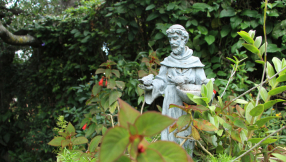
800 years on: Why St Francis of Assisi still captivates the world
4 October is St Francis’s Day, when Christians around the world remember the life and witness of Francis of Assisi. This year’s observance has particular significance, marking the 800th anniversary of his death. This is the story …

Majority back Ireland’s three-day abortion waiting period, poll finds
A new poll has found majority support for retaining Ireland’s mandatory three-day waiting period before an abortion, as lawmakers continue to consider legislation that would remove the requirement.

ONS figures show 'good' outlook for married couples
The Coalition for Marriage (CFM) has welcomed new figures suggesting that married couples are increasingly staying together.
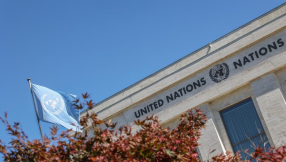
Christians condemn sexual violence following UN report on Russia-Ukraine conflict
Most cases of sexual violence documented were against male prisoners of war.








