The spread of Ebola is being made worse by endemic poverty and hunger in parts of Africa, Christian Aid has warned.
In Sierra Leone, families without access to enough food and water are being forced to leave their homes, which risks undermining measures put in place to halt the spread of the virus.
"Households, neighbourhoods and even entire districts have been isolated in Sierra Leone. To break the chain of transmission, you have to limit people's movements, but it is counter-productive to restrict their movement without addressing their basic needs," said Adrian Ouvry, Christian Aid's humanitarian programmes manager.
"Endemic poverty, increased food prices and limited support to affected communities are forcing people to leave quarantined homes to fend for their families – increasing the chances of transmitting the virus to others."
Ouvry added that "day-to-day survival" means parents have to risk either being exposed to the virus or seeing their children go hungry.
"Governments and aid agencies must recognise that quarantine will only be effective if those who are isolated are guaranteed a sufficient and constant supply of nutritious food and clean water. Otherwise, the issue of hunger and food security will undermine the success of quarantine measures," he said.
Emergency food assistance is now being provided by the World Food Programme, with rations allotted to vulnerable families, but Christian Aid says more is needed.
More than 4,500 people in West Africa have died from Ebola so far, and the number is growing every day. Theresa Bagrey, Christian Aid's senior programme officer for community health, told Christian Today that cases in Freetown, where she is based, are consistently rising.
"There were 28 new cases just yesterday," she said. "It's increasing every day in Freetown, because it's very difficult to stop the transmission."
Community farming efforts, a key source of income for many families, have stopped, and people are struggling to maintain a livelihood. Forced to go to busy markets to buy and sell what they can, they are unwittingly contributing to the spread of the virus which occurs through contact with the body fluids of an infected person.
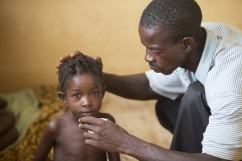
"Vulnerable people, women and children, are the ones who are suffering," Bagrey added. She said there is a real sense of fear as the spread of the virus shows no sign of slowing.
"People are very much afraid of it, because it is difficult for them to manage the situation. It's quite a challenge," she said.
There have been several factors contributing to the spread of Ebola, including traditional healers and witchdoctors who are encouraging locals to eschew Western medicine in favour of their own costly techniques.
Cases of people flocking to see these so-called healers has resulted in the disease spreading further, as the witchdoctors themselves often contract Ebola.
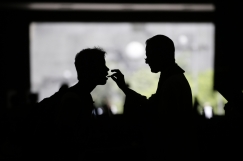
In Nigeria, churches have been advised against typical Communion practices which involve placing the wafer directly into the parishioner's mouth. However, a Guardian study found that many churches were still drinking from the same Communion cup and priests were breaking and dividing the bread with their bare hands.
The director of the London School of Hygiene and Tropical Medicine has also warned that other traditional practices, such as touching and kissing the corpse during funerals, is also contributing to the spread of the disease.
Peter Piot, who was among the first to identify Ebola in the 1970s when it broke out in the Democratic Republic of Congo, said that dead bodies are able to host the virus and transfer it to the living.