Russia's Supreme Court has formally banned Jehovah's Witnesses from the country, calling the religious community an extremist organisation.
The court ordered state seizure of the group's property and the closing of its headquarters, according to USA Today. Russian justice ministry attorney Svetlana Borisova said Jehovah's Witnesses 'pose a threat to the rights of the citizens, public order and public security'.
The move is deeply significant, leaving the religious community – and other groups – fearing for their security and freedom.
But the group, though many have heard their name - remain obscure and mysterious to many, including Christians.
Here are five things you should know about Jehova's Witnesses.
1. It started with a Bible study
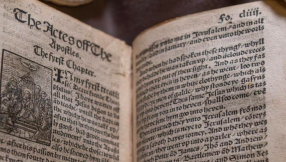
The group was founded by a man names Charles Taze Russell, who started a Bible study group in Pittsburgh, Pennsylvania in 1870. Russell soon began disputing traditional Christian teachings, however. His teaching emphasised the present reality as the 'last days', with the return of Christ as imminent. His group became known as the 'Watch Tower Society', the name often associated with it today. They use their alternative translation of the Protestant Bible, known as the New World Translation.
2. Are they Christians?
Jehovah's Witnesses reject the Christian teaching about the Trinity, so insofar as they deny an essential of the orthodox creeds, they aren't Christians. They teach that Jesus was created by God, not pre-existent with God as Christians believe. The Holy Spirit, rather than being a person of the Godhead, is more like God's 'applied force'. The focus is on God himself, named as 'Jehovah', a representation of the Tetragrammaton, God's Hebrew name given in the Old Testament (usually translated as Yahweh).
3. They don't celebrate Christmas, Easter or birthdays
Jehovah's Witnesses emphasise a separateness from society. For example, they don't celebrate Christmas, Easter, birthdays, national holidays or any occasion that appears to honour someone other than Jesus. So that Jehovah's Witness children do not feel deprived from the lack of birthday celebration, some opt for spontaneous giving of gifts.
4. They don't serve in politics or the military
Another example of their distance from mainstream society is that they attempt to be politically neutral, do not seek public office and are discouraged from voting. Instead, they emphasise citizenship of Christ's heavenly kingdom.
They also reject patriotism, including national service and pledges of allegiance, and they do not serve in the military. They emphasise a brotherhood that transcends national boundaries.
They also famously, and controversially reject the medical practice of blood transfusions, even in life-or-death situations. In the case of the Russian ban of the group, the country said the Jehovah's Witnesses' stance on blood transfusion was in violation of Russian health care laws.
5. They're active and evangelical
The group and its Watchtower publication can be found all across the world, and its advocates can often be found on street corners, inviting passers-by to learn more about their faith. In 2016, the group reported a global average of 8.13 million 'publishers' – the name given to the group's active preachers. It claims to be growing by 1.8 per cent every year.