
The 49th session of the United Nation's Commission on the Status of Women (UNCSW) opened yesterday in the New York Headquarters. A number of the hot issues concerning women are planned to be addressed when a review takes place over the implementation of the Beijing Platform for Action. Among all of them, the international dispute over women’s rights for abortions has been raised as the very first order of business by the US, and this is expected to dominate the headlines over the next few days.
The Beijing Platform for Action was proposed at the 1995 UN women's conference in Beijing, it lists twelve specific areas, such as poverty, education, health, violence and the environment, that need to be improved if the status of women is going to rise.
"The review provides an opportunity to confront the major obstacles that are preventing women from advancing in the economic, political, and social spheres," said Rachel Majanja, the top advisor to Secretary-General Kofi Annan on the advancement of women. "It is time to recommit to the promises made to women 10 years ago in Beijing and make gender equality a reality."
While ten years ago, the platform once backed abortion, claiming it to be a path to achieve women’s rights, the US has now signalled its efforts to push the UN to reverse it and will now lobby the UN to make a final declaration stating that women are not guaranteed the right to an abortion.
On Friday, the US proposed an amendment to the draft declaration that would reaffirm the Beijing platform and declaration. It clarified that the US would accept the platform only "while reaffirming that they do not create any new international human rights, and that they do not include the right to abortion".
"There is no fundamental right to abortion," said Ellen Sauerbrey, the US delegate to the UNCSW said yesterday.
"And yet it keeps coming up largely driven by NGOs (nongovernmental groups) trying to hijack the term and trying to make it into a definition," she said without specifying any of the activist groups.
In his opening speech, even the UN Secretary-General Kofi Annan criticised the abuse of using the term "sexual rights" which the US delegates said was undefined.
At least 100 government delegations, 80 ministers from Afghanistan to Peru, and some 6,000 advocates of women's rights gathered under the theme "Women 2000: gender equality, development and peace for the twenty-first century", were called to review the controversy over women’s rights and abortion.
Kyung-wha Kang, who chairs the commission, denied the platform will create any new human rights. "It's not a human rights convention," Kang said. "It's a policy document. In that sense, I personally as chair do not think it should be seen as creating any new human rights."
In fact, since the 1994 UN population conference in Cairo, nations have recognised abortion is an issue that governments must deal with in the wake of debates about public health issues in society.
At Beijing the following year, delegates reaffirmed this and asked governments to review laws that punish women for having abortions. However, the proposal was declined and the Beijing platform stated for the first time that women have the right to "decide freely and responsibly on matters related to their sexuality ... free of coercion, discrimination and violence."
While in Europe and Latin America hundreds of women's rights activists have supported the reference to abortion at these conferences so far, the Vatican and a handful of Islamic and Catholic countries strongly opposed it. US President Bush has also taken a tough stand against abortion, as reflected in the proposed amendment.
The UNCSW is scheduled to last for two weeks from 28th February 28 to 11th March.




-

European hate speech laws are ‘dangerous’, says politician prosecuted for Christian beliefs
-

Ex-BBC reporter tells of 'cabal' of journalists who influenced trans coverage
-

The Church of England should repent for previous calls to ban 'conversion therapy'
-

Belfast City Council votes again to celebrate abortion after failed attempt
-

NI conversion therapy ban 'dead in the water' after consultation
-

Why John Stott’s ‘Christian Counter-Culture’ still challenges the church
Most Popular
News

Faith in difficult times: lessons from 1930s Britain
Architectural historian Steven Brindle talks to Christian Today about the faith that shaped 1930s Britain, the churches that supported struggling communities and what lessons the decade might have for us today.

Campaign aims to mobilise 500,000 Christians for Christmas outreach
Shine Your Light is aiming to mobilise half a million Christians to share the gospel with five million people across the UK this Christmas, with more than 2,000 churches already signed up, organisers say.
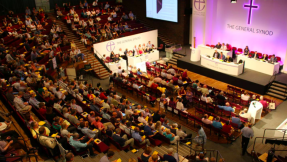
The Church of England should repent for previous calls to ban 'conversion therapy'
The Church of England's uneasiness about the government's ‘conversion practices’ bill is a perfect lesson in the old adage, 'be careful what you wish for,' writes Dr Martin Davie.
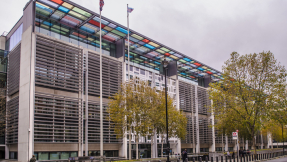
Leaked Home Office report links 'Christian extremism' to traditionalist beliefs and immigration concerns
An internal Home Office report lists concerns about immigration, multiculturalism and changing social values among the characteristics associated with what it calls "Christian extremism", it has been reported.





