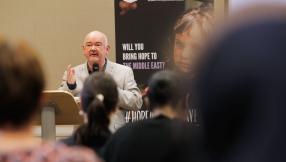
A Bill has been introduced to Parliament aimed at strengthening legal protections around free speech on university campuses.
Under the Higher Education (Freedom of Speech) Bill, universities face sanctions if they don't protect freedom of speech on campus and in students' union.
The proposed measures will also force universities to take action to prevent the "silencing" of students, academics and visiting speakers with particular views.
Michelle Donelan, Universities Minister, said: "This bill will ensure universities not only protect free speech but promote it too. After all, how can we expect society to progress or for opinions to modernise unless we can challenge the status quo?"
Education Secretary Gavin Williamson said freedom of expression and being able to take part in "rigorous debate" were basic human rights.
"Our legal system allows us to articulate views which others may disagree with as long as they don't meet the threshold of hate speech or inciting violence - this must be defended, nowhere more so than within our world-renowned universities," he said.
"Holding universities to account on the importance of freedom of speech in higher education is a milestone moment in fulfilling our manifesto commitment, protecting the rights of students and academics, and countering the chilling effect of censorship on campus once and for all."
Michael Robinson, of the Society for the Protection of Unborn Children (SPUC), said the Bill was a "victory for common sense and free speech".
"For years university students who identify as pro-life have struggled to have their voices heard. SPUC hopes that this bill will ensure that pro-life students can speak freely about pro-life issues," he said.
Pro-life groups at Aberdeen University and Glasgow University were only able to affiliate with their students' unions after threatening legal action.
At Queen's University Belfast, students were investigated by their students' union after sharing pro-life content on social media.
Robinson said: "Freedom of speech is one of the rights we cherish in this country and it is chilling when certain voices are silenced because they are unpalatable to others. Pro-life university students have been routinely subject to censorship and unfair treatment.
A recent survey by the Alliance of Pro-Life Students found that nearly three-quarters of students (70%) had felt "unable to speak" in lectures or seminars because of their views.
One in three said events had been cancelled because of the "de-platforming" of pro-life speakers.
Robinson added, "The right to speak up for the most defenceless members of the human race, unborn babies and mothers is one that many pro-life students are passionate about. SPUC is relieved that the Government is finally taking pro-active steps to uphold free speech on campus."