
Commencing from Thursday 21st October, the UN General Assembly’s legal committee will begin a two-day debate on the treaty banning human cloning. The debate will focus on two resolutions: Costa Rica’s draft calls for a treaty that would ban all cloning while Belgium’s draft calls for a treaty that would ban the cloning of babies but allow countries to decide on whether to outlaw cloning of a human embryo (known as therapeutic cloning) for stem cell research, which will lead to new treatment for diseases.
Currently, Britain, Japan and South Korea are in support of the Belgian draft but the United States, Portugal and Uganda will take the more conservative ban on all kinds of cloning suggested by Costa Rica.
The argument of the conservative pro-lifers suggested that human life starts at the formation of embryo; therefore it should be treated with utmost respect. In the process of therapeutic cloning, embryo will be destroyed after the extraction of useful stem cells, which is considered as a breach to human dignity.
Costa Rica’s U.N. Ambassador Bruno Stagno Ugarte stated, “human cloning, for any purpose whatsoever, is unethical, morally reproachable and contrary to due respect for the human person and that it cannot be justified or accepted.”
The Roman Catholic Church and anti-abortion groups, which support the Costa Rican draft, say embryonic stem cell research is tantamount to murder.
In addition, Costa Rica and the Vatican pointed out that therapeutic cloning for stem cell research can actually be avoided because adult stem cells from umbilical cords and placentas can be used to search for cures for many diseases as well.
On the other hand, the Belgian draft supporters argue that stem cell research would offer a promising prospect for medical science.
“Adult stem cells are worth exploring, but embryonic seems much more promising...so both should be explored, but one is not a replacement for the other,” Belgian diplomat Marc Pecsteen de Buytswerve said.
No conclusion has been drawn from the debate yet, but it is expected to be very uneasy as it involves a great ethical dilemma at the root of the debate. Therefore, Belgian diplomat Marc Pecsteen de Buytswerve said his supporters “still hope to engage the other side in a dialogue to find some way out to a consensus” while Costa Rica’s UN Ambassador Bruno Stagno Ugarte said “nobody has closed the doors to a compromise.”
At a pre-conference meeting held on Monday, South Korea proposed that the United States accept another year’s delay in the drafting of a treaty banning human cloning so that it will allow time for a UN conference to consider carefully the pros and cons of embryonic stem cell research. Among the 8 countries attending the meeting, 6 of them reacted favourably to this suggestion, they include both the pro- therapeutic cloning countries as well as those in opposition.
Actually the treating banning all kinds of human cloning was first suggested by the UN as early as in 2001. Many countries have been very cautious in passing this divisive law, so it has already been delayed a few times until now.
In the midst of all the debate, Britain has already taken the first step to cloning human embryos. Dr Miodrag Stojkovic from the University of Newcastle Centre for Life said on Monday, he has done the first manipulation with human eggs. The University of Newcastle Centre for Life was granted the first license in Europe for therapeutic cloning in August. South Korea is even more advanced, the scientists announced in February that they had cloned an embryo and extracted the stem cells from it.
While the UN’s anti-cloning treaty is still undetermined, Costa Rica’s U.N. Ambassador Bruno Stagno Ugarte considers the current situation as “extremely worrisome”.



-

Wes Huff confesses to plagiarism, asks for prayer: 'It was sinful'
-

Wes Huff addresses plagiarism allegations
-

Jonathan Aitken says Russell Brand asked him for prayer after rape conviction
-

Attacks on Christians in Europe rise by 44%, report finds
-

Adult baptisms rise by a third as Church of England sees fifth consecutive year of growth
-
Where is this ‘space for faith’ that the King speaks of?
Most Popular
News
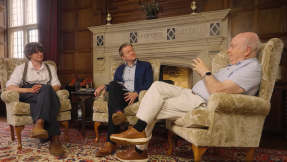
John Lennox says there is enough evidence to take Christianity seriously
Speaking with agnostic YouTuber Joe Folley, Oxford mathematician John Lennox argued that the historical evidence for Jesus’ resurrection is enough of a reason for sceptics to explore whether his promises hold true in their own lives.

Calls for inquiry as recorded assisted suicide deaths in Hawaii rise 293% since 2019
Pro-life organisation Right To Life UK has called for an independent inquiry into Hawaii’s assisted suicide system after official figures showed a record number of deaths and the state’s Department of Health acknowledged gaps in its reporting.

Can Labour tackle the youth jobs crisis without addressing its roots?
The barriers that keep young people out of work can take shape long before they leave school. Tackling them starts with supporting families and giving every child the chance to develop their gifts.

Christian group calls for prayer for forced marriage victims in Pakistan
Every year it is estimated that around 1,000 girls in Pakistan are kidnapped, forcibly converted to Islam and married, often to a much older man.





