
Charismatic preacher Joyce Meyer has spoken out against Uganda’s highly contentious Anti-Homosexuality Bill.
In a statement released Monday, Meyer said it is “increasingly evident” that the Bill introduced in the Ugandan parliament is a “profoundly offensive, dangerous and disturbing attack on the very foundation of individual liberties and human rights afforded not only to the good citizens of Uganda, but on the at-large global community”.
“If enacted, this hostile legislation will also further, and adversely, serve as a major setback in the global health efforts to combat Uganda's Aids epidemic and reduce the record-high infection rates among the country's HIV population, an already at-risk community that could be further ostracised, threatened, and targeted as potential criminals,” she added, echoing comments from groups like World Vision.
Proposed last October, Uganda’s Anti-Homosexuality Bill seeks to strengthen the criminalisation of homosexuality in Uganda by introducing the death penalty for people who are considered serial offenders, are suspected of "aggravated homosexuality" and are HIV-positive, or who engage in sexual acts with those under 18 years of age.
Though Member of Parliament David Bahati, who proposed the Bill, said the legislation is necessary to protect Uganda’s children from being “recruited” into homosexuality, the Bill has provoked criticism and protests internationally, including in the United States, where both liberal and conservative church leaders have expressed their opposition.
Among those who have spoken out against the legislation are Evangelical Lutheran Church of America (ELCA) Presiding Bishop Mark S Hanson, popular megachurch pastor Rick Warren, and leaders of Exodus International – which claims to be the world's largest Christian referral and information network dealing with homosexual issues.
In her statement Monday, Meyer stressed that her motivation and intent is not to interfere with Uganda's political agenda or internal affairs but that, as a believer, she has a moral and ethical duty that compels her to speak out against injustice wherever it may be in the world.
“As a global society, we do not have to agree, endorse or condone the lifestyle choices of others. However, history has taught us that we equally cannot and should not excuse those who would hide behind religion or misuse God's word to justify bigotry and persecution,” she insisted.
Despite criticisms, bill sponsor Bahati and those supporting the legislation insist that it is based on the foundations of "strengthening the nation’s capacity to deal with emerging internal and external threats to the traditional heterosexual family" and "protect[ing] the cherished culture of the people of Uganda, legal, religious, and traditional family values of the people of Uganda against the attempts of sexual rights activists seeking to impose their values of sexual promiscuity on the people of Uganda".
Notably, however, some supporters – including Uganda's Catholic leadership – say they do not back the death penalty provision and instead recommend that the death penalty sentence be replaced with 20 years imprisonment.
Some, including the Anglican Church of Uganda, have also expressed support for amendments to the legislation that call for exemption from punishment for health care professionals, pastors and counsellors who may minister to homosexuals or care for HIV patients.
On Friday, a Ugandan parliamentary panel reported that a timetable has not yet been set for debate on the Bill.
Furthermore, Stephen Tashyoba, chairman of the Legal and Parliamentary Affairs Committee tasked with reviewing the bill before it can be presented to the House, said the legislation is not a priority.
"As far as I am concerned, we really have more urgent matters to discuss like electoral reforms, which are already behind schedule," he told Agence France-Presse.
Presently, homosexuality is already illegal in Uganda - as it is in many sub-Saharan African countries - punishable by incarceration in prison for up to 14 years.
In sub-Saharan Africa, the government of South Africa is the only official entity to acknowledge gay rights.




-

Wycliffe celebrates ‘remarkable moment’ as Bible translation advances at rapid pace
-

Could the Church face a ‘silver uprising’?
-

Christian leaders issue ‘sober and urgent call’ for Western Church to prepare for disruption
-

Church in Wales pauses plans to allow gay marriage
-

800 years on: Why St Francis of Assisi still captivates the world
-

500 million Christians worldwide face Bible access restrictions, report finds
Most Popular
News
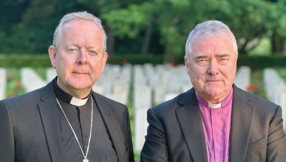
Irish archbishops urge peace and reconciliation amid Drumcree stand-off
Ireland’s Catholic and Church of Ireland archbishops have appealed for an “urgent” initiative to resolve the Drumcree parade dispute and asked Christians to pray for peace.

Former priest Chris Brain convicted of rape as Church review set to begin
Former Church of England priest Chris Brain has been convicted of rape and four counts of indecent assault following a retrial.
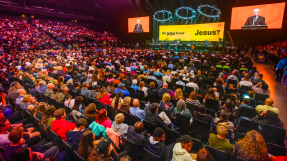
Franklin Graham preaches with warning from Sodom in Manchester
Franklin Graham used the biblical story of Lot’s flight from Sodom to urge thousands in Manchester on Saturday night to seek forgiveness through Christ and accept His gift of salvation.
More than 4,200 Christians killed in Nigeria this year - report
More than 4,200 Christians have been killed in Nigeria so far this year, according to a new report calling for stronger action to protect communities facing violence across the country’s Middle Belt.








