
Lambeth Palace, on the south bank of the Thames, stands almost opposite the Houses of Parliament. It was built by Archbishop Stephen Langton who having sided with the barons against King John, forcing him to sign the Magna Carta, decided he needed to have London headquarters to keep the finger on the pulse of national politics.
Langton’s role in the creation of Magna Carta is just one of many examples where Archbishops of Canterbury have rightly intervened in politics and the nation was the better off for it.
In recent memory we have an instance of Robert Runcie’s determination to pray for Argentine as well as British dead after the Falklands War.
Winston Churchill declined to appoint George Bell, arguably the best qualified prelate of his generation to Canterbury because he criticised the bombing of Dresden towards the end of World War II.
In earlier eras archbishops and bishops paid with their lives for political opposition, among them William Laud and of course, most famous of all, Thomas Beckett. Some like William Sancroft (1678-90) were deposed for making a stand over a principle.
It’s a long time since it fitted reality to call the Church of England the Tory Party at prayer. Having rejected Bell, Winston Churchill chose William Temple whose politics were hardly comfortable for Conservative politicians and for most of the last five decades Archbishops of Canterbury have raised questions about the policies of the government of the day.
In the process, an understanding was hammered out that the church is not there to blindly endorse the political consensus. During the 1970s and 80s this was not necessarily taken for granted. When Runcie took his stand over Argentine dead there were Tory politicians who argued that the church should be confining itself to matters spiritual. The same happened over the Faith in the City report which Runcie championed.
There is, and always has been, a straightforward Christian answer that rebuts this view. The Christian faith insists that this is God’s world. There is no distinction between sacred and secular. Every sphere of life must live under the scrutiny of God’s judgment. Thus every Christian, and certainly every Christian leader, has a duty to express a view about the moral dimensions of political debate and the way the future is being shaped.
So when Archbishop Rowan Williams questioned whether the coalition government had a mandate for its economic and social policies, no politician was naïve enough to deny his right to say this. The truth is that in recent years few governments have stuck to the letter of manifesto commitments. Of greater concern is that government policies over spending, education and the NHS appear to be going forward hastily and without adequate consideration.
David Cameron may “profoundly disagree” with Archbishop Williams on many points but he will never for one moment suggest the Archbishop should stay silent. What is more, there will be many who will be glad that Dr Williams gave voice to their views and concerns.
John Martin is General Secretary of Fulcrum, the evangelical Anglican network




-

Wes Huff confesses to plagiarism, asks for prayer: 'It was sinful'
-

Wes Huff addresses plagiarism allegations
-

Jonathan Aitken says Russell Brand asked him for prayer after rape conviction
-

Attacks on Christians in Europe rise by 44%, report finds
-

Adult baptisms rise by a third as Church of England sees fifth consecutive year of growth
-

Where is this ‘space for faith’ that the King speaks of?
Most Popular
News
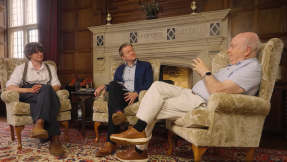
John Lennox says there is enough evidence to take Christianity seriously
Speaking with agnostic YouTuber Joe Folley, Oxford mathematician John Lennox argued that the historical evidence for Jesus’ resurrection is enough of a reason for sceptics to explore whether his promises hold true in their own lives.

Calls for inquiry as recorded assisted suicide deaths in Hawaii rise 293% since 2019
Pro-life organisation Right To Life UK has called for an independent inquiry into Hawaii’s assisted suicide system after official figures showed a record number of deaths and the state’s Department of Health acknowledged gaps in its reporting.

Can Labour tackle the youth jobs crisis without addressing its roots?
The barriers that keep young people out of work can take shape long before they leave school. Tackling them starts with supporting families and giving every child the chance to develop their gifts.
Christian group calls for prayer for forced marriage victims in Pakistan
Every year it is estimated that around 1,000 girls in Pakistan are kidnapped, forcibly converted to Islam and married, often to a much older man.





