Historical EU-Turkey Membership Deal Opens Way to Diversity
An historical step was made by the European Union (EU) on Friday 17th December when it was finally agreed that the EU would hold entry talks with Turkey. It paves a way for the predominantly-Muslim nation to the bloc, demonstrating the spirit of diversity and unity between different civilisations.
Most of the world leaders welcomed the current development. British Prime Minister Tony Blair said the deal showed there was no fundamental clash of civilisations between Christians and Muslims.
"On the contrary, if [Turkey] fulfils the same principles of human rights, then Muslims and Christians can work together. You know that is a very, very important signal right across the world." Blair added.
The US, which has long been a supporting country to embrace Turkey into the EU, welcomed the breakthrough. US Secretary of State Colin Powell said, "A Turkey that is firmly anchored in Europe and sharing European values will be a positive force for prosperity and democracy."
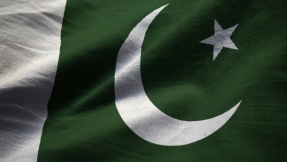
The talk is scheduled on 3rd October 2005. If the talks succeed, Turkey would become the largest EU member, with a population of 71 million. The success comes more than 40 years after Ankara signed an association deal as a first step to membership in 1963.
"If I think back on today, I believe we can say that we have been writing history today, and the agreement we reached today will acquire full significance in the years ahead," said Dutch Prime Minister Jan Peter Balkenende, whose country holds the EU presidency.
The geographical and cultural background of Turkey is very unique compared to the other 25 EU members. Turkey is located in the South of Europe and connected to Middle Eastern countries such as Syria and Iraq. Moreover, unlike other European countries which were mostly influenced by Christianity, Turkey is known as the "citadel of Islam" with the establishment of the Ottoman Empire. Sources say it seems like a logical place to look for the great divide between the Christian and Islamic worlds.
Supporters of Turkey's entry maintain that the country could be a bridge between Europe and the Middle East. As part of the Bush administration to stand against Islamic extremism and terrorism, the US believe that the entry of Turkey will be beneficial for the spread of democracy in what is called the Greater Middle East.
"It is led by a moderate, Muslim government which is largely pro-West. The United States believes that Turkey is a model for its Middle East project," commented Omer Taspinar, Director of the Turkey Program at the Brookings Institution in Washington.
Despite the development being widely welcomed, serious doubts still remain in some countries, notably France, Germany, Austria and the Netherlands. French President Jacques Chirac, who has previously questioned the restricted religious freedom and human rights in Turkey, stressed that Turkey's membership of the EU was still not guaranteed, and promised the issue would eventually be put to a referendum in France. Austrian Chancellor Wolfgang Schuessel expressed a similar opinion also.
The Council of Churches in the Netherlands also released a statement this month, saying Turkey must recognise religious minorities within its borders before entering the European Union (EU).
Opponents have suggested some other practical challenges. Turkish membership would add millions of citizens to the EU at a time when many Europeans are questioning whether their countries, which have Christian heritage, can absorb large numbers of Muslim immigrants. There is also fear that an influx of culturally different migrants would compete for jobs.
Jose Manuel Barroso, head of the European Commission, accurately summed up the conclusion in a short comment, "Today is also a new beginning for Europe and for Turkey... This is not the end of the process. This is the beginning."