
Despite previous denials of religious persecution targeted against evangelical and Protestant Christians by the Eritrean government, Eritrea has dramatically announced the official recognition of a Protestant Christian denomination - the Seventh Day Adventist Church - on 5th April at the United Nations Commission on Human Rights (UNCHR) in Geneva, according to the UK-based human right group Christian Solidarity Worldwide (CSW).
The news comes from Release-Eritrea, a UK-based global partnership of Eritreans standing in solidarity with the persecuted Eritrean church. It is reported that the Head of the Eritrean government delegation at the UNCHR, Dr Amare Tekel stated that the registration process had been completed and that the church would be operational once bureaucratic processes have been finalised.
Currently, only the Orthodox Church, Roman Catholic Church, Lutheran Church and Muslim religion are officially recognised by the Eritrean government. Any other worships and gatherings organised in the name of other religious groups are regarded illegal.
Early in May 2002, Eritrea even ordered all independent Protestant churches not belonging to the Orthodox, Roman Catholic and Evangelical Lutheran denominations to close down, including the Seventh Day Adventist Church. The Church’s activities had been suspended since then and it has been waiting for three years for registration.
It will become the fourth Christian denomination to receive official sanctions in Eritrea. Therefore, the move at the UNCHR is in fact a great breakthrough in human rights developments in Eritrea in the midst of alleged increasing persecutions against evangelical or Protestant Christians.
The grant of official recognition followed strong lobbying by the United Nations Liaison Director of the Seventh Day Adventist Church, Dr Jonathan Gallagher.
According to CSW, although the government has said that churches can apply for official recognition, the requirements for registration are both stringent and intrusive, and the majority of churches that have been able to meet them are still awaiting accreditation.
The human rights situation in Eritrea has raised international concern over the past 6 months as even the officially recognised Christian sects were reportedly experiencing persecution. In November 2004, three Orthodox priests from the Medhanie Alem church in Asmara were arrested without charge. On 18th March, an active member of the Lutheran church was detained at the Wengel Mermera investigation centre.
Meanwhile, the Eritrean government has denied all these Christian persecutions. On 5th April, the Director of the Eritrean President’s office, Yemane Gebremeskel said to Agence France Presse, "These accusations are groundless. They are part of a routine allegation due to a lack of knowledge or done in the interest of smearing this country. So-called human rights groups pick up anything on the internet and give arbitrary figures."
He continued, "One cannot question the credentials of this country on religious rights and religious tolerance."
He went on to assert that those arrested "are maybe held for five hours and then let off with a warning".
Stuart Windsor, CSW’s National Director, said, "We are encouraged that the Adventist church has now gained official recognition from the Eritrean government, but this freedom to operate is not extended to several other Eritrean Christian groups. The government’s refusal to admit it has a problem with religious freedom when hundreds of Christians are in prison simply for practising their faith shows there is still a long way to go."
The Seventh Adventist Church was founded by William Miller, a well-known Baptist preacher, in 1844 at Washington, New Hampshire, United States. The name Seventh-day Adventist is based upon two core beliefs of the church. Seventh-day describes the observance of the biblical Sabbath, the seventh day of the week Saturday as God's ordained day of worship. Advent, or coming, describes a belief in the nearness of Jesus Christ's return to this earth. It has close to 13 million baptised members and reportedly about half a million new members joining each year.



-

Wes Huff confesses to plagiarism, asks for prayer: 'It was sinful'
-

Wes Huff addresses plagiarism allegations
-

Jonathan Aitken says Russell Brand asked him for prayer after rape conviction
-

Attacks on Christians in Europe rise by 44%, report finds
-

Adult baptisms rise by a third as Church of England sees fifth consecutive year of growth
-
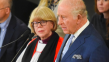
Where is this ‘space for faith’ that the King speaks of?
Most Popular
News
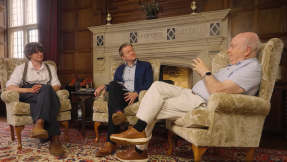
John Lennox says there is enough evidence to take Christianity seriously
Speaking with agnostic YouTuber Joe Folley, Oxford mathematician John Lennox argued that the historical evidence for Jesus’ resurrection is enough of a reason for sceptics to explore whether his promises hold true in their own lives.

Calls for inquiry as recorded assisted suicide deaths in Hawaii rise 293% since 2019
Pro-life organisation Right To Life UK has called for an independent inquiry into Hawaii’s assisted suicide system after official figures showed a record number of deaths and the state’s Department of Health acknowledged gaps in its reporting.

Can Labour tackle the youth jobs crisis without addressing its roots?
The barriers that keep young people out of work can take shape long before they leave school. Tackling them starts with supporting families and giving every child the chance to develop their gifts.
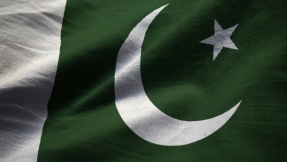
Christian group calls for prayer for forced marriage victims in Pakistan
Every year it is estimated that around 1,000 girls in Pakistan are kidnapped, forcibly converted to Islam and married, often to a much older man.





