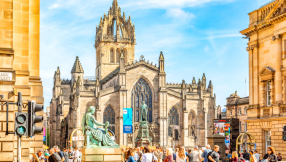
The Church of Scotland and the Humanist Society Scotland have made a joint appeal for a change to the way that spiritual development is approached in schools.
They want Religious Observance, currently a statutory requirement for schools in Scotland, to instead be labelled 'Time for Reflection' in order to increase inclusivity and reflect the diversity of school children and their faiths.
The 2011 census revealed that around 32 per cent of the Scottish population affiliate with the Church of Scotland, 16 per cent are Catholic, 1.4 per cent are Muslim and 37 per cent say they have no religious affiliation at all.
The percentage of Scots who associate with Christianity has decreased by 11 per cent in the last decade.
A joint statement released by the two groups asserts that their proposed change in legislation will mean that "one faith belief system [is not] promoted over another".
Douglas McLellan, Chief Executive of the Humanist Society Scotland, has welcomed the surprising collaboration, with the belief that the proposal will remove "the religious exclusivity of the current system and bring about fairness and equality for all".
"If this change is made, it will bring current practices in-line with the modern demographic in Scotland," he asserts.
Convener of the Church and Society Council of the Church of Scotland Rev Sally Foster-Fulton concurs. She argues that the proposed changes will support "the community and spiritual development of all pupils whatever their faith or belief", and will "enhance young people's ability to celebrate difference rooted in respect".
The bid has not been received well by all members of the Christian community, however. The Reverend David Robertson, a Free Church minister and director of the Solas Centre for Public Christianity, has criticised the proposed legislation, branding it as "stab-in-the-back" Christianity, and a sign of the Church "capitulating to the secularist agenda".
"Without Christian worship, Christianity does not exist. When the Church says it does not want worship or prayers but instead advocates what will inevitably be a state-sponsored non-Christian moralism, it has reached the stage where it is no longer fit for purpose and should no longer seek to style itself as Scotland's national Christian church," he said.
"It would be far better to have meaningful Christian worship which pupils and teachers would opt in to, rather than force everyone to go to the beige, bland, brain-dead, unquestioning banalities that would...result."
Christian think tank Ekklesia has called the proposed changes "excellent news" and a positive step in building relationship between different groups in Scotland.
"It is vital for a healthy society that people of different religious and non-religious outlooks can learn to share public space fairly, collaborate on common values, uphold the rights and dignity of all, and negotiate disagreements with informed respect," said co-director Simon Barrow.
"A 'Time of Reflection' in schools ought to be a space where these virtues can be put into practice by breaking down barriers, challenging prejudices and providing opportunities for the appreciation of different viewpoints and experiences."
The Church of Scotland and the Humanist Society Scotland will make their joint submission to the Petition Committee of the Scottish Government on Tuesday.