
The British Qualifications and Curriculum Authority today published the first national framework for teaching religious education in English schools. The current Religious Education (RE) curriculum is based on introducing the Christian faith, however the new guidelines will be more open to teaching knowledge other than Christianity.
The Education Secretary, Charles Clarke, is launching the framework. It recommends that secular philosophies and world views independent of any religion should be taught alongside Christianity. In addition, it suggests studying the tenets of the other five main religions - Buddhism, Hinduism, Islam, Judaism and Sikhism - across the school years up to the age of 14.
As Britain is seen by many as the historical home to Christianity in the Western world, its education has been influenced by Christian teachings to a certain extent.
In the past, a majoirty of people were brought up as Christian since childhood through the influence of the family, church and school.
Nowadays, in face of the end of Christendom and the spreading secularisation, many people have actually grown up without any Christian context in their lives.
The Church of England has therefore been disappointed with the report which may further threaten the religious life of the younger generation. However, the Education Secretary, Charles Clarke, emphasised that Christianity is still the main religion featured.
The Church of England is pleased that the framework advocated the teaching of RE for everyone, right up to the age of 19. Last week, an Education Report - Tomlinson report - on 14 to 19 learning in England revealed that students are “weak on RE”.
Canon John Hall of the Church of England’s National Society for Promoting Religious Education hopes that a large majority of schools would adopt it, he said, “We hope it will have a statutory effect.”
Incorporating the teaching of faiths other than Christianity in the RE curriculum has arisen because of the rising conflicts between different faiths and the impact of violence associated with them.
Clarke said, “Religious education can transform pupils’ assessment of themselves and others, and their understanding of the wider world. I see it as vital in widening inclusion, understanding diversity and promoting tolerance.”
Other non-mainstream religious traditions such as the Baha’i faith, Jainism and Zoroastrianism, should also be offered for study where appropriate, the draft even said.
Keith Porteous Wood of the National Secular Society mentioned the fact that the current religious education system in school does not respect the right of non-believers. He cited some complaints from non-believing parents that their children are being made to sweep school playgrounds and being isolated from their peers after absence from religious education classes on request.
Therefore, one point on the report said pupils should be “encouraged to reflect on the important contribution religion can make to community cohesion and the combating of religious prejudice and discrimination”.
“We want to encourage community cohesion,” Wood said, “but the evidence all around us of sectarian warfare and hatred tells us that the QCA approach flies in the face of reality.”




-

Edinburgh University ends divinity programmes as theology faces a changing future
-

Why the Archbishop of Canterbury’s award controversy matters
-

More than one in four US Protestant churchgoers believe some biblical truths become outdated
-

Catholicism in France has 'collapsed'
-

Christian leaders issue ‘sober and urgent call’ for Western Church to prepare for disruption
-

Australia's anti-therapy laws harm the most vulnerable - Britain should not copy them
Most Popular
News

Active faith linked to happier marriages and lower divorce rates, study finds
People who regularly attend church are more likely to report happy marriages, according to a new report examining the relationship between faith and family life.
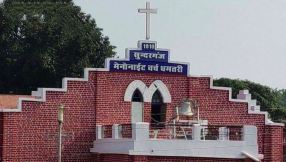
Indian churches fearing anti-conversion laws tell non-Christians: enter at your own risk
Churches in Dhamtari, a town in the central Indian state of Chhattisgarh, have put up notices warning non-Christians that they enter at their own risk, weeks after a law against religious conversion came into force in the state.

£1k bursaries to help churches develop youth and community mentoring programmes
Churches across the UK are being offered bursaries to help them establish mentoring programmes aimed at supporting young people and others in their communities.
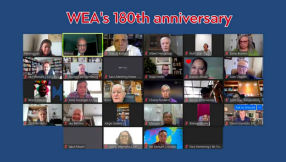
World Evangelical Alliance celebrates 180th anniversary
The World Evangelical Alliance (WEA) has held an online celebration to mark its 180th anniversary. Hundreds of people from more than 22 countries attended, and the event was rebroadcast to accommodate different time zones.








