
Archbishops, bishops and members of the Church of England have been battling without any rest since the Windsor Report was published by the Lambeth Commission in London in mid-October. Yesterday as the proposal on women bishop consecration was released, another potential deep rift between the conservatives and liberals in the Church seems to be forming.
In the midst of the current stormy mood within the Church, Dr. David Hope, the Archbishop of York, yesterday spoke to the Guardian newspaper about his despair at the splitting Anglican Communion, he honestly admitted that he is frustrated over the warring church.
Dr Hope, who is in the second most senior position in the Church of England, under only the Archbishop of Canterbury Rowan Williams, regretted that the “cacophony of factions” is distracting the Church from its historic mission.
“There is a cacophony of factions drowning out the Good News of Jesus Christ. We have got world problems of poverty, hunger, Aids, the war in Iraq, the environment - large questions - and here we are, almost preoccupied with the gay issue. We need to look beyond ourselves.”
In Dr Hope’s opinion, the divisive church has hindered the growth of faith among the congregation of the Church. He pointed out that the radical attack on the Archbishop of Canterbury, Dr Rowan Williams from Phillip Jensen, the Dean of Sydney has damaged the image of the leader and shaken the faith of churchgoers.
“You almost despair when you hear people commenting in that way. The sense of the spirit is singularly lacking. That was an outrageous thing to say. I have the highest regard for the Archbishop of Canterbury. He has enormous qualities and huge spiritual depth. I have been privy to some of the things that have pressed down on him but he has great resilience,” he commented with a supportive word for his senior.
Phillip Jensen, the Dean of Sydney, told Reform - the conservative evangelical network in the Church of England - that the Archbishop of Canterbury was guilty of “total prostitution of the Christian ministry” and should resign, during the group’s annual conference last month. Later Jensen apologised for his “rhetorically forceful language”, but insisted that the newspaper has misinterpreted his word.
In fact, one year ago on a conference, Dr Hope warned the conservative evangelicals that their rancorousness towards Dr Williams and over the gay issue was turning off other Christians. However, they disagreed with his comment.
In face of the current impaired Anglican Communion, Dr Hope has taken a low key stance and gone forward with a heart of reconciliation, just as the centre of the Anglican Church in England has advocated. This position, however, contrasts greatly with the more forward attitude that their Global South counterparts have adopted.
Dr Hope called for Christians to honour diversity and difference and to behave more charitably towards their opponents, “We have to keep batting for that. I must admit I have felt at times that there is no point in going on; I have felt ground down and helpless. There is a time to speak and a time to listen, and sometimes people need to shut up.”
Dr Hope could not help to hide his despair at the current situation, “I don’t think in the short term they can be reconciled...I would like to think people have looked down into the abyss and will now work with the grain of the report. Maybe we will have to live in an impaired communion for the time being. I doubt whether it will be solved in my lifetime.”
Concerning the issue of women bishop consecration, Dr Hope opposes women’s ordination as a breach with the Church’s universal tradition. He has stated his belief that the theological problem behind the ordinations only started since the Church allowed the first ordination of a women priest in 1992.
“The question of whether women should be made bishops once they had been ordained is absolutely pivotal. It seems to me absolute nonsense for women to be ordained to the priesthood but not to the episcopacy because the two are inextricably linked. It seems to be inevitability,” he said.
For some traditionalists, they will consider leaving the Church if women bishops are allowed. Dr Hope commented that he will not support a breakaway, nor consider leaving the church, “Not at the moment. That is not an option. It depends what the alternatives are. I don’t see any point in forming a breakaway church on one issue, whether it is over gays, or women.”
He also suggested that one of the report’s recommendations saying that “women could become suffragans but not diocesans” is nonsense.
Dr David Hope announced on 1st August that he will retire from his position as Archbishop of York in February 2005. He will then go on and take up his new post as the vicar in Ilkley soon after.



-

Wes Huff confesses to plagiarism, asks for prayer: 'It was sinful'
-

Wes Huff addresses plagiarism allegations
-

Jonathan Aitken says Russell Brand asked him for prayer after rape conviction
-

Attacks on Christians in Europe rise by 44%, report finds
-

Adult baptisms rise by a third as Church of England sees fifth consecutive year of growth
-
Where is this ‘space for faith’ that the King speaks of?
Most Popular
News
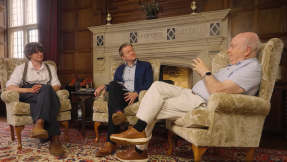
John Lennox says there is enough evidence to take Christianity seriously
Speaking with agnostic YouTuber Joe Folley, Oxford mathematician John Lennox argued that the historical evidence for Jesus’ resurrection is enough of a reason for sceptics to explore whether his promises hold true in their own lives.

Calls for inquiry as recorded assisted suicide deaths in Hawaii rise 293% since 2019
Pro-life organisation Right To Life UK has called for an independent inquiry into Hawaii’s assisted suicide system after official figures showed a record number of deaths and the state’s Department of Health acknowledged gaps in its reporting.

Can Labour tackle the youth jobs crisis without addressing its roots?
The barriers that keep young people out of work can take shape long before they leave school. Tackling them starts with supporting families and giving every child the chance to develop their gifts.
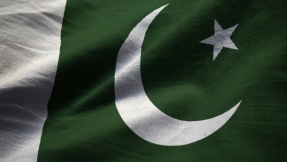
Christian group calls for prayer for forced marriage victims in Pakistan
Every year it is estimated that around 1,000 girls in Pakistan are kidnapped, forcibly converted to Islam and married, often to a much older man.





