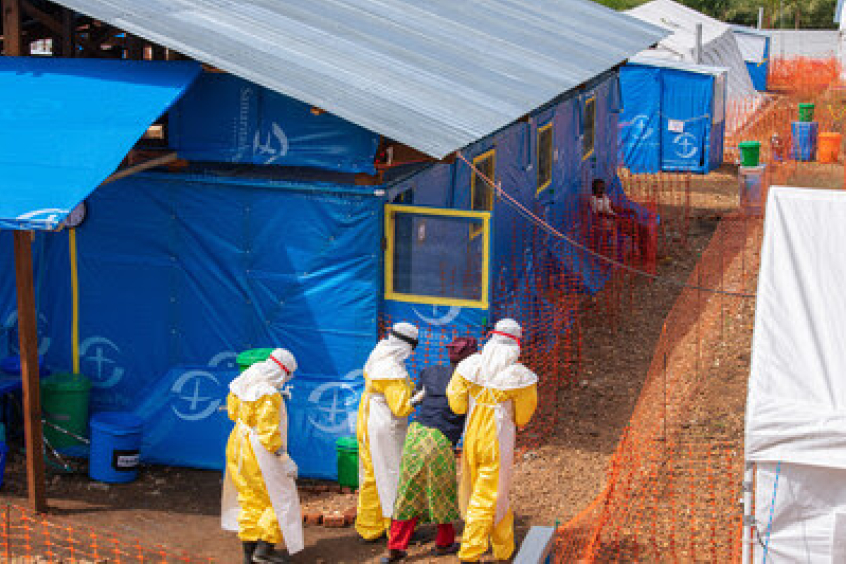
Representatives of the Anglican Church in the Democratic Republic of Congo (DRC) have warned that the challenge posed by the latest Ebola outbreak remains a daily struggle and that the international community should not take its eye off the situation.
In May the DRC declared that another Ebola outbreak had occurred, the 17th in the country in 50 years. In July the death toll officially passed 1,000.
As well as the disease itself, health and aid workers have had to deal with the impact of poverty and ignorance. Some locals are unaware of the seriousness of Ebola, while others doubt the disease even exists. In some cases health centres have even been attacked.
Even when the threat of Ebola is taken seriously, poverty takes its toll. Basic hygiene practices like hand washing are effective in combating the disease, but when clean water is in short supply, hand washing can seem like an unaffordable luxury.
The Rt Rev William Bahemuka Mugeny, Bishop of Boga diocese, lamented the lack of attention the outbreak had prompted in recent months.
“The response was quick, compassionate, and strong at first. Now, it seems as if the word ‘Ebola’ has all but vanished from the international conversation, and along with it, the thoughts and prayers for the people of Congo," he said.
“The disappearance of this outbreak from the global conversation could leave some with a bad impression, thinking that the virus has been contained, effective means of treatment have been found or the spread has slowed.
"This, however, is not the case. For the people of Congo and other affected areas, the reality of this disease is a daily struggle.”
The bishop added that even in the DRC there was a certain amount of tiredness about having to deal with the disease and that this frustration was behind some of the attacks on healthcare workers.
Churches and aid organisations are doing what they can to provide medical assistance in the country. Moreover, significant effort has gone into combating misinformation about Ebola and into promoting simple hygiene practices and introducing things like handwashing stations in churches.
Bishop Mugeny said, “The Lord is calling His church to lead the way in this day as it has in the past - we can overcome the weariness to see victory on the other side.
"We remain committed to training health care workers and establishing better preventive provisions so that pastors, leaders and church members alike may learn new skills, teach new practices and, above all, live out the teaching of Scripture.”