Amid the flood of Chilcot report coverage focusing on the build-up to the 2003 Iraq invasion, there has been little attention on Iraqi Christians, whose perilous plight echoes that of displaced and persecuted Christians in the Middle East more widely.
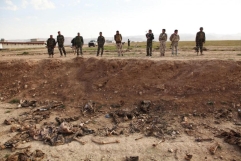
The ongoing turmoil since the war in Iraq came to a head for Christians there in July 2014, when some 80,000 of them fled the Iraqi city of Mosul and the Nineveh Plain after ISIS issued a deadly ultimatum.
The 2,000-year-old Christian population of Iraq has shrunk from 1.4 million to around 250,000 in the aftermath of the war, with many of those who are left now living in disused steel containers or hiding out in churches.
According to one senior charity worker familiar with the country, Iraqi Christians are doomed as a result of the war. Mark Lattimer, the head of Minority Rights Group, tells Christian Today: "We can see now that the 2003 invasion sounded a death knell for Christianity in Iraq. The warnings were certainly there before the invasion, but it was the coalition support for sectarian policies after Saddam fell which made Iraq's decline unstoppable. In 2006 the Iraqi human rights minister told me that Christians' days were numbered in Iraq. We're now down to a population of just 250,000 and some Christian leaders in Iraq have told me that they don't believe the population can survive outside of Kurdistan. The situation for other minorities – Yezidis, Turkmen, Mandaeans – has been equally catastrophic."
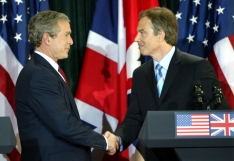
On the west's role, Lattimer says that the British Government is "turning a blind eye" to a new rise in sectarian attacks because of the war against Isis. "It isn't just about [George W] Bush and [Tony] Blair. Maybe of the mistakes highlighted in Chilcot are still being made today. The war on ISIS is causing the British government and other members of the international coalition to turn a blind eye to a new rise in sectarian attacks, including against Sunni Arabs."
However, a spokesperson for the charity Open Doors says that despite the "chaos and extreme difficulty," many Christians who are left want to stay and help rebuild the country. The spokesperson told Christian Today: "Whatever has happened that has brought us to this point, many church leaders in the Middle East tell us that they want to be actively involved in the rebuilding of their countries and that they believe they have an important role to play in shaping their future societies. Whilst there is chaos and extreme difficulty many are choosing to stay, to support their fellow Christians and to bring a message of hope amidst the darkness. Open Doors is committed to the long term support of persecuted Christians both in the Middle East and around the world."
The Chilcot report does repeatedly highlight warnings about the fate of Iraqi Christians, as the Catholic Herald has reported.
For example, Chilcot underlines a report by a junior British embassy official in Amman in January 2002: "The Iraqi Christian community was concerned that it risked marginalisation, with some senior figures worrying about what would happen to their community if the current Iraqi regime fell or changed."
In May 2002, the embassy went on to warn as follows: "The May update contained some insights into both social and infrastructure issues. It highlighted Saddam Hussein's 'scare tactics' over what would happen in the event of a coalition invasion of Iraq and the possibility of Iraqi and regional instability thereafter: 'This line plays on real fears of the unknown and of religious instability. For all his faults, Saddam does, for now, mean stability and peace.'"
And the report points out French Foreign Minister Dominique de Villepin's warning in March 2003 to the UN Security Council that: "... War would only increase it [terrorism], and we could then be faced with a new wave of violence. Let us beware of playing into the hands of those who want a clash of civilisations or a clash of religions."
Also in 2003, Lord David Alton warned fellow peers about the risk to Assyrian Christians, Shia Muslims, Marsh Arabs and Kurds, saying: "It is essential that their suffering is minimised in the aftermath of any possible conflict."
Lord Alton told Christian Today: "Clearly, the failure to plan for the aftermath has been a disaster for hundreds of thousands of people and today's genocide against the region's minorities has its origins in that failure to plan for the future. As Sir John Chilcot has concluded it doesn't need the benefit of hindsight to see to what the absence of a post war strategy would lead. Warnings were given at the time and those warnings were ignored. We must all now reflect with great care on the report's findings - based on 2.6 million words contained in 13 volumes - not least on how public confidence and trust in political processes and leaders can be restored."
In January this year, a delegation of senior Bishops highlighted the plight of Iraqi Christians on a visit to Gaza and Jordan. The Bishops, all Catholics apart from the Anglican Bishop of Southwark Christopher Chessun, emphasised the cause of the "forgotten" Christians of the Middle East.