In a simulated exercise at a major shopping centre in Manchester on Monday night a fake suicide bomber shouted "Allahu Akbar".
Police have since said the decision to ask the mock terrorist to use this "religious phrase...which so vocally linked this exercise with Islam" was "unacceptable". Greater Manchester Police's Assistant Chief Constable, Gary Shewan, apologised for any offence caused.
On the same night as the simulated attack in Manchester, a very real knife attack happened near Munich in Germany. One man and three others were wounded. What turned this from a national story to an international alert was a number of witnesses who said the killer shouted: "Allahu Akbar."
So why did Greater Manchester Police feel the need to apologise? Based on recent attacks in Paris and Brussels, it is perfectly realistic to assume that, were a terrorist attack to happen in Manchester, it might have Islamist roots.
In fact Shewan said the whole operation was "based on a suicide attack by an extremist Daesh style organisation". So the problem is not in the assumption that any imminent terrorist attack would be by Islamic extremists.
The key phrase for me is a comment by Greater Manchester's police and crime commissioner Tony Lloyd. Of the use of "Allahu Akbar" he said: "It didn't add anything to the event, but has the potential to undermine the great community relations we have in Greater Manchester."
It is not that it is overly presumptive for an attacker to shout "Allahu Akbar". The problem lies more with public perception of the phrase itself and Islam more broadly.
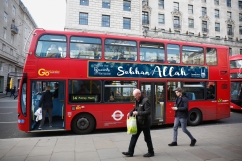
It literally means "God is great" in Arabic. It is not a battle-cry. Incidentally it is a phrase used by thousands of Arabic-speaking Christians in their worship. But the more we associate the phrase with terror the more we become suspicious of our Muslim neighbour when they peacefully go to prayers on a Friday and recite the same phrase.
One tweet I saw read: "If you're more offended by Greater Manchester Police using 'Allahu Akbar' during exercise than by actual terrorists shouting it...you're part of the problem."
But that is not the point. It is self-evident that recent attacks have been by Islamic jihadi fighters. What is not self-evident is the fight to still treat our Muslim friends with respect and dignity. It is a point that has been made over and over again but the vast majority of Muslims are not extremists. A smear that links a common phrase in Islam's prayer cycle to global terror is unhelpful. The police, whose job is to protect communities from all forms of violence, must be especially sensitive.
As Lloyd said, it was an "ill-judged, unnecessary and unacceptable decision".
Greater Manchester Police were right to apologise.