
The World Association of Newspapers and the World Editors Forum have condemned what they say are the Geneva-based UN Human Rights Council's repeated efforts to undermine freedom of expression in the name of protecting religious sensibilities.
"WAN reminds the UN that the council's proper role is to defend freedom of expression and not to support the censorship of opinion at the request of autocracies," the WAN Board said in a resolution issued during the World Newspaper Congress and World Editors Forum. The 1 to 4 June meetings of the world's newspapers and editors were held in Gothenburg.
In its resolution condemning actions by the UN Human Rights Council, WAN cited the council's approval of an amendment proposed by the Organisation of the Islamic Conference, requiring the council's investigator to "report on instances where the abuse of the right to freedom of expression constitutes an act of racial or religious discrimination".
WAN said the amendment "goes against the spirit" of the work of the UN Special Rapporteur. It said that amendment will require the rapporteur to investigate abusive expression "rather than focusing on the endemic problem of abusive limits on expression imposed by governments, including many of those on the council".
The resolution issued by the groupings of newspapers and editors said, "The WAN Board is concerned at what appears to be the emergence of a negative trend against freedom of expression in the UN Human Rights Council."
It noted, "In March 2007, the Council has already passed a resolution, sponsored by Pakistan on behalf of the Organization of the Islamic Conference, which opened the door to the restrictions of freedom of expression by governments on the grounds that it might offend religious sensibilities."
The UN Human Rights Council, which was sets up to address human rights violations, is the successor to the UN Commission on Human Rights, which was often criticised for the high-profile positions it gave to member states that did not guarantee the human rights of their own citizens. International human rights groups have expressed concerned that the council may be emulating the practices that discredited its predecessor.
The WAN resolution called on the council president and UN Secretary-General Ban Ki-moon "to protect the mandate of the Special Rapporteur and to ensure that international standards of freedom of expression are fully supported by the UN Human Rights Council and not undermined by it".
WAN and WEF issued six other resolutions including a condemnation of widespread press freedom violations during presidential elections in Zimbabwe. The two groups invited recently-elected Russian President Dmitry Medvedev to "decisively support and promote freedom of the press in Russia".
The groups also called upon Chinese authorities to release all imprisoned journalists and Internet reporters ahead of the Olympic Games and to honour the press freedom commitments it made in its successful bid for the 2008 Olympics.
The Paris-based WAN, the global organisation for the newspaper industry, says its mandate is to defend and promote press freedom and the professional and business interests of newspapers worldwide.
Representing 18 000 newspapers, its membership includes 77 national newspaper associations, newspaper companies and individual newspaper executives in 102 countries, 12 news agencies and 11 regional and global press groups.
Source: Ecumenical News International www.eni.ch Printed with permission




-

Wycliffe celebrates ‘remarkable moment’ as Bible translation advances at rapid pace
-

Could the Church face a ‘silver uprising’?
-

Christian leaders issue ‘sober and urgent call’ for Western Church to prepare for disruption
-

500 million Christians worldwide face Bible access restrictions, report finds
-

Church in Wales pauses plans to allow gay marriage
-

800 years on: Why St Francis of Assisi still captivates the world
Most Popular
News
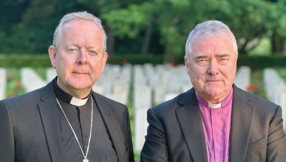
Irish archbishops urge peace and reconciliation amid Drumcree stand-off
Ireland’s Catholic and Church of Ireland archbishops have appealed for an “urgent” initiative to resolve the Drumcree parade dispute and asked Christians to pray for peace.
Former priest Chris Brain convicted of rape as Church review set to begin
Former Church of England priest Chris Brain has been convicted of rape and four counts of indecent assault following a retrial.

Franklin Graham preaches with warning from Sodom in Manchester
Franklin Graham used the biblical story of Lot’s flight from Sodom to urge thousands in Manchester on Saturday night to seek forgiveness through Christ and accept His gift of salvation.
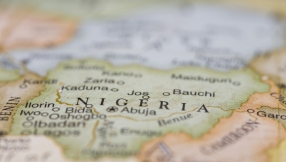
More than 4,200 Christians killed in Nigeria this year - report
More than 4,200 Christians have been killed in Nigeria so far this year, according to a new report calling for stronger action to protect communities facing violence across the country’s Middle Belt.








