
The Archbishop of Canterbury has condemned the criminality unleashed in English cities earlier this week.
Addressing the House of Lords yesterday, Dr Rowan Williams said: “In the events we have seen in recent days, there is nothing to romanticise and there is nothing to condone in the behaviour that has spread across our streets. This is indeed criminality.”
He said that one of the “most troubling” aspects of the violence had been the sight of not only young people, but children as young as seven taking part in the carnage.
Calling for a careful analysis of recent days, the Archbishop said there was a need to educate young people to be good citizens.
“Over the last two decades, many would agree that our educational philosophy at every level has been more and more dominated by an instrumentalist model; less and less concerned with a building of virtue, character and citizenship – ‘civic excellence’ as we might say.
“And a good educational system in a healthy society is one that builds character, that builds virtue.”
The Archbishop said a top priority must be the question of rebuilding the “skills of parenting” in some communities and in “rebuilding education itself”.
He stressed that many young people felt frustration at the betrayal of their own generation by some of their contemporaries, saying that communities and young people “deserve the best”.
He concluded with a call for the renewal of civic identity and civic solidarity.
“I believe that this is a moment which we must seize, a moment where there is sufficient anger at the breakdown of civic solidarity, sufficient awareness of the resources people have in helping and supporting one another, sufficient hope (in spite of everything) of what can be achieved by the governing institutions of this country, including in Your Lordship's House, to engage creatively with the possibilities that this moment gives us.
“And I trust, My Lords, that we shall respond with energy to that moment which could be crucial for the long-term future of our country and our society."
The second most senior figure in the Church of England, the Archbishop of York, issued a similar statement yesterday.
He said he had been “shocked and appalled” by the behaviour of individuals “who simply have no care and respect for other people”.
The clear message has to be sent to the looters, rioters and vandals that their actions are not only “mindless and destructive” but have a “massive human cost”, he said.
“These vile and evil acts can never be justified.
“We cannot simply measure the damage in pounds and pence. It is not just about the rebuilding of shops and homes set on fire. It is not about the cost of repairing windows and walls.
“It is about the communities that have been torn apart by a selfish underclass that has little respect for hard work and decency. An underclass laid bare in the Stephen Lawrence Inquiry and the Damilola Taylor Murder Review reports.”
Responding to criticism of the police handling of the riots, he said it was the first responsibility of government to ensure that police were equipped and enabled to keep the peace and civil order.
“If the police cannot do it, vigilante groups will. Nature abhors a power vacuum,” he said.
The Archbishop said that the broader question of resourcing the police “should not be too glibly tied up” with current plans for cuts in public expenditure.
“But the public does need to be reassured that first things are coming first, and that police resources are not subject to some false principle of equal sharing of burdens among governmental departments,” he said.
“An under-resourced police will be a brutal and insensitive police, because it will always be forced to cut corners to get things done. The attempt to control the police by tying their operations up in excessively restrictive regulations has similar implications.”
He added: “As a matter of fact in our society the major threats to liberty do not come from that source, and we do nothing to protect liberties by hampering the police, but only undermine liberties.”
The Archbishop said it was too early to offer an explanation as to why so many young people felt compelled to wreak havoc on the streets, but commented that the “strong peer-bonding element” in the events of recent days pointed to a “significant educational deficit”.
“Sadly, we have created an individualistic, disposable society, with weakened family and community structures, where the interests of me, myself and I have become paramount. In many ways, we have made a god of self and self-interest,” he said.
“Let us stand together at this difficult time and seek the goodness in each other to help us rebuild our great nation for whatever challenges we may face tomorrow, following the good example of the thousands of young people who turned up yesterday, via Twitter, to clean the streets of Manchester.”




-

Thousands sign petition against drag show after advert showed baby Jesus in nipple tape
-

Wes Huff confesses to plagiarism, asks for prayer: 'It was sinful'
-

Where is this ‘space for faith’ that the King speaks of?
-

‘Beyond astonishing’ that schools are encouraging children to play GTA 6, Christian group says
-

John Lennox says there is enough evidence to take Christianity seriously
-

Does the BBC understand worship?
Most Popular
related articles
After the riots, don't tar all young people with the same brush - YFC
All young people shouldnât be tarred with the same brush in the midst of the riots, a Christian organisation has said.
Will the obvious lessons of the riots be learned?
Anarchy reigns in a society that does not understand the virtue of discipline
News
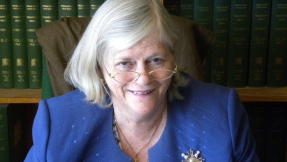
Hundreds gather to remember Ann Widdecombe at Westminster Cathedral
Prime Minister Andy Burnham and four of his predecessors joined around 600 people at Westminster Cathedral on Thursday for a memorial service for Ann Widdecombe.
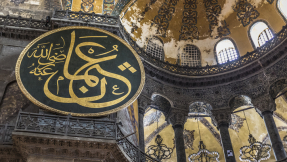
Wake up and smell the coffee: why the rise of Islam is a call to discipleship
New demographic forecasts from the Pew Research Centre predict that Islam is set to overtake Christianity globally by 2035. And in the UK, the Christian share is set to collapse to 25 per cent by 2070. Drawing on 30 years’ reporting on the persecuted church, Andrew Boyd argues that these figures are a sharp wake-up call.
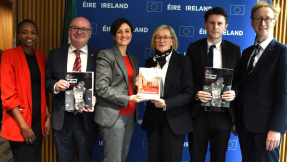
EU envoy pledges support for persecuted Christians
The envoy spoke of the “terrible and unnecessary suffering” faced by persecuted Christians.

When Jacob and Esau meet
Jewish academic and Hebrew scholar Irene Lancaster explores the rabbinic interpretation of Jacob’s encounter with Esau.





