Medical needs that are not being met in Iraqi Kurdistan have reached a critical point, according to the UK-based medical donations charity International Health Partners (IHP). This week the charity launched an urgent appeal for funding and medical donations in the region.
The primary reasons for the crisis are two-fold: the current economic crisis in Iraqi Kurdistan, and the surge of refugees and the displaced people coming from within Iraq and Syria.
Over 215,000 Iraqis have been displaced from Mosul and surrounding areas in recent months. Kurdistan is currently hosting approximately two million refugees and displaced people, including 300,000 Syrian refugees.
Christian Today spoke to IHP's CEO, Alex Harris, who recently returned from Iraqi Kurdistan.
First, the context. 'The situation on the ground has been an intractable crisis for five to six years and this particular part of northern Iraq [Kurdistan], where the local population is 5 million, is currently hosting approximately 2 million refugees and internationally displaced persons (IDPs) internally,' explains Harris.
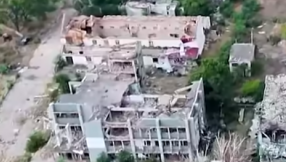
Many Iraqi Christians and others were driven from their homes by the ISIS advance in the summer of 2014. Some 80,000 Christian refugees fled Mosul and the Nineveh Plain under threat of forced conversion or execution.
'The number of people arriving into Iraqi Kurdistan is into the thousands every day, and particularly people fleeing from Mosul, leaving in their thousands every day,' says Harris. 'The issue is one of very large numbers of people moving rapidly.
'In that geographical context is a local government who have no money – because of an economic depression – in which doctors get paid around a quarter of their salary once every 36 days.
'Any acute medical cases have to be referred from refugee camps into local hospitals, which in turn are chronically under-financed and under-supplied.'
IHP is working with its local partner, Bring Hope, to distribute medical aid across Iraqi Kurdistan, both in the refugee and IDP camps, and the local hospitals and clinics.
'I visited a hospital in Irbil [West Irbil Emergency Hospital], which is the closest place to Mosul where you can receive emergency medical care: 80 per cent of its patients are now refugees and IDPs. Across that region they are seeing about 200 to 300 trauma patients every day. They are under-financed, but as much as anything they are [also] under resourced.
'Last year we were able to supply 650,000 treatments into Iraq but we are aware that there is much more to be done. So the appeal that we have launched in Mosul was in response to what felt to me like the refugee crisis reaching a crescendo in that part of the Middle East.'
On the ground, there is no doubt that medicines supplied by IHP that have reached the region are having a positive impact.
An example highlighted by the charity is that of Hameeda, who fled Mosul three years ago and set up a shop in Harsham camp for displaced people. 'I am not young and I have several health problems. At the clinic they've been able to provide me with the different medicines I need,' she says. 'They give me water pills for my hypertension, aspirin for my heart and statins for my cholesterol. I'm not sure what I would do without the clinic.'
Harris concludes: 'Our challenge and opportunity is not so much the availability of the medicines but the financing to make it happen, because the institutional spending is focusing – rightly – on building the refugee camps and water, sanitation, shelter and food. But for those who are unfortunate enough to suffer a serious medical condition, the funding is not there. And we believe that access to medicine is a basic human right.'