Another day, another survey...
It usually best to let these things wash over you. It's silly season, where journalists are desperate for stories and will puff up any old piece of ropey research into a story to keep the hungry beast of the 24-hour news cycle satisfied.
Occasionally, though, a survey or a poll will throw up something genuinely interesting. New statistics from YouGov are a case in point.
The stats reveal that 58 per cent of British people favour cremation when they die, with only 17 per cent keen for burial.
On one level, this is unsurprising – since it was legalized in the laste 19<sup>th Century in the UK and US, cremation has been steadily gaining in popularity. We have no doubt all been to cremation services of friends and family.
As burial space has become more in demand in cities, cremation has been presented as the solution.
Does this stat indicate something more than a change in our preferences, or a merely pragmatic response to the lack of space for vast graveyards? Maybe so...
The history of cremation in the West speaks not just of practicality, but of the spiritual significance of the practice. The Cremation Society of Great Britain says, "by the time of the ancient Roman and Greek civilizations cremation had been generally adopted as a method of disposing of the dead. With the advent and spread of Christianity, however, and its concomitant belief in the resurrection of the dead, cremation fell into disfavour and by the fifth century the practice had become almost completely obsolete."
In this, the society is correct. Mainstream Christian belief in the resurrection of the body meant that burial was not only the favoured method of treating a corpse – it was felt that cremation was in some way an interference with God's plan.
When cremation began to be legalised, Christians responded in different ways. The Christian Burial and Cremation Society argues that it makes no difference whatsoever whether we are buried or cremated after death. "When the body is buried, given enough time, it will completely disintegrate. So, cremation and burying ultimately lead to the same." The society suggests, "there is nothing to prevent God from accomplishing His promises to raise us."
Many Christians now adhere to this viewpoint and opt for cremation for themselves and their families in a reflection of the culture. Yet this position is still contested by Christians of all denominations.
Leading Reformed voice John Piper spoke out against cremation earlier this year. He said, "I am arguing that God-centered, gospel-rooted burial is preferable to cremation. Preferable. Not commanded, but rich with Christian truth that will become a clearer and clearer witness as our society becomes less and less Christian."
He is joined in his preference by the Roman Catholic Church whose canon law allows, yet discourages, cremation: "The Church earnestly recommends that the pious custom of burying the bodies of the deceased be observed; nevertheless, the Church does not prohibit cremation."
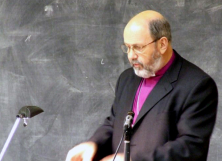
The Eastern Orthodox Church remains opposed to cremation altogether. Anglican theologian NT Wright picks up on this is his book Surprised by Hope. He talks about the 'implicit theology' of cremation, saying, "Reasons of hygiene and overcrowding led reformers... to propose this step, which, as not all Western Christians know, is still firmly opposed by the Eastern Orthodox (despite the shortage of land in Greece at least) as well as by Orthodox Jews and Muslims."
Wright goes onto suggest that the increase in popularity in cremation in the West has come about as we have become a less Christian society. He argues, "cremation tends, classically, to belong with a Hindu or Buddhist theology, and at a low-grade and popular level... that is the direction toward which our culture is rapidly moving... the underlying implication, of a desire simply to be merged back into the created world, without any affirmation of a future life of new embodiment, flies in the face of classic Christian theology.
Wright though, stops short of suggesting that cremation is sinful. "I am not of course saying that cremation is heretical" he writes, "I am merely noting that the huge swing toward it in the last century reflects at least in part some of the confusions, both in the church and in the world." He suggests this is because Christians have become unfamiliar with the biblical teaching that we all have bodies which will be resurrected. Instead, he says, the Church is at risk of slipping into Platonism – which taught that we have disembodied souls, which float up to heaven – and that the body doesn't matter.
So where should Christians come down on this issue?
It seems agreed by many theologians that burial is preferential. Of course God is able to do anything, so resurrecting a cremated body does not present a problem to Him. The issue at stake is more one of orientation. In other words, do we believe in resurrection of the body, and therefore will we act in life, and in death in accordance with our beliefs that the body will be raised? As Paul puts it in 1 Corinthians 15, "in a moment, in the twinkling of an eye, at the last trumpet. For the trumpet shall sound, and the dead shall be raised incorruptible, and we shall be changed."
Follow Andy Walton on Twitter @waltonandy