
Christian pharmacists fear they could face the sack if they refuse to hand out morning-after pills, under new guidelines issued by a medical regulator.
Many pharmacists have moral objections to supplying emergency contraception, and have in the past refused to do so because the drugs work by preventing a fertilised egg from implanting in the womb.
Some chemists and lawyers say the guidance circulated last week by the General Pharmaceutical Council (GPhC) effectively strips them of their right to object on religious grounds to handling such drugs. Many Christian pharmacists object to the drugs.
Under the new rules, pharmacists will be obliged to refer a customer to a specified chemist who is willing to distribute the pills and should also ring ahead to check that the product is in stock.
The guidance will also compel pharmacists to make drugs available for IVF, to which some object because of the high numbers of embryos created then destroyed in the process.
For the first time under the guidelines, pharmacists are told that their right to conscientious objection on religious grounds is secondary to the contractual demands of employers, such as the NHS.
The new guidelines follow cases in which staff working in chemists have been criticised but have kept their jobs after refusing to dispense emergency contraception on religious grounds.
Anna Sweeting-Hempsall, a Catholic hospital pharmacist from Sunderland, said the new guidance “forces pharmacists to act against their consciences” and would cause legal conflicts between staff and employers.
She said: “Now the employers have the right to impose any contractual obligations that take precedence over the right of conscience.
“The need to notify people beforehand makes you virtually unemployable,” she said.
“Anybody who values the sanctity of life from the moment of conception will be forced from the profession.”
The regulator produced the guidelines to explain how a pharmacist’s right to conscientious objection should be interpreted. All pharmacists are accountable to the GPhC and must be able to explain their actions in the context of the regulator’s guidance.
However, the GPhC said the document was “not mandatory” and was open to review after one year. “Our guidance is advice for pharmacy professionals and explains how our standards might be met, or provide additional suggestions for practice,” a spokeswoman said.
Neil Addison, the director of the Thomas More Legal Centre, who specialises in religious discrimination law, said that the guidance was flawed.
“What many people do not seem to grasp is the fact that if you are refusing to do something because it is morally objectionable you cannot be obliged to recommend someone else,” he said.
“If they (the GPhC) accept that a person has a right to conscientious objection they cannot take it further than that.”




-

Wycliffe celebrates ‘remarkable moment’ as Bible translation advances at rapid pace
-

Could the Church face a ‘silver uprising’?
-

Christian leaders issue ‘sober and urgent call’ for Western Church to prepare for disruption
-

500 million Christians worldwide face Bible access restrictions, report finds
-

Church in Wales pauses plans to allow gay marriage
-

800 years on: Why St Francis of Assisi still captivates the world
Most Popular
News
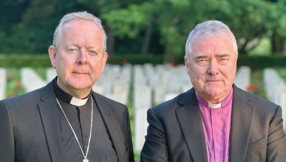
Irish archbishops urge peace and reconciliation amid Drumcree stand-off
Ireland’s Catholic and Church of Ireland archbishops have appealed for an “urgent” initiative to resolve the Drumcree parade dispute and asked Christians to pray for peace.

Former priest Chris Brain convicted of rape as Church review set to begin
Former Church of England priest Chris Brain has been convicted of rape and four counts of indecent assault following a retrial.

Franklin Graham preaches with warning from Sodom in Manchester
Franklin Graham used the biblical story of Lot’s flight from Sodom to urge thousands in Manchester on Saturday night to seek forgiveness through Christ and accept His gift of salvation.

More than 4,200 Christians killed in Nigeria this year - report
More than 4,200 Christians have been killed in Nigeria so far this year, according to a new report calling for stronger action to protect communities facing violence across the country’s Middle Belt.








