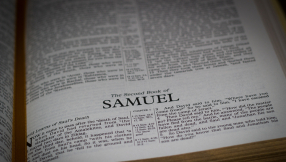
The invention of printing has a lot to answer for.
Yes, it means we have access to far more books and magazines than previous generations. And we have Bibles – lots of different versions of them.
And the Internet has made things even worse. As well as cute pictures of cats, millions of words are created and shared every day. Office workers spend their working lives in front of screens. When they go home (and sometimes while they're at work) they're on Facebook and Twitter.
What good do all these words do?
As a journalist, I'd hope some of them do a lot of good. We know more about the world than we used to. We have access to far more information about how the world works. It's harder to hide wrongdoing. I like being able to access books and articles on history and spirituality from anywhere. Words, printed or on screen, open our minds to new possibilities. And I read all the time – research and writing articles at work, recreationally afterwards.
But is it possible to read too much?
AW Tozer, the writer and preacher who diagnosed his culture's ills so well, once wrote: "You should think 10 times more than you read."
He put his finger on one of the key drawbacks of the avalanche of words we take into our heads every day. If we do nothing but take in other people's opinions we'll never really develop any of our own. If we read about other people's spirituality we'll never become truly spiritual. If we fill up our minds with disconnected bits of information – there's even a word for them, 'factoids' – we'll never truly learn anything.
What we do with our brains today, fluttering insect-like between tempting headlines, wouldn't be recognised as learning by previous generations. Scholars distinguish between intensive reading and extensive reading.
Extensive reading involves exposure to large amounts of text. Readers get to know a language or a subject by taking in large quantities of information. Their brains work out connections between works automatically, they grasp the meaning of unfamiliar words by their context, and they become fluent without having to try very hard.
That's the theory, anyway – and there's no doubt that this extensive reading can be very beneficial.
But its counterpart is intensive reading – and that's a skill I worry we're losing. Intensive reading is concentrating on a small amount of text, a few paragraphs perhaps, and studying it minutely, getting every last ounce of meaning from it.
Sometimes it's good to read whole chunks of the Bible. But sometimes dwelling on just a few verses of it, turning them over and over in our minds, praying, interrogating and applying them, will give us far, far more.
When people didn't have many books, they treasured the ones they had. One of these was usually the Bible. They learned it by heart, they knew its themes and its stories. We're far less educated in Scripture than our forefathers. Is one of the reasons that we have so much more to read?
If so, we need to re-learn the discipline of slow, patient study, thinking about what we read and not imagining we're wasting time if we don't hurry on to the next chapter or the next book. When we read the Bible, we aren't reading for an exam. And if we were, the question wouldn't be, "How much did you read?" It would be, "How much did you understand? And did you do what it said?"
Follow Mark Woods on Twitter: @RevMarkWoods