Cost of sending people back to the moon 90 percent cheaper now, says NASA study

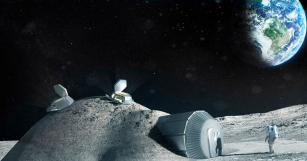
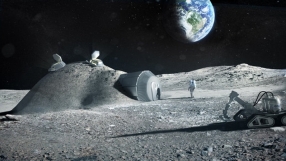
An artist's concept of a moon colony just a few kilometers from the Apollo 17 Taurus Littrow landing site shows a lunar mining facility harvesting oxygen from the resource-rich volcanic soil of the eastern Mare Serenitatis. (NASA/Wikimedia)

The United States spent $25 billion to send 12 people to the moon from 1969 to 1972. Now, the National Aeronautics and Space Administration (NASA) believes it can send people back to the surface of the moon for even less than half that price.

Through a recent study conducted by the National Space Society and the Space Frontier Foundation, the NASA found out that a mission to return human beings to the moon right now will only cost $10 billion.

This figure is 90 percent lower compared to earlier spending projections of $100 billion and is well within NASA's current budget.

"A factor of ten reduction in cost changes everything," National Space Society executive committee chairman Mark Hopkins said in a press release.

The same study also estimates the establishment of a permanent colony on the moon's surface would cost $38 billion.

What is the reason behind the significant drop in projected spending? The report envisions private and international partnerships for lunar explorations, for instance between the NASA and the European Space Agency (ESA).

That idea is not at all farfetched, since the current director of ESA, Professor Johann-Dietrich Woerner, earlier said he wants to build an international community on the moon's surface.

The study also encouraged NASA to use a competitive model in its mission to build a space colony. Two independent companies, for instance, can work with government-funded agencies to send astronauts back to the moon.

NASA can also tap its commercial crew partners, Boeing and SpaceX, to lower the cost of building a moon colony. SpaceX, for instance, recently spent $443 million to develop a rocket and a crew capsule, which would have cost NASA some $4 billion.

"Returning to the moon is easy, it's reasonable and affordable, and could be the pathway to Mars... But there has to be a will do it," said Tom Moser, the lead engineer and program manager for the Apollo program.

related articles
Columbus delivery gives Europe a place in space

Columbus delivery gives Europe a place in space

Space shuttle carries Japanese lab into orbit

Space shuttle carries Japanese lab into orbit

NASA: Aliens may be found by 2025

NASA: Aliens may be found by 2025

A village on the moon: Europe\'s space agency planning to build \'Lunarville\'
A village on the moon: Europe's space agency planning to build 'Lunarville'

A village on the moon: Europe's space agency planning to build 'Lunarville'

New human species may develop if space colonisation happens, experts say

New human species may develop if space colonisation happens, experts say

New European Space Agency chief wants to build international village on the moon

New European Space Agency chief wants to build international village on the moon

News
Shine, Jesus, Shine remix launched for Christmas evangelism campaign

The project was divinely inspired, says the organiser

Sudanese human rights activist assaulted in Newcastle

The assault happened outside Newcastle City Hall, said Christian Solidarity Worldwide.

Gaza's Christians praying for a peaceful Christmas

Conditions remain tough for Gaza's Christians despite the ceasefire.

Churches across the UK are getting into the Christmas spirit

Cathedrals and churches across the UK are embracing Advent with a flurry of festive markets, carol services and community events.