Universities have been told they must protect free speech on campus, including by allowing Christians, pro-life groups and others who hold minority views, to affiliate.
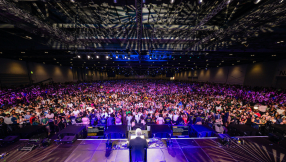
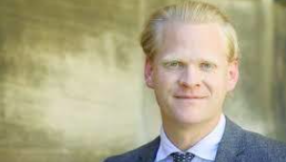
The Chair of the Equalities and Human Rights Commission (EHRC), David Isaac, said in an address at the Theos conference in London that people were "rightly" concerned about stories being reported in the media of "silencing" and no-platforming - where certain people are blocked from speaking on campus.
Mr Isaac, a former Chair of Stonewall, said he was aware of cases where Christian and pro-life groups had been denied access to rooms on campus or prevented from having a stall at the Freshers' Fair.
He criticised this approach, saying: "This is not consistent with ensuring freedom of speech on campus, and the EHRC guidance makes clear that it should not happen."
He went as far as to say that he believed some students' unions were "promoting their own very narrow policies which don't extend the principles of freedom of expression".
"One has to remind students' unions, and the universities in which those students' unions sit, about their current legal obligations which I think would allow affiliations of pro-life organisations and groups," he said.
Although he said that the problem of no-platforming had been "overstated", he said universities and students' unions had a responsibility to comply with freedom of speech laws, and promote "respectful and open" debate.
"The default in our view, when considering all the legal duties that currently exist, is that events should be allowed to go ahead wherever possible," he said.
He also welcomed the social media charter published by the Church of England earlier this week calling for more respectful engagement online as he said that social media was making the polarisation of opinion "much worse".
"It can be a minefield for educators when we're living in an age of hypersensitivity - or perceived hypersensitivity - where it's increasingly easy for people to feel offended or for others to be worried about protecting minority groups," he said.
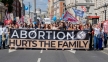
Several pro-life groups have struggled to affiliate with British universities in the past year. The application of the Aberdeen Life Ethics Society (ALES) was only approved by the Aberdeen University Students' Association after the group threatened legal action.
Similarly, the Glasgow Students for Life (GSL) was granted affiliation after it too threatened a legal challenge against the Glasgow University Students' Representative Council.
Notts Students for Life is the latest pro-life group to have been refused affiliation with a university.
In 2017, the Christian Union was barred from a Freshers' Fair at Balliol College, Oxford, because the vice-president of its Junior Common Room committee said their presence could cause "potential harm" to new students.