
Islamisation is increasing at an alarming rate in Tanzania according to a bishop from the country.
Bishop Bernadin Mfumbusa of Kondoa warned that religious freedom and other civil liberties were under threat from intolerant radical Muslim influences sweeping in from countries neighbouring the east African nation.
Speaking to Aid to the Church in Need, the Catholic charity for persecuted and other suffering Christians, the bishop said: “We see more and more itinerant preachers from Saudi Arabia and Sudan entering this country – and Muslims are increasingly making political demands.”
These demands include extending Islamic Sharia law and making everyone subject to it – Muslim and non-Muslim alike.
Bishop Mfumbusa said: “In recent times there has been a constant demand to introduce Shari‘a into other parts of Tanzania which do not have a majority of Muslims.”
Sharia law is already in force in Zanzibar, a semi-autonomous archipelago with an almost completely Muslim population, but it does not apply to other parts of the country.
The bishop said there were calls for Sharia, which currently applies in areas of civil law such as marriage and inheritance, to be extended to cover criminal law.
“They claim that otherwise Muslims would be able to avoid the law by claiming not to be Muslim.
“To prevent this they say Sharia law must be made applicable to everyone.”
But, despite these demands to extend Islamic law, no more than 31 per cent of Tanzania’s 45 million inhabitants are Muslim according to Church sources.
Christians make up more than half the population – including more than 12 million Catholics.
Bishop Mfumbusa described how the influence of radical Islam can be seen on the country’s streets.
He said: “In many parts of the country more veiled women than in the past can be seen, among them small girls.”
The bishop added: “Verbal attacks are also on the increase,” but stressed that to date there had been no violent attacks in Kondoa Diocese.
He said that education is not only being radicalised but even Catholic schools can face difficulties.
“In the church schools, which are also attended by Muslim children, we must be very sensitive and cautious to avoid any undesirable incidents,” said Bishop Mfumbusa.
The number of madrassas – Qur’anic schools – has also grown, with more extremist ones encouraging pupils not to attend regular schools, which is compulsory in Tanzania.




-

More than one in four US Protestant churchgoers believe some biblical truths become outdated
-

Wycliffe celebrates ‘remarkable moment’ as Bible translation advances at rapid pace
-

Could the Church face a ‘silver uprising’?
-

Christian leaders issue ‘sober and urgent call’ for Western Church to prepare for disruption
-

Church in Wales pauses plans to allow gay marriage
-

Christian social worker returns to Court of Appeal in dispute over withdrawn job offer
Most Popular
News

Majority back Ireland’s three-day abortion waiting period, poll finds
A new poll has found majority support for retaining Ireland’s mandatory three-day waiting period before an abortion, as lawmakers continue to consider legislation that would remove the requirement.

ONS figures show 'good' outlook for married couples
The Coalition for Marriage (CFM) has welcomed new figures suggesting that married couples are increasingly staying together.
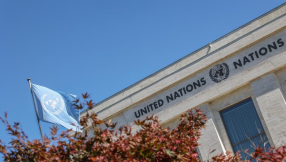
Christians condemn sexual violence following UN report on Russia-Ukraine conflict
Most cases of sexual violence documented were against male prisoners of war.

Peterborough Cathedral opens exhibition on Mary, Queen of Scots
Peterborough has opened a new exhibition on Mary, Queen of Scots, that will remain in place until 15 November.








