Iraq is a mess. (Syria, if anything, is worse.) Millions of people have been displaced from their homes, and in spite of the panic in Europe's capitals about the number of refugees pressing across their borders, most of them are still in the region. They are in Jordan and Lebanon or in camps in (relatively) safe parts of Iraq. They don't want to go to Europe or America, they want to go home. But even when the fighting stops – as it will – what will a new Iraq look like? Who will be in charge, and how will the safety of minorities be assured?
I don't understand. Islamic State can't last much longer, can't everyone just go home?
In many cases there just isn't a home to go to. The destruction in some parts of Iraq has been total. But there have also been terrible acts of violence committed against Christians and other minorities, like the Yazidis, who are understandably very frightened about going home. In some cases they were attacked by outsider extremists, but sometimes it was their own neighbours who turned on them. There are serious fears that a statistically meaningful Christian presence in the Middle East might simply come to an end.
That would be terribly sad. What's the answer?
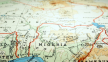
There is no simple answer, but one that seems to be getting some traction is the idea of a new province, created in the Nineveh Plain which is the heartland of the old Christian community. It would provide a refuge and safe space for Iraq's Christians where they could live in peace alongside other minorities like the Yazidis. Congressman Jeff Fortenberry of Nebraska introduced a bi-partisan bill into the US House of Representatives on Friday calling for it.
Isn't it up to the Iraqis to decide how to run their own country?
Indeed, and the bill calls on the US and the international community to "support the Republic of Iraq and its people to recognize a province in the Nineveh Plain region, consistent with lawful expressions of self-determination by its indigenous peoples".
It's still none of the US's business, though?
Strictly speaking, no, though it is still heavily involved in Iraq and has a fair bit of diplomatic leverage. And to do Fortenberry and others credit, at least they're thinking about what comes next.
Any support from actual Iraqis?
Yes, actually. The idea of designating the Nineveh Plain as a separate province actually originated in Iraq in 2014.There's also an effective and well-informed pressure group, A Demand For Action, which "seeks the protection of the indigenous people and minorities of the Middle East, and to create a meaningful place for them in their ancestral homelands". It's backing this, and its spokesman Steve Oshana told Christian Today: "The Nineveh Plain represents an unbroken link to our ancestors, we have continously inhabited that land from the very first days of civilization and we will always stand for our people's right to live freely in our ancestral homeland."
The Assyrian Confederation is also behind it. Its spokesman Afram Yakoub told Christian Today: "The introduced bill in the US Congress is a way to put pressure on Iraqi leaders and to help put the issue on the political agenda in the West." He also stressed it wasn't just about creating a Christian homeland: "The Nineveh plain is home to several different ethnic groups each with their own religion and the aim is to empower all these vulnerable minorities by creating the Nineveh Plain province."
There doesn't seem to be a downside, then.
Not so fast. It's probably true that the creation of a separate homeland for minorities, which is effectively what's being proposed, might mean that Christians, Yazidis and others would feel more secure. That is not a small consideration. But it also means tacitly accepting that Christianity might disappear from the rest of Iraq and be concentrated in a much smaller area. The centuries of co-existence, patchy and occasionally hostile as it sometimes was, would come to an end, and Christianity would be ghettoised in a small area. In a time when much of the world is getting used to living alongside people of different faiths, it seems like a backward step. At its worst, it might further entrench the sort of divisions between peoples that made the war possible in the first place. But as Oshana told Christian Today: "We've already been driven from the rest of the country over the years. The Nineveh Plain is in a way a last stand to maintain our presence in Iraq."
So perhaps two cheers?
Perhaps two cheers. Anything that would give Christians and other minorities more security has got to be a good thing. But if it puts up walls rather than pulling them down, it's a pity.
Follow Mark Woods on Twitter: @RevMarkWoods