With the Paris attacks and their aftermath still dominating the news, the publication last week of the 2015 Global Terrorism Index was very timely, and contained some fascinating statistics about terror worldwide.
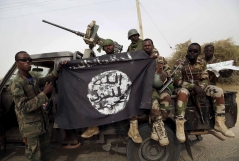
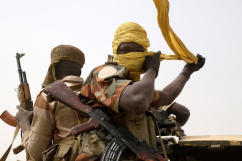
Among other things, it reveals that at the top of the league table for terrorist-related deaths is not, as everyone might assume, Islamic State, but another Islamist movement, the Nigeria-based Boko Haram. In 2014, Boko Haram was responsible for 6,644 deaths, an increase of 317 per cent on the previous year. IS was responsible for 6,073 terrorist deaths, though it is also involved in conventional warfare which adds a good deal more to the total there were around 20,000 battlefield deaths. In terms of attacks classed as pure terrorism, however, Boko Haram leads the field.
So why don't we hear more about it? Islamic State dominates the headlines, its recent Paris atrocity is about to lead to the mass mobilisation of Western military forces to defeat it in Iraq and Syria, and everyone has heard heart-wrenching stories of its treatment of Yazidi and Christian minorities. By contrast, Boko Haram – the name means something like, "Western education is forbidden" – barely registers.
There are good, or at least understandable, reasons for our relative indifference to Boko Haram, and others that are neither. The West has ploughed billions of pounds and dollars into the Middle East and we have a sort of proprietory interest in it. Also, of course, the terrorist threat in the West comes largely from IS rather than Boko Haram, at least at the moment.
Neither, to be fair, is it the case that Western media and we who consume it have ignored it completely: the case of more than 200 abducted Chibok schoolgirls last April spawned the famous "bringbackourgirls" campaign, though the militants themselves appeared less intimidated by the hashtag than Twitter users appeared to expect. Some have escaped, but most of the girls – raped, impregnated, beaten and brainwashed – are still out there, and there is no sign of any Western nation volunteering its blood and treasure on anything like the scale of its commitment to defeating IS in order to get them back.
There are other reasons for our lack of interest, though, and these are far less forgiveable. One is that it's a sign of Western disengagement from Africa generally. It's just a place where horrible things happen. It's this mindset that continues to be indifferent to the continuing trauma of the Democratic Republic of Congo, where hundreds of thousands die from violence and disease every year and where an estimated 400,000 women are raped every year. Others would point to the difficulty of getting news back from really remote places, though many of the places where terrorist attacks happen aren't that remote.
The horrible suspicion has to be, though, that at the root of it is old-fashioned racism: they just matter less because they're black Africans, and that's what happens there.
However, the disproportionate focus on Islamic State terrorism matters not just as a question of justice. It also matters because it's shaping policy. Every death is a tragedy, and without the ceaseless vigilance of our security services there would certainly have been more attacks in the West than there have in fact been. But the point is that Western nations have enormous and sophisticated resources to deploy against terrorism which are simply not available in developing countries. Using the terror threat to justify an all-out assault on Islamic State, as Western governments seem intent on doing, is arguably an ill-directed over-reaction to what is a security problem rather than a military one.
According to the GTI survey, 78 per cent of terrorist deaths occurred in only five countries – Iraq, Nigeria, Afghanistan, Pakistan and Syria. Globally, there were 32,685 deaths from terrorist attacks in 2014, the largest ever year-on-year rise – but deaths in advanced Western nations hardly registered on the graph.
The fact that it takes a terrorist outrage like the Paris attack to stir Western nations to action, while in less-regarded parts of the world such horrors are a daily though unreported part of life, is deeply depressing. Just as depressing is the assumption that any response has to be in military terms.
The GTI report also notes that almost all terror attacks happen in response to state-sponsored political violence – that is, where a regime is oppressing its own people – or in countries involved in violent conflicts. By contrast, in rich countries, "socio-economic factors such as youth unemployment, confidence in the press, belief in democracy, drug crime and attitudes towards immigration are the most statistically significant factors correlating with terrorism".
The suspicion has to be that in preparing for military action in Iraq and Syria the West is simply sowing the seeds of more violence; and in neglecting the causes of the rise of home-grown terror, it is doing exactly the same.
Follow @RevMarkWoods on Twitter.