20 April is the feast day of Zacchaeus of Jericho. We all know the account of Zacchaeus climbing a tree to see Jesus. However, it turns out not to have been a sycamore tree at all. This is the story …
Story of Zacchaeus
Zacchaeus is the Greek version of the Jewish name ‘Zaccai’ found in Ezra 2:9 and Nehemiah 7:14. The story of Zacchaeus is only recorded in Luke 19:1–10 and is well known to Sunday School children. The story relates to an encounter when Jesus visited the town of Jericho. While Jesus was in Jericho, a local tax collector called Zacchaeus wanted to meet him. Being a short man, Zacchaeus could not see Jesus through the crowd, so he climbed a tree. Jesus spotted him and then invited himself to Zacchaeus’s house for tea. This event horrified many of the Jewish people because tax collectors were disliked for collaborating with the occupying Roman authorities, and they were considered corrupt. However, in this story, Zacchaeus repented of exploiting the people. He became a reformed man and offered to pay back more than he had defrauded people of.
Source
The detail in this story, such as using the name of the man and describing the exact type of tree, indicates that this is one of the eyewitness accounts collected by Luke (Luke 1:2). Luke seems to have either got this story from Zacchaeus himself or, if not, from someone who was there at the time.
Jericho
Jericho was a town of Judea on the west bank of the River Jordan and is claimed to be the oldest continuously inhabited settlement in the world. Jericho is on the edge of the Dead Sea valley, over eight hundred feet below sea level. It is an oasis, where spring water has irrigated the area for thousands of years. Jericho was known for its orchards, which grew trees such as fig trees, date palms, and olive trees. In Deuteronomy 34:3, Jericho was called the ‘city of palms’, so for Luke to note the exact type of tree which Zacchaeus climbed is significant.
Gathering under trees
In the warm climate of the Middle East, trees also provided shade. Trees lined roads for shade, and people would gather under some large ones. The idea of gathering under a tree for a meeting is found in many cultures.
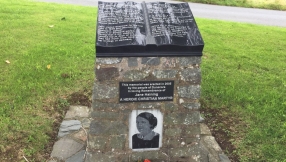
In the village of Tolpuddle near Dorchester in Dorset, in southern England, there is an ancient sycamore tree where, in 1833, local farm workers met to discuss conditions and agreed to go on strike. These men are now known as the Tolpuddle Martyrs. They are considered the start of the British trade union movement. The Tolpuddle sycamore tree is now managed by the National Trust and has a plaque on it to tell the story. Something similar happened in Jericho. People gathered under a large tree - not a cultivated one in an orchard, but one in the town.
Sycamore trees
The word ‘sycamore’ has been applied to several types of trees which have similar leaf forms. The name derives from the ancient Greek συκόμορος (sūkomoros). In fact, there are many distinct species of trees known as ‘sycamore’ around the world.
The type of sycamore known in the British Isles is called in Latin ‘Acer pseudoplatanus’. It is also called the Eurasian maple or the great maple and is a type of maple tree which grows natively in central Europe and southwestern Asia. It has been known in the British Isles for at least five centuries, and British settlers have taken it to North America, Australia, and New Zealand. In the USA, it is known as the sycamore maple. It is not found natively in the Middle East. Rather, it seems to have got the name ‘sycamore’ by analogy to the Bible story, and not because it was the type of tree Zacchaeus went up.
More confusingly, in North America, the tree usually known as a ‘sycamore’, or American sycamore, is another tree called in Latin ‘Platanus occidentalis’, also called the eastern sycamore, which is a type of plane tree native to the eastern USA. Another type of tree, ‘Platanus racemosa’, found in the western USA, is known as the western sycamore. There are also trees known as sycamore in Australia, where there is the silver sycamore, the white sycamore, the satin sycamore, the pink sycamore, and the mountain sycamore.
None of these sycamore trees grew in the Middle East at the time of Jesus.
Fig trees in the Bible
The type of tree referred to in the story of Zacchaeus is not a maple tree, nor a plane tree, but instead a type of fig tree.
There are two types of fig tree which appear in the Bible. The fig gets an early mention when Adam and Eve sewed fig leaves as their first garments (Genesis 3:7), where the purpose is suggested by the shape of the leaf. The fig tree is also mentioned in Song of Solomon 2:13 and Matthew 24:32.
The Good News Study Bible explains that the cultivated fig, called in Latin ‘Ficus carica’, or the true fig, “is grown for its fruit, not to be confused with the ‘Ficus sycomorus’, or sycomore-fig … grown for its hard wood.”
The wild fig is found in the Middle East, Ethiopia, and much of eastern Africa. In East Africa, it is known by its Swahili name, the mukuyu tree. The wild fig's extensive root system helps to prevent soil erosion and maintains soil fertility. It provides shade for people and animals. It has clustered, button-like fruit which are edible, but it is not the type of fig which is usually cultivated; rather, it grows wild and was quite common.
In Hebrew, it is called שקמה (shikmah), which was rendered in Greek as συκόμορος (sūkomoros). King Solomon tried to make cedars as common as wild figs (1 Kings 10:27), and Isaiah contrasts cedars and wild figs (Isaiah 9:10). Psalm 78:47 explains that wild figs and vines were destroyed in the Egyptian plagues. The prophet Amos refers to his secondary occupation as a dresser of fig trees (Amos 7:14). In the New Testament, in Luke 19:4, this is the type of tree which Zacchaeus goes up. This type of tree has a sturdy trunk, a broad canopy, strong wood, and low, wide-spreading branches, making it relatively easy to climb, even for a short person like Zacchaeus.
Jericho today
To this day, there is a house in Jericho which, by tradition, was Zacchaeus’s house. There is even a tree in Jericho reputed to be the very one which Zacchaeus climbed - in fact, there are two of them. They have both been places of pilgrimage for centuries, and both trees are of the type ‘Ficus sycomorus’, which is the wild fig. Whether either of these is the exact tree is unprovable, but it does show which type of tree the locals have understood it to be since the early centuries of the Christian era.
Bible translations
The tree is only mentioned in Luke 19:4. The New King James Version (NKJV), the New Revised Standard Version (NRSV), the Contemporary English Version (CEV), the English Standard Version (ESV), the NET Bible, and some other translations misleadingly have “sycamore tree”. In most readers’ minds, this will conjure up an image of a maple tree for British people, or a plane tree for Americans. The tradition of it being a sycamore tree comes from the King James Version (KJV), which had “sicomore tree” in the 1611 edition and “sycomore tree” in the 1769 edition, being a transliteration of the Greek rather than a translation of the tree type.
Some translations, like the Revised English Bible (REB), follow the KJV and spell it “sycomore” as a transliteration of the Greek, which is slightly better than “sycamore”—but only just. Even spelling it “sycomore tree” (with an o), instead of “sycamore” (with an a), is a subtlety lost on most readers. In any case, the spelling difference is lost when the verse is heard when read aloud in church or listened to on audio.
A few translations do call it a fig tree. The latest version of the New International Version (NIV) and the New Living Translation (NLT) are slightly more helpful with “sycamore-fig”.
Translations into German, starting with Luther, tend to call it a Maulbeerbaum (mulberry tree) or a Maulbeerfeigenbaum (mulberry-fig tree). Some European languages which followed Luther’s translation use the equivalent of “mulberry”. In English, the 1903 New Testament in Modern Speech by R. F. Weymouth had “mulberry tree”, as did the Translators’ New Testament produced by the Bible Society in 1973.
The first man to translate the New Testament from Greek into English was William Tyndale in 1526. In his 1526 translation, he had “sicomore tree”, but later he learnt Hebrew and wrote that he could “consider the Hebrew phrase or manner of speech left in the Greek words”. When he revised his New Testament, published in 1534, he wrote that Zacchaeus ascended “into a wilde fygge tree”. This became “a wilde figge tree” in the Geneva Bible, or “wild fig” in modern spelling. Almost five hundred years later, “wild fig” still seems like the most helpful translation of them all and shows Tyndale’s genius.
Very few modern English Bibles render it as a fig tree, but a few have broken away from the tradition of calling it a sycamore tree. The 1989 Jewish New Testament by David H. Stern has “fig tree”, as does the EasyEnglish version from MissionAssist, and the Passion Translation has “blossoming fig tree”.
Conclusion
People have grown up with the image of Zacchaeus climbing a sycamore tree. Children’s books and stained-glass windows feature him in a sycamore tree, looking down from a high branch, and this is the image most people have. The problem is that sycamore trees do not grow in the Middle East. Instead, Zacchaeus was sitting on a lower branch of a wild fig tree.
This misunderstanding has been fuelled by centuries of misleading Bible translations in Luke 19:4, which created a tradition. It is so fixed in people’s minds that they are surprised to find it is wrong.
Does it matter? On one hand, it does not really matter what type of tree Zacchaeus went up. However, on the other hand, this is just one of many examples in the Scriptures where people have false assumptions or misunderstandings based upon tradition, often without realising it. When catalogued together, these can distort the view of the story. It is one of many examples of how false ideas can become fixed in our minds about what is in the Bible, especially if they are commonly repeated and form part of our tradition.