
Twenty-five per cent of born-again Christians said all people are eventually saved or accepted by God. A similar proportion, 26 per cent, said a person’s religion does not matter because all faiths teach the same lessons.
An even higher proportion of born-again Christians, 40 per cent, said they believe Christians and Muslims worship the same God.
Barna defined universalism as the belief that all human beings will eventually be saved after death.
The California-based research and polling firm defines born-again Christians as people who have made “a personal commitment to Jesus Christ that is still important in their life today, and who believe they will go to heaven after death because they confessed their sins and accepted Jesus Christ as their saviour.
According to the Barna analysis, 43 per cent of Americans in general agreed with the statement “It doesn’t matter what religious faith you follow because they all teach the same lessons”, while 54 per cent disagreed.
The study follows the publication of Rob Bell’s new book, Love Wins: A Book About Heaven, Hell, and the Fate of Every Person Who Ever Lived.
Last week, Time magazine released its Easter Week feature with a cover story on Bell’s controversial views contained in his new book.
For many evangelicals, the idea of Christians holding universalist ideas is particularly disturbing because it nullifies the need for Christ to die on the cross and the message of Jesus that he is the only way, truth and life.
Various research firms have reported different data on the prevalence of universalist beliefs among born-again believers and, more specifically, evangelicals.
A 2008 Pew Forum survey revealed that 57 per cent of evangelicals agreed with the idea that other religions than their own can lead to eternal life. After tweaking the definition of "evangelical", however, LifeWay Research, found that only two out of 10 evangelicals agreed with the statement that eternal life can be obtained through religions other than Christianity.
While universalism is nothing new, some believe cultural trends are placing pressure on Christians and their beliefs.
Don Carson, research professor of New Testament at Trinity Evangelical Divinity School, said at The Gospel Coalition’s national conference last week that many are feeling pressure from the culture "to find universalism attractive".
"There are pressures in our culture to reduce the truth content of Scripture and then simply dismiss people by saying that they're intolerant or narrow-minded ... or bigoted without actually engaging the truth question at all. And that is really sad and in the long haul, horribly dangerous."
Barna’s analysis on beliefs regarding universalism and pluralism is based on data from telephone interviews conducted in the OmniPollSM and from Barna Group’s theolographic TM database from 2005 through 2011.




-

More than one in four US Protestant churchgoers believe some biblical truths become outdated
-

Wycliffe celebrates ‘remarkable moment’ as Bible translation advances at rapid pace
-

Could the Church face a ‘silver uprising’?
-

Christian leaders issue ‘sober and urgent call’ for Western Church to prepare for disruption
-

Church in Wales pauses plans to allow gay marriage
-

Christian social worker returns to Court of Appeal in dispute over withdrawn job offer
Most Popular
News

800 years on: Why St Francis of Assisi still captivates the world
4 October is St Francis’s Day, when Christians around the world remember the life and witness of Francis of Assisi. This year’s observance has particular significance, marking the 800th anniversary of his death. This is the story …

Majority back Ireland’s three-day abortion waiting period, poll finds
A new poll has found majority support for retaining Ireland’s mandatory three-day waiting period before an abortion, as lawmakers continue to consider legislation that would remove the requirement.

ONS figures show 'good' outlook for married couples
The Coalition for Marriage (CFM) has welcomed new figures suggesting that married couples are increasingly staying together.
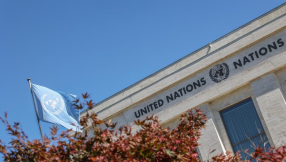
Christians condemn sexual violence following UN report on Russia-Ukraine conflict
Most cases of sexual violence documented were against male prisoners of war.








