"Why do you rob banks, Willie?" asked FBI agents of the legendary criminal Willie Sutton on his arrest in 1934.
"Because that's where the money is," he replied, baffled.
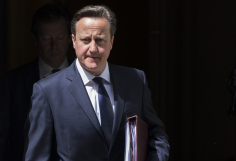
David Cameron has announced tough new measures aimed at combating Islamic extremism. They have been met by instant cries of foul from the Muslim Council of Britain, which released a statement saying that it detected "McCarthyist undertones" in the Government's proposals.
Among these are an official investigation into the application of Sharia law, powers to intervene in the activities of faith-based schools and a new "extremismm community trigger" to streamline the police response to warnings from suspected extremists' families and friends. The MCB statement refers to blacklists and banning orders, describes the policy as flawed and undemocratic and says it will alienate the Muslim community.
So here's the case for the defence. Criminals rob banks because that's where the money is. Government targets Islamists because that's where the extremism is.
The first responsibility of any government is to ensure the safety of its citizens. Britain has already faced attacks from radicals on its own soil, both in the 7/7 bombings and in the murder of Lee Rigby. We know there are others that have been foiled. To imagine that there simply isn't an issue and that the roots of extremism are somehow irrelevant is naive. As Cameron said announcing the new policy: "The extremist narrative needs to be fought every day at the kitchen table, on the university campus, online and on the airwaves." The interpretation of Islam which makes murderers and suicide bombers out of ordinary British teenagers has to be resisted at every level. It might not look very liberal, but it's necessary.
And here's the case for the prosecution. All of this targets one community. It puts the onus on Muslims to prove their innocence. It brings us one step nearer to being a police state. It infringes our freedom to say unpopular things without being called to account for it. It alienates people. Far from making people less likely to become terrorists, it makes them more likely, because it drives a wedge between them and the wider community. We are making enemies when we should be making friends.
The sad, frustrating and paradoxical truth is this: both the prosecution and the defence are right.
Yes, it does make sense to restrict people's liberties for the sake of increasing our security. We ought to try to tackle radicalism if we can. The fact that the Park View school in Birmingham - the ''Trojan Horse' school - was able to develop such a poisonous ideology and teach it to children is a scandal, and if we can stop that happening again we should make sure that we do.
But the mechanism chosen to do this, the rhetoric that brands Muslims as potential terrorists simply by virtue of their religion, the cackhanded and unconvincing trumpeting of 'British values' as so self-evidently superior to anything that Islam has to offer ("this battle will only be won through argument and persuasion – people taking a stand to demonstrate the incredible power of our liberal, democratic values, and the emptiness of theirs" Cameron said) - none of this shows the slightest understanding of what drives the radicals' agenda.
"It is a problem that so many see the West as an oppressor, and buy into the grievances, if not necessarily the violence," said Cameron. Well, how very strange that anyone should. The record of European and American policy towards Muslim nations has been one of almost unremitting perfidy, violence and exploitation. It is perfectly true that the extremists' narrative does not derive necessarily from Islam itself. But there is quite enough true history around to provide the justification they need to create more followers of their creed.
The involvement of our Government in creating the charnel-house that the Middle East has become has made a British Islamist backlash inevitable. It has to be controllled, and to do tthat some limitations on personal freedom are necessary. This is not new: times of crisis have always required such measures, and it would foolish and irresponsible to deny that this is a crisis in the making.
But the Government has not yet succeeded in finding the right tone in which to speak either to Muslims, or about them. It comes across as bullying or condescending. It will alienate Muslims through its ignorance of religion in general and their own religion in particular.
It is impossible to stop all radicalisation. But the best weapons against it are the personal encounters between people of different faiths, the friendships forged across boundaries and the mutual recognition that strikes when people perceive theiir common humanity. That's the kind of thing that happens when commmunities take things into their own hands and bbuild bridges themselves. Churches and mosques are in the in the best position to do that; Whitehall not so much.