Government plans to force priests, rabbis and imams to face rigorous new security vetting to combat extremism have been condemned.
The Home Office is to make ministers and clergy across the religions join a national register of faith leaders. They will receive special training and security checks as part of the UK Government's counter-extremism strategy.
The draft proposals, leaked to The Telegraph, will be published in the autum. They state that the Government will "require all faiths to maintain a national register of faith leaders". There will be a "minimum level of training and checks" that faith leaders must go through to join the register.
Faith leaders who wish to work with the public sector, such as in universities, schools and prisons, will have to join the register. Most faith leaders in the country will be affected as most work closely with a number of public institutions.
The plans follow concerns that police responses to recent episodes in Rotherham and the so-called Trojan Horse affair in Birmingham were hindered by "a poor understanding of isolated communities and a fear of being seen as racist. This is not acceptable," the document says. "We will therefore ensure that the police have a better understanding of extremist behaviour."
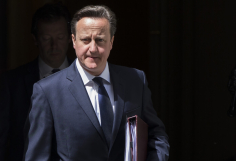
Prime Minister David Cameron has said the fight against Islamist extremism is the "struggle of our generation".
Maulana Shah Raza, an imam who is a founding member of the Mosques and Imams National Advisory Board, said the Government should not "meddle in religious affairs or to expand the state's involvement in deciding on religious and theological issues". He called on the Government to treat all faith communities equally.
The Catholic Church is among the religious bodies not consulted on the proposals, even though clergy are included in the new measures.
Catholic priest Father Jeffrey Steel said on Twitter: "Exactly what China did and does. Don't submit!"
Christian writer and blogger Barrie Lawrence tweeted: "Faith leaders' in the UK will have to register? I thought such predictions were alarmist – it's starting to happen."
Colin Green, Christian author and expert on apologetics, said: "Government plans to put church leaders' names on a watchlist. No this isn't a novel by George Orwell."
Rabbi Neil Janes, of London's flagship West London Synagogue, said: "This sounds unworkable and reads like too strong state intervention."