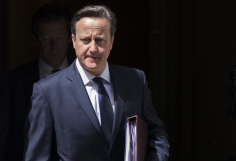
The quiet downgrading of the government's Faith Minister position, discovered by Premier Christian Radio after a fair amount of digging, does not necessarily represent a sinister sidelining of religion by government, though there are bound to be some who think it does. However, it does raise important questions of its own.
The first Faith Minister was Baroness Warsi, a Muslim with a good grasp of Christianity and of the importance of keeping a space clear for faith in the public square. The title devolved to Eric Pickles, who was also the Communities and Local Government secretary. Even more watered down, the role has now descended to Baroness Williams, Parliamentary Under-Secretary at the DCLG, who has responsibility for something called 'faith and integration'.
What, exactly, does she do? It's hard to know, but a job description so nebulous must make for a delightfully free-ranging unaccountability.
The relationship between the government and religion is always rather fraught, nowadays. In times gone by, the Church of England was the Tory party at prayer. The 1985 Faith in the City report, with its forthright criticisms of Thatcherism, put paid to that idea, though the CofE's laity have remained more Conservative than their clergy.
More significant than this, though, is the demise of the notion that the CofE really is the Church of England: that it has an automatic right to be regarded as the authentic expression of the nation's spirituality.
In that capacity it has acted as the broker between the government and different faiths and Christian denominations, whether they liked it or not. It is the established Church, with a constitutional position that in the irreligious or multi-faith Britain of the 21st century can best be described as quaint. No government has the time or energy to unpick the complex threads that bind Church and State together, no matter how absurd the conjunction is today, and it looks as though establishment will be with us for a good while yet.
However, Baroness Warsi's appointment was a recognition that it wasn't enough for the government to only talk to the CofE. It has to talk to Muslims, Hindus, Sikhs and the rest. There are Roman Catholic, Nonconformist and non-denominational Christians, too, the latter categories particularly important among black and ethnic minority communities.
Warsi's strengths were that she was religiously literate and that she felt faith from the inside. Pickles, not so much; Williams, who knows?
There is a legitimate argument to be had over whether the faith brief should be a cabinet-level appointment. There are too many members of the cabinet for business to be conducted efficiently anyway. But there should be no doubt at all as to the importance of clear lines of communication between the government and faith communities, and deep engagement with the issues that they face.
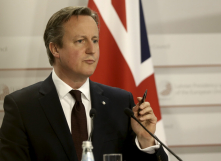
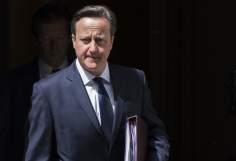
This has been highlighted in recent weeks by David Cameron's comments about the British Muslim community "quietly condoning" terrorism – "demonising a community of over 3 million", as Baroness Warsi put it. Clearly it is an issue he feels very deeply and not everything in his speech was wrong, but it was a shallow analysis.
There are plenty of other pressure points for faith and society. Anti-Semitism is on the rise. In sections of the South Asian community there are forced marriages and honour killings. Many traditional British Christians feel marginalised by what they perceive as a militantly intolerant liberal social agenda – and yes, of course that's ironic.
Britain is no longer a country at ease with its spiritual identity. From a gospel point of view, that's not a bad thing: in days gone by, the cosy social religion of hatches, matches and dispatches did a great deal to camouflage a lack of deep, heart-felt commitment. But faith has not gone away, and without a serious attempt to incorporate engagement with believers into the national conversation, we will be worse governed than we ought to be.
Follow @RevMarkWoods on Twitter.