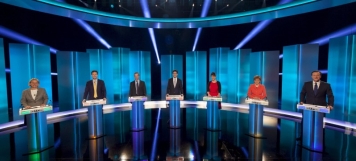
Anyone who managed to get through the party leaders' debate last Thursday surely deserves a medal. It was nothing short of a marathon that left me coming away wondering what it had achieved, if anything. Certainly each leader was able to set out their stall on a fairly narrow range of issues and fire a few shots across the platform, but with so many competing voices attempting to jockey for position, it took a great deal of will to resist the temptation to leave them to it and find something more enjoyable to fill the remainder of the evening.
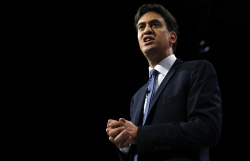
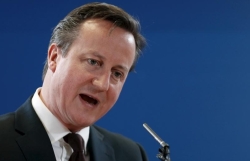
Perhaps the biggest disappointment I felt was reflecting on how little the rhetoric of our politics has moved on since the last election. Given that we're only just beginning to find our feet again having been knocked for six in 2008 when the economy came crashing down, it's not entirely surprising. But take a look at what the parties are saying. David Cameron told us that we needed to stick with the same plan that was in place when he came to power. Nick Clegg said basically the same thing, but to take things a little slower. Ed Miliband has had five years to come up with a new vision for his party, but strangely he seems drawn closer to the position of the Coalition than ever. Nigel Farage is still obsessed with immigration and the EU. Nicola Sturgeon is the one leader who has genuine reason for optimism. The SNP's following is increasing in size and loyalty, which will lead to the most dramatic change in fortunes on May 7, however this is almost entirely down to the aftermath of the Scottish referendum rather than any change in policy. Natalie Bennett for the Greens and Plaid Cymru's Leanne Wood stuck to familiar themes too.
This is the first general election that I can remember where all three main parties are focusing their energies on shoring up their existing support rather than go after new groups of the electorate. We're often told – even by some MPs – that political system is broken, but few have the appetite to do anything about it. Risk is not a popular concept at the moment.
We're not finding much in the way of bigger visions as the well-trodden subjects of our economy, the NHS and immigration dominate the agenda from their political cul-de-sac. However if we begin to dig below the surface I believe something profound has taken shape during the lifetime of this parliament and will become increasingly significant over the coming years. That 'thing' is the influence of faith in the corridors of Westminster and beyond.
Take the Easter messages of Cameron, Miliband and Clegg. Openly celebrating this key date in the Christian calendar is now the done thing even for leaders who are declared atheists:
"Over the Easter weekend millions of Christians will attend Easter services and events up and down the country. Through such gatherings, the church shares the story of the resurrection, and spreads the good news of Easter," said Ed Miliband on his Facebook page. Nick Clegg also talked of "the moving and powerful story of Jesus's sacrifice and resurrection".
The cynics among us might put this down to little more than an attempt to win over the sizable Christian vote, but such explicit pronouncements are in stark contrast to the time Tony Blair was in government, when he failed to offer such celebratory greetings despite having a much more developed grasp of theology than any of our current crop of leaders.
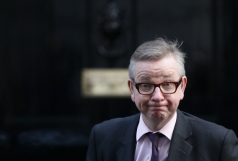
The previous Labour administration did much to alienate the churches and make public declarations of faith by politicians difficult with their 'We don't do God' approach, but this is far from the case now. Michael Gove has given a stirring defence of Christianity this week in the Spectator, which would hardly have been imaginable coming from a cabinet minister five years ago. Politicians of all political persuasions have been more than happy to declare their Christian faith in recent times. Christianity and Christian values, which have been unhelpfully branded 'British values', are being increasingly defended in the wake of pressures and hostility from those who seek to undermine them.
This shift in attitude and language can be attributed to various factors. At the last election 40 of the 200 new MPs were committed Christians, believing that God had called them to Westminster to make a difference. To be a professing MP is increasingly common and respected. The Christian groups of the main parties have stepped up their activities, working hard to increase the profile of the Christian faith and support those MPs who believe, many of whom are finding themselves in positions of influence.
Over this last parliament the drives to implement austerity has resulted in many more questions about the morality of how these cuts impact lives. What has become apparent is that market forces and our consumerist individualism left unchecked do not make our lives better. There needs to be a moral framework that that seeks to benefit all and not just the few. In addition, this period of self-reflection has found that a society that functions well and cares for all of its citizens cannot be established and maintained entirely through the state, undergirded by progressive thinking. Instead a morality that gives our communities strong foundations is repeatedly found in Christian teaching and answers that give hope to those desperately in need are being increasingly provided by Christians and the churches.
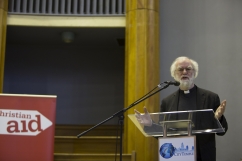
It is not only politicians rediscovering God, but also the churches rediscovering their political voice. Through words and actions the political discourse is being impacted. We have an Archbishop of Canterbury who is probably the most politically astute since the great William Temple who whose writings and actions in the 1940s directly inspired the creation of the welfare state. When Justin Welby speaks our politicians listen.
It is not just bishops who are influencing the debate. As Jeremy Paxman launched his interview with David Cameron a few days ago his first line of questioning was on the 900,000 who used foodbanks last year. Without the churches' dedication, not only would this need be left unaddressed, but few would know it existed in the first place.
The artificial divide between politics and Christianity that we have seen for too long is beginning to close. Historically there was no such separation. All three of our main political parties have deep Christian roots. Christian political thinkers are increasingly looking to change the political landscape by placing families and civil society back at the heart of policy, especially in relation to tackling inequality. The Blue Labour movement and the recently launched Conservative Good Right will undoubtedly increase in influence over the next parliament bringing vision inspired by Christian virtue and teaching to the heart of their respective parties that seeks to both reform politics for the better and serve the common good of all.
Inscribed into the stone floor of the central lobby in the Houses of Parliament are the words from Psalm 127 written in Latin, 'Unless the Lord builds the house its builders labour in vain.' Once again our politicians are learning that these are anything but empty words.
Gillan Scott regularly writes about the relationship between Christianity and society. He is deputy editor at archbishopcranmer.com and founder of the God and Politics in the UK blog godandpoliticsuk.org