The Government today launches its new counter-terror strategy in an attempt to "confront and defeat" all forms of extremism, the Prime Minister's office announced.
Passports are to be removed from all under-18s deemed to be at risk of travelling abroad to join terrorist groups such as Islamic Sate.
Convicted terrorists will be banned from working with children and vulnerable people. And suspected British jihadists returning from Syria will be forced to go back to school in special classes where they will be made to confront their warped outlook.
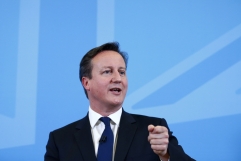
Writing in The Times, David Cameron says today that extremism is one of the biggest problems the UK faces. "Subversive, well-organised, and sophisticated in their methods, Islamist extremists don't just threaten our security, they jeopardise all that we've built together – our multiracial, multifaith democracy. We have to confront them wherever we find them."
He describes it as perhaps the "defining" generational battle of the century, with extremists attempting to infect public debate, divide communities and advance a "warped" world view.
Parents concerned that their 16- and 17-year-old children are at risk of travelling abroad under the influence of extremists will be able to apply to have their passports removed, the Government said. Anyone with a conviction for terrorist offences or extremist activity will be automatically banned from working with children and vulnerable people.
The new strategy follows the four key pillars set out by the Prime Minister in his speech in Birmingham in July:
"It will vigorously counter extremist ideology – making sure every part of government is stepping up to the plate," said Downing Street. "It will actively support mainstream voices, especially in our faith communities and in civil society. That means supporting all those who want to fight extremism, but are too often disempowered or drowned out in the debate. It will disrupt extremists, aggressively pursuing the key radicalisers who do so much damage.
"And it will seek to build more cohesive communities, tackling the segregation and feelings of alienation that can help provide fertile ground for extremist messages to take root."
Over the past year there have been a number of cases of young Britons travelling to join Islamic State in Syria and Iraq, as well as the prosecution of the UK's youngest terrorist, a 15-year-old boy convicted of inciting another person to commit an act of terrorism overseas.
According to latest police figures, there were 338 counter-terrorism related arrests of which 157 were linked to Syria and 56 were under 20 years old, which is a growing trend.
Cameron said: "I have said before that defeating Islamist extremism will be the struggle of our generation. It is one of the biggest social problems we need to overcome.
"We know that extremism is really a symptom; ideology is the root cause – but the stakes are rising and that demands a new approach. So we have a choice – do we choose to turn a blind eye or do we choose to get out there and make the case for our British values.
"The government's new Counter-Extremism Strategy is a clear signal of the choice we have made to take on this poisonous ideology with resolve, determination and the goal of a building a greater Britain. And a key part of this new approach is going further to protect children and vulnerable people from the risk of radicalisation by empowering parents and public institutions with all the advice, tools and practical support they need."
However the Muslim Council of Britain (MCB) condemned it as flawed and said it risked alienating Muslims.
Secretary General, Dr Shuja Shafi, said: "British Muslims have stood up and been counted in their opposition to terrorism. That is why we welcome effective and evidence-based initiatives to counter terrorism. The threat of terrorism is real and serious. Facing this challenge requires engagement with all sections of society particularly the diversity of British Muslim communities in an open and frank dialogue.
"Yet, today's 'one nation' counter-extremism strategy continues down a flawed path, focusing on Muslims in particular, and are based on fuzzy conceptions of British values. It risks being counter-productive by alienating the very people needed to confront Al-Qaeda or Daesh-related terrorism: British Muslim communities."
Next month, the MCB will be organising a special conference with grassroots Muslim community groups and leaders to facilitate a community response to the problem of terrorism.
Andrea Williams, of the Christian Legal Centre, also condemned the plans as flawed: "The government's Counter-Extremism Strategy betrays a dangerous blindness to the Christian basis of 'British values' and a naivety about the nature of Islamic radicalisation," she said.
"The government is right to recognise the danger that Islamic radicalisation poses to freedom but the government's response poses dangers of its own.
"The strategy as a whole is incoherent. It states, for example, that extremism disruption orders will not prevent people from expressing their religious beliefs, yet it is clear elsewhere in the strategy that the censoring of certain religious beliefs is exactly what the government wants to achieve.
"This exposes a fundamental problem of the strategy. It will not name the specific religious beliefs that it wants to quash. A fundamental principle of good law-making is to 'name the mischief' as narrowly and carefully as possible. This strategy falls well short of that standard."