This Saturday, July 9, South Sudan will commemorate five years of independence. However, the sombre mood in the world's youngest country will stand in severe contrast to the jubilant celebrations of 2011, thanks to the past two-and-a-half years of civil war and bitter conflict.
On June 24, South Sudan's Cabinet passed a resolution cancelling its Independence Day celebrations, as the severe economic crisis has left it unable to pay for national festivities. The Government announced that the anniversary would only be observed in silence and with a presidential statement to mark the day it broke away from Sudan.
Half a decade on, South Sudan faces many challenges. A financial crisis has brought the country to its knees: conflict and financial mismanagement have triggered economic collapse, exacerbated by a global drop in oil prices and reduced oil production. This has led to a currency devaluation of almost 90 per cent since December 2015, plus the world's highest inflation rates, at 295 per cent in June 2016.
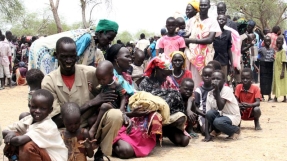
I have seen firsthand the extent to which the livelihoods of South Sudanese communities have been severely hit as a result. Since December 2013, 1 million more people have been pushed below the poverty line. Over half the population – 6.1 million people – urgently need humanitarian assistance.
What's more, some 2.4 million citizens have been displaced by the fighting between the Government and opposition groups; with harvests disrupted, up to 5.3 million people may face severe food insecurity this summer.
Tens of thousands have lost their lives, homes and infrastructure have been destroyed, and unspeakable human rights atrocities have been committed during the protracted conflict – including sexual abuse and violence against women and girls.
A peace agreement was signed in August 2015, and a Transitional Government of National Unity was formed in April 2016, accompanied by a sigh of relief from citizens and observers. Elections are due to take place 30 months from that date. However, the path to recovery will be fraught with difficulty, after this very dark period in South Sudan's history. The crisis is far from over.
The peace agreement addresses a daunting list of key issues – including a permanent ceasefire, the constitution, transitional justice, reconciliation, humanitarian assistance, reconstruction, resource management, and security sector reform. So far implementation has been painfully slow: there remain many critical issues to resolve.
In the meantime, conflict and violence continue, and in 2015 the fighting spread to some previously unaffected areas.
While the peace agreement was a positive step, it's often the case that international engagement tends to fade or switch to new crises before the ink dries on the paper. But if we want the agreement to translate into sustainable peace and meaningful change, then the global community must continue to support South Sudan's leaders as they implement it, and help to ensure it does not fail. International guarantors, including the UK government, must continue to engage in this process.
However, achieving sustainable peace also relies on making sure that national efforts are connected to grassroots peace-building and reconciliation work. The experience of conflict varies widely, so local communities need to be given a voice and a stake in the national peace process: South Sudanese-owned initiatives have critical contributions to make.
The churches play a particularly influential role, as nationally respected institutions with strong local constituencies. Just last week the South Sudan Council of Churches (SSCC) reaffirmed its call for unity, peace and an end to violence in the country.
The SSCC – a partner of Christian Aid – has begun implementing an Action Plan for Peace: reconciliation is a strong element of the churches' plan, building on decades of experience of conflict transformation and trauma healing. Indeed, the impact of trauma on children, women and men must not be underestimated.
Over the years, Christian Aid's local partner organisations have responded courageously to severe humanitarian needs, accessing hard-to-reach areas and sticking with communities even when international agencies have left due to insecurity.
This important role of local and national groups in the country's humanitarian response was highlighted earlier this year in a report published by Christian Aid, in collaboration with other UK-based NGOs. We have also enabled our partners to build communities' capacity to respond to local conflict, and to empower citizens to engage with the peace agreement.
Five years on from independence, our support for and solidarity with the work of South Sudan's churches remains unchanged, and is perhaps more important than ever.
But it is never enough, and can never be enough, in such times of distress and suffering. We remain ever humbled by the weary yet enduring hope of South Sudanese people, and by the resilience of those who struggle to maintain a semblance of everyday life amid this protracted conflict, although this becomes harder month by month.
While national independence celebrations may have been cancelled, the anniversary will not pass unnoticed by South Sudanese communities and those who have walked with them for many years.
Although there does not appear to be much to celebrate, we continue to stand with the people of South Sudan and pray that they will continue to be given the strength to overcome difficult times, and the hope to envisage a better future.
Natalia Chan is Christian Aid's senior advocacy and policy officer for East Africa. Find out more about Christian Aid's work in South Sudan here.