Mosquito-borne brain-deforming virus spreading; at least 20 Latin American countries report cases

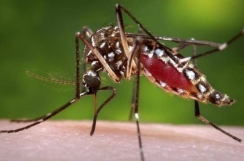
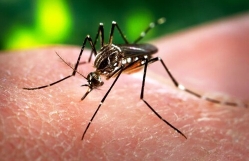
More and more countries are being infected by the Zika virus—which has earlier been associated with brain deformities among infants in Brazil—and its alarming spread is not over yet.

At least 20 countries in Latin America and the Caribbean, including areas with popular tourist destinations, have so far recorded cases of Zika virus infection, according to international health officials.

The countries with reported incidents of the Zika virus include Barbados, Bolivia, Brazil, Colombia, Ecuador, El Salvador, French Guiana, Guadeloupe, Guatemala, and Guyana.

Cases have also been reported in Haiti, Honduras, Martinique, Mexico, Panama, Paraguay, Puerto Rico, Saint Martin, Suriname, and Venezuela

Despite its great distance from the affected countries in Latin America, Samoa in the South Pacific has also reported an incident of the virus.

Because of the increasing number of nations infected by the Zika virus, health officials expect it to spread even more, with mosquitoes carrying it across the region or even in other parts of the world.

As a result, the United States' Centers for Disease Control and Prevention (CDC) has reiterated its recommendation to pregnant women to avoid travelling to areas where there have been reported cases of Zika virus infection, especially in Latin America.

The CDC's travel advisory came at a time when scientific evidence connecting the Zika virus to brain deformity continues to grow.

Brazilian health officials, who earlier examined 35 babies with microcephaly, or underdeveloped heads and brains, are getting more and more convinced that the mental condition is due to the Zika virus.

Although the health officials still need to examine the babies' spinal fluids, they have ruled out that the brain deformity was connected to syphilis, toxoplasmosis, rubella, cytomegalovirus and herpes simplex virus infections.

"Studies are under way to evaluate the risks for Zika virus transmission during pregnancy, the spectrum of outcomes associated with congenital infection and the possible association between Zika virus infection and Guillain-Barré syndrome," the Brazilian medical practitioners said.


related articles
Over 2,400 babies in Brazil suspected to have brain damage due to mosquito-borne virus that came from monkeys

Over 2,400 babies in Brazil suspected to have brain damage due to mosquito-borne virus that came from monkeys

Untreatable mosquito-borne disease that can cause deformities in babies reaches Texas

Untreatable mosquito-borne disease that can cause deformities in babies reaches Texas

Brain-deforming Zika virus carried by mosquitoes reaches Hawaii, infects baby

Brain-deforming Zika virus carried by mosquitoes reaches Hawaii, infects baby

News
Active faith linked to happier marriages and lower divorce rates, study finds

People who regularly attend church are more likely to report happy marriages, according to a new report examining the relationship between faith and family life.

Indian churches fearing anti-conversion laws tell non-Christians: enter at your own risk

Churches in Dhamtari, a town in the central Indian state of Chhattisgarh, have put up notices warning non-Christians that they enter at their own risk, weeks after a law against religious conversion came into force in the state.

£1k bursaries to help churches develop youth and community mentoring programmes

Churches across the UK are being offered bursaries to help them establish mentoring programmes aimed at supporting young people and others in their communities.

World Evangelical Alliance celebrates 180th anniversary

The World Evangelical Alliance (WEA) has held an online celebration to mark its 180th anniversary. Hundreds of people from more than 22 countries attended, and the event was rebroadcast to accommodate different time zones.